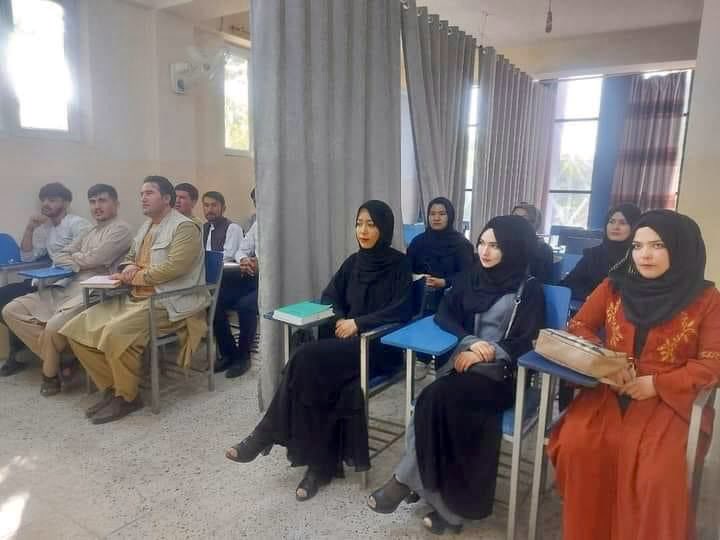
They’ve gone dark: Afghans who helped the U.S. military, trained as American-style journalists and rode the wave of women heading to higher education are destroying the diplomas, transcripts and résumés that prove how they built civil society in the country that the U.S. has left behind.
Opinion: Presidents Cup should take global approach to donations
By Sarah Choi, GSS correspondent
SONGDO, South Korea — When we think of world-class golfers, often images of them holding trophies and prize money pop up in our heads. Winning just one competition can guarantee they’ll be comfortable in their lives and careers for several years.
But when it comes to the Presidents Cup, something most unusual happens: Prestigious golfers compete against each other without any promise of a prize.

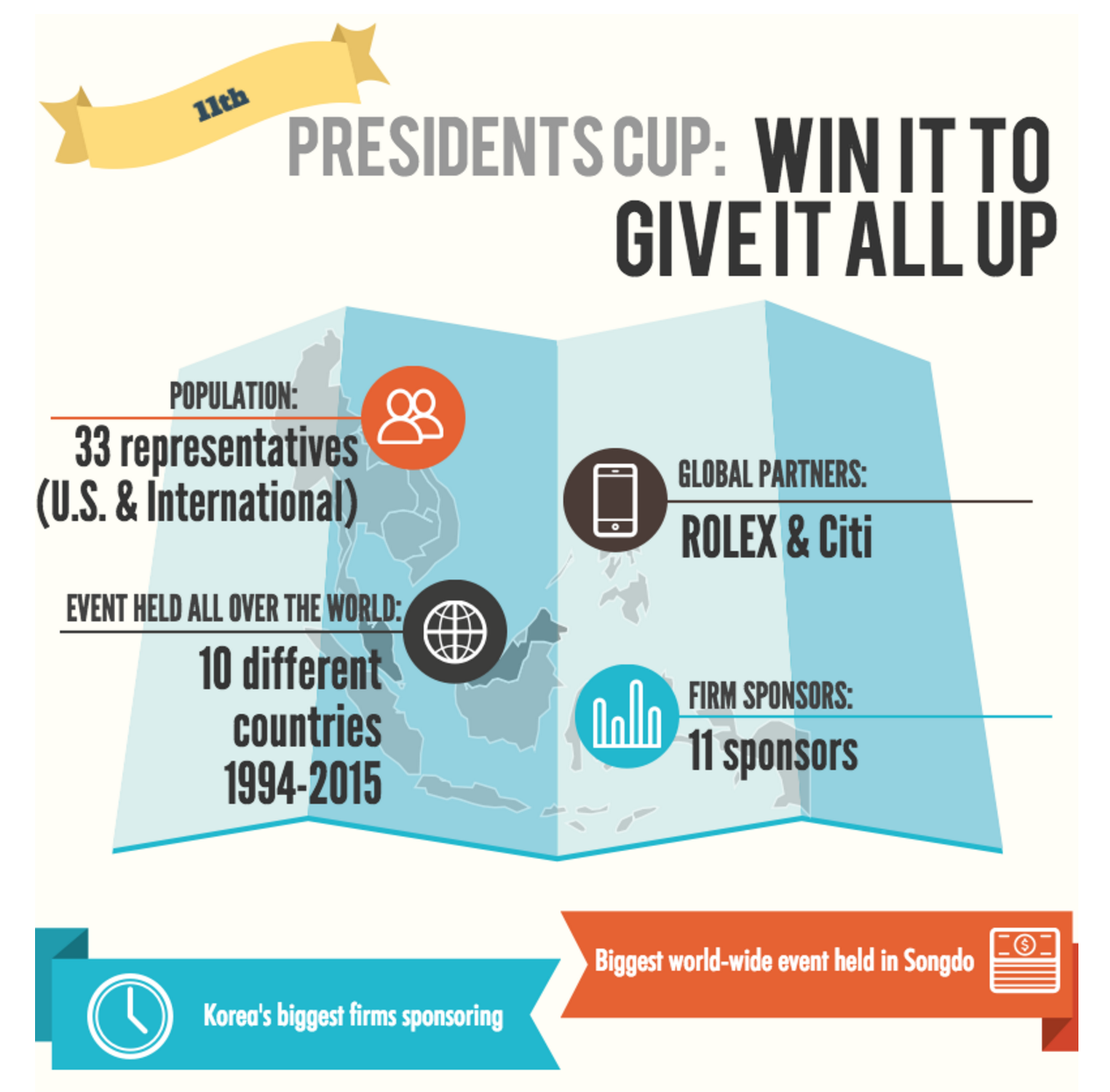
Since 1994, the Presidents Cup has developed a reputation as a world-class competition that seeks to promote the good of society by donating monies across the globe.
While many prestigious golf competitions are famous for the enormous amount of prize money that winners receive, in the Presidents Cup all 24 players from both the international and the U.S. teams designate charities of their choice to receive their prize money.
According to the Cup’s official 2015 media guide, as of 2013, more than $32.31 million has been donated to at least 470 charities in 15 different countries since the Cup began in 1994.
In past years, the Cup has funded reconstruction in earthquake-ravaged Haiti, golf programs for disabled kids in South Africa, and free school lunches for underprivileged children in South Korea.
After the 2013 Cup, golfer Ernie Els designated EMMAüS George, an organization that provides support to disabled people in South Africa, as his choice for donations; Hideki Matsuyama chose to donate to Great East Japan Disaster Victim Relief Fund; and Mark McNulty designated the South African National Parks Rhino Fund.
However, more than 60 percent of the Cup’s funds still goes to charities in the United States or other developed countries.
In 2013, the majority of the Cup’s players designated programs in the U.S., including San Francisco City Impact, Texas A&M Foundation, and the Ronald McDonald House Charities.
In 2013, additional donations were made to The First Tee of San Francisco ($500,000) and the Victorian Bushfire Appeal in Australia ($100,000) in 2009; New Zealand Earthquake disaster relief in 2011; additional Victorian charities (totaling $250,000); and to Nationwide Children’s Hospital in Columbus, Ohio ($125,000). These donations brought the total amount generated for charity to more than $32.3 million.
Players who participated in the 2015 Cup in Songdo, South Korea, have not yet designated their choices for this year’s donations.
Interviews with people in Songdo on Oct. 9 while the Cup was underway suggested that the Cup should sharpen its focus on global needs.
Some people voiced concern that the charities receiving help are located only in the U.S. Out of 16 people interviewed, 11 said that U.S. charities should not monopolize the use of prize money. Four said that prize money should be used solely for developing countries, or be divided equally among countries involved in the event. However, several others suggested leaving that decision to the players, which is the current policy of the Presidents Cup.

The designation of South Korea as the first Asian country to host the Presidents Cup shows that it is gradually becoming a truly world-wide competition.
Prize money going to charity also has increased from $750,000 in 1994 to more than $5 million in 2013. This significant increase is a good reason why the cup’s charity committee should seriously consider the best use of these substantial funds.
So perhaps players should consider: Should prize money be used to support charities in developing countries? Or should it be used to support poor people in South Korea since it is the host nation?
Going forward, how to donate and to whom may be the Cup’s most difficult call. Will it focus on charities in the developing countries and deal with global issues — or just charities in the U.S.?
This story was developed and published with cijournalism.org, the student-led news website of Chadwick International School. For more information, contact CI Journalism editors-in-chief Diana Minjin Kim mkim2016@chadwickschool.org and Sarah Choi s2choi2017@chadwickschool.org.

Related Posts