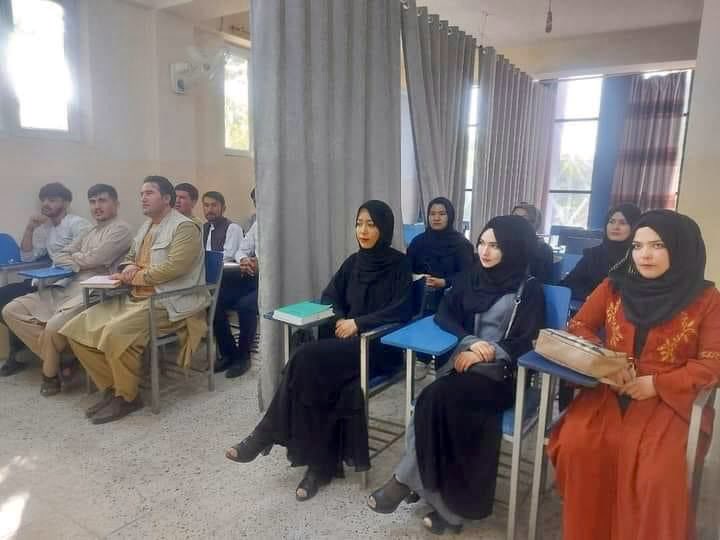
They’ve gone dark: Afghans who helped the U.S. military, trained as American-style journalists and rode the wave of women heading to higher education are destroying the diplomas, transcripts and résumés that prove how they built civil society in the country that the U.S. has left behind.
Rising cost of living challenges but doesn’t define California students

By Carmen Vescia, GSS Correspondent
REDWOOD CITY, California — Some nights she finishes her homework in the bathroom—the only room with a door to separate it from the studio where she lives with her family of six.
Then some mornings she wakes up at 6 a.m. to study before the long bus ride to school. She works anywhere from 16 to 48 hours a week and gives all but around $20 to her parents for rent and other necessities. For junior Karolina Soto, it’s a balancing act.
“It’s not always all easy,” Soto said. “It’s not that I don’t want to have 100 percent focus on school. It’s not that I don’t want to hang out with my friends. It’s not that I want to be tired in class all the time. It’s not that I don’t want to bring my friends over to my house, but it’s just situations prevent me from doing stuff like that.”
Soto has lived in studio apartments in the same Redwood City complex for the last 14 years. Bedrooms, kitchen, living room all blend into one and make finding private time and space a challenge, but an even more daunting issue is that of rising rent. Soto began working at Safeway this fall to contribute.
Advancement Via Individual Determination (AVID) and history teacher and Key Club adviser Teresa Yeager, a close friend of the Soto family, helped her balance academics, clubs — Soto is president of Key Club and an active member of the DREAM Club — and work hours when it became overwhelming.
“She looked frazzled every time I saw her,” Yeager said. “ When we finally talked, it was about: Why are you working so much? Not: Why are you working? Because I would never want to question a student wanting to help their family.”
As housing prices skyrocket in the Bay Area, many Sequoia families, like the Sotos, encounter financial hardships. Parent Center Coordinator Mayela Ramirez and the Parent Center, a school organization committed to supporting Sequoia families, strive to offer what help they can.
“Rent is expensive, [but] unfortunately we don’t have money to support every single family, but we [offer] support with some food with some clothes or just listen to the people when they have some problems and we can give some advice or refer [them],” Ramirez said.
Soto would like to move, especially because she describes her neighborhood as both distant and dangerous, but her family can’t afford it.
“It’s kind of the same in the whole Bay Area. The prices are high, and my dad can’t afford the deposit,” Soto said. “I’d say that’s what’s keeping us there. I’m always, like, ‘when are we ever going to leave?’ and it’s always the same answer: ‘When you grow older and you can buy a house.’”
And that’s exactly what Soto intends to do, as she hopes to follow in her two older sisters’ footsteps and attend a 4-year university. Her sisters both received full-ride scholarships and now live most of the year at the University of California, Santa Cruz and Pomona College where they attend school.
“If I can prevent them (my parents) from paying for my college education, that would be a big accomplishment. And after that, (I would) just get a job so I can buy them a house because that’s been my goal since I was little: Actually buy them a house and for me have my own room, my own bed for once,” Soto said.
According to the U.S. Census Bureau’s report from 2010, the average family size in Redwood City is 2.7 people, but Soto is just one of the Sequoia students who lives in a small home with a large family or even in a home with multiple families.
“Their circumstances are difficult, but she’s not unique to that situation,” said AVID and ELD teacher Jane Slater. She is also the DREAM Club adviser and knows all three Soto sisters and their family. “Certainly they’re a really good example of how strong and resilient people can be.”
Despite how prevalent situations like the Sotos’ are, many other students remain unaware that their peers’ families face economic hardships daily. Other factors, such as being undocumented, make finding reliable and affordable housing even more difficult for some families.
“Sometimes you may not have certain sensitivity about situations because you’ve never had to think about it,” Yeager said. “It’s important to not feel guilty about your own blessing or circumstances, and one of the ways to think about it is ‘yes maybe I have some things easier than other people, so what am I going to do with that?’ And it doesn’t necessarily mean starting a canned food drive. It just might mean that I’m going to be sensitive to the fact that for some people this might be harder.”
According to Soto, insensitivity regarding this diversity can be painful.
“I guess [some people] don’t value what they have all the time because it’s just so normal for them, and it’s not like you can blame them for that, but it just feels weird. I sometimes feel like I’m trying too hard,” Soto said. “Let’s say [you] gets a D or something and somebody’s bragging over there that they got an A and you’re like, ‘Shut up.’ It’s kind of like that feeling.”
For students who struggle to find a place for work at home, teachers provide office hours, the school runs after-school SAFE tutorial and the local library offers homework resources.
“I’m pretty impressed by the resilience of students, the fact that they come to school every day and get their work done; that you’re walking down the hallway in the school and you can’t tell the difference between someone who lives with eight people or six people in one room sharing an apartment with several families and someone whose family has their own apartment or home,” Slater said. “I think it would be good if people were aware of just how wide that range is.”
—This story was originally published in the Raven Report, the award-winning newspaper of Sequoia High School in Redwood City, California. For more information, contact the Raven Report’s Executive Editor, Carmen Vescia, at carmenvescia@gmail.com.

Related Posts