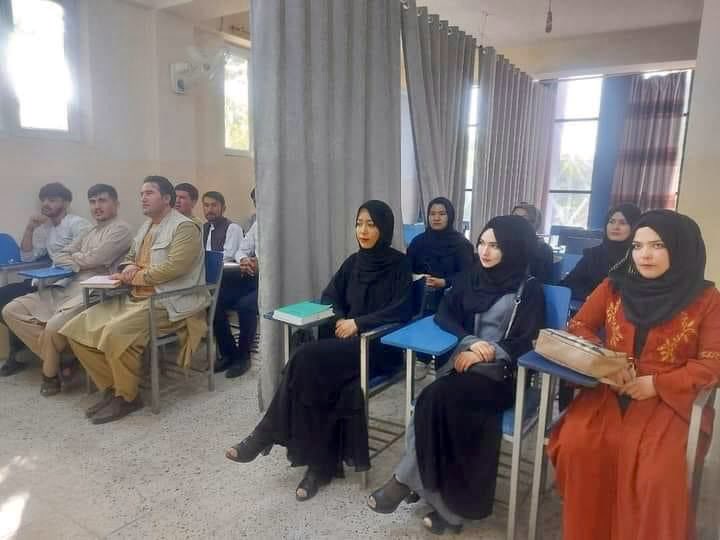
They’ve gone dark: Afghans who helped the U.S. military, trained as American-style journalists and rode the wave of women heading to higher education are destroying the diplomas, transcripts and résumés that prove how they built civil society in the country that the U.S. has left behind.

Migrant film festival, Jordan media literacy program and Canada’s “Media Smarts” receive UNESCO awards
KAUNAS, Lithuania — A project that helped refugees tell their stories in film, a literacy education program in one of the world’s most media-challenged nations and a “pioneer” in media literacy in Canada were honored today by UNESCO.
Alton Grizzle, programme specialist for UNESCO’s Communication and Information Sector/Division for Freedom of Expression and Media Development, and Carolyn Wilson, chair of the GAPMIL International Steering Committee, announced winners of its third annual Global Alliance for Partnerships (GAP MIL) awards.
“Recognition motivates, stimulates and translates experience to others — these are new media literacy champions,” Grizzle said before announcing the top four projects.
First prize went to retired educators Jane Tallim and Cathy Wing of Media Smarts, a non-profit organization launched in 1995 that is one of the longest-running programs in the world on internet and youth, including creating educational resources for schools across Canada. A statement by Tallim and Wing read at the awards ceremony noted that “our current environment and the spread of information that is known to be false is the issue of our time” and that developing skills to understand and discriminate between news and disinformation is important “now more than ever.”
Second prize was a tie, with two winners: The Jordan Media Institute and youth filmmaker Hemmo Bruinenberg of Video Bakery, a nonprofit youth film group based in Utrecht, Netherlands. JMI was honored for working with UNESCO to integrate media literacy in schools and universities across Jordan, including training more than 70 teachers and nearly 400 students in eight public schools and two universities. Bruinenberg was honored for an intensive filmmaking project in which refugee youth were taught to shoot, edit and produce films over a three-day period. Grizzle praised the group for a “media production perspective — learning by doing” (see video, top of story).
The third place prize went to Universidad Autónoma del Estado de Morelos, a public university in Mexico that created an online course to fight fake news. Nearly 4,000 people registered and completed the course, which has also spread to 13,000 other students at other universities. The project was praised for attempting “to meet the needs of society in Mexico and in the Spanish-speaking world.”
Máximo Dominguez, a graduate student in library science at UNAM, said that he shares the goal of the online course.
“I want people to be more conscious of immigrants, and opportunities they miss because of their status — not necessarily because of poverty, but other non-economic barriers (that are) in the way of immigrants,” he said.
—Reporting by GSS correspondent Macy Quinn-Sears with video by Maria Trinidad Giner Soler/European Youth Press.

Related Posts