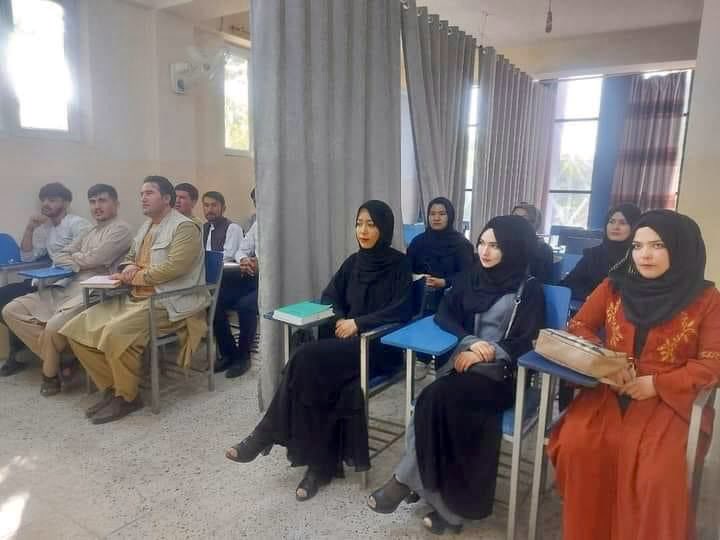
They’ve gone dark: Afghans who helped the U.S. military, trained as American-style journalists and rode the wave of women heading to higher education are destroying the diplomas, transcripts and résumés that prove how they built civil society in the country that the U.S. has left behind.
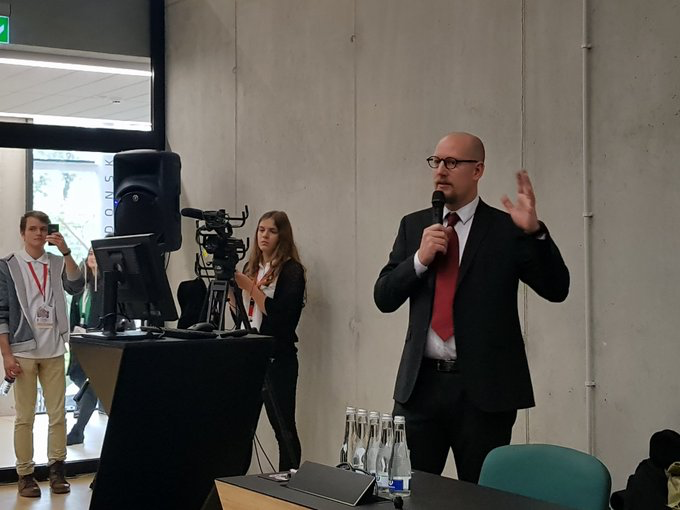
Media literacy speakers discuss sexting, soap dispensers and “standing up and being heard”
By Macy Quinn-Sears
GSS correspondent
KAUNAS, Lithuania — With more than four dozen presentations on Day 1 alone of the Feature Conference that opened Global Media and Information Literacy Week, ideas flew thick and fast. Here are snapshots of some of the speakers we heard.
Carl Heath, vice president of professional education, Research Institute of Sweden (RISE)
Heath centered his keynote address around the idea that industries that deal with communication, technology and the production of content are becoming influencers in an increasingly digital world. But as Heath showed, when it comes to using data, that’s not necessarily positive.
In one example, Heath discussed what have been dubbed “racist soap dispensers” — electronic soap dispensers tested to work only on white skin, and thus won’t dispense soap when someone with dark skin puts his or her hand under the sensor. Although this may seem like an innocent engineering error, it raises the question of what other designs are influenced by faulty or selective statistics.
“Data-driven structures are reproductions of law,” said Heath. “(If we) want to understand the next generation of media literacy, we need to understand what data actually drives it… ongoing advances in artificial intelligence and how we think about the developments.”
 Elizabeth Milovidov, consultant and coach, Council of Europe
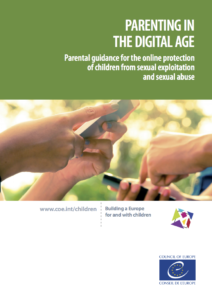
In her lightning-quick talk, Milovidov discussed her work on “Parenting in the Digital Age,” a handbook published in November 2017 and aimed at providing parents with tools to raise their children to be digitally responsible. The book details a child’s rights in a digital environment and how exactly those rights should be respected. With chapters on “sextortion” (sexual exploitation of children) and “sex-chatting,” the book tries to take parents into a digital age where toys and tech can fuse in sometimes terrifying ways. Milodov said that the council, which calls itself Europe’s leading human rights organization, felt it necessary to revise its child protection policies in order to “look at the tech of tomorrow.” Said Milodov: “We are putting things into the hands of children without thinking about the consequences.”
The handbook notes that critical thinking is one of the most important yet difficult skills to bring to parenting. But Milodov said she hopes that the handbook will help parents bring their children out of the digital world they live in — even if just for a short time.
 Sonia Livingstone, professor of social psychology, London School of Economics and Political Science
Livingstone’s approach to media literacy balanced negative and positive: “Media literacy feels a lot like startup culture,” she said, adding, “without the venture capitalists.” The implication is clear: Without investment, media literacy efforts are about as successful as a conversation over coffee.
But according to Livingston, the problem may be that media literacy education tends to blame the victim, and not the source of the disinformation that he or she takes in. Efforts to advocate for a kinder and gentler internet are beside the point, she said; instead, media literacy advocates should be much more emphatic about “standing up and being heard.” But she agreed that readers should hold media organizations accountable for sound policy, as not all news providers have adopted such policies for everyday use.

Related Posts