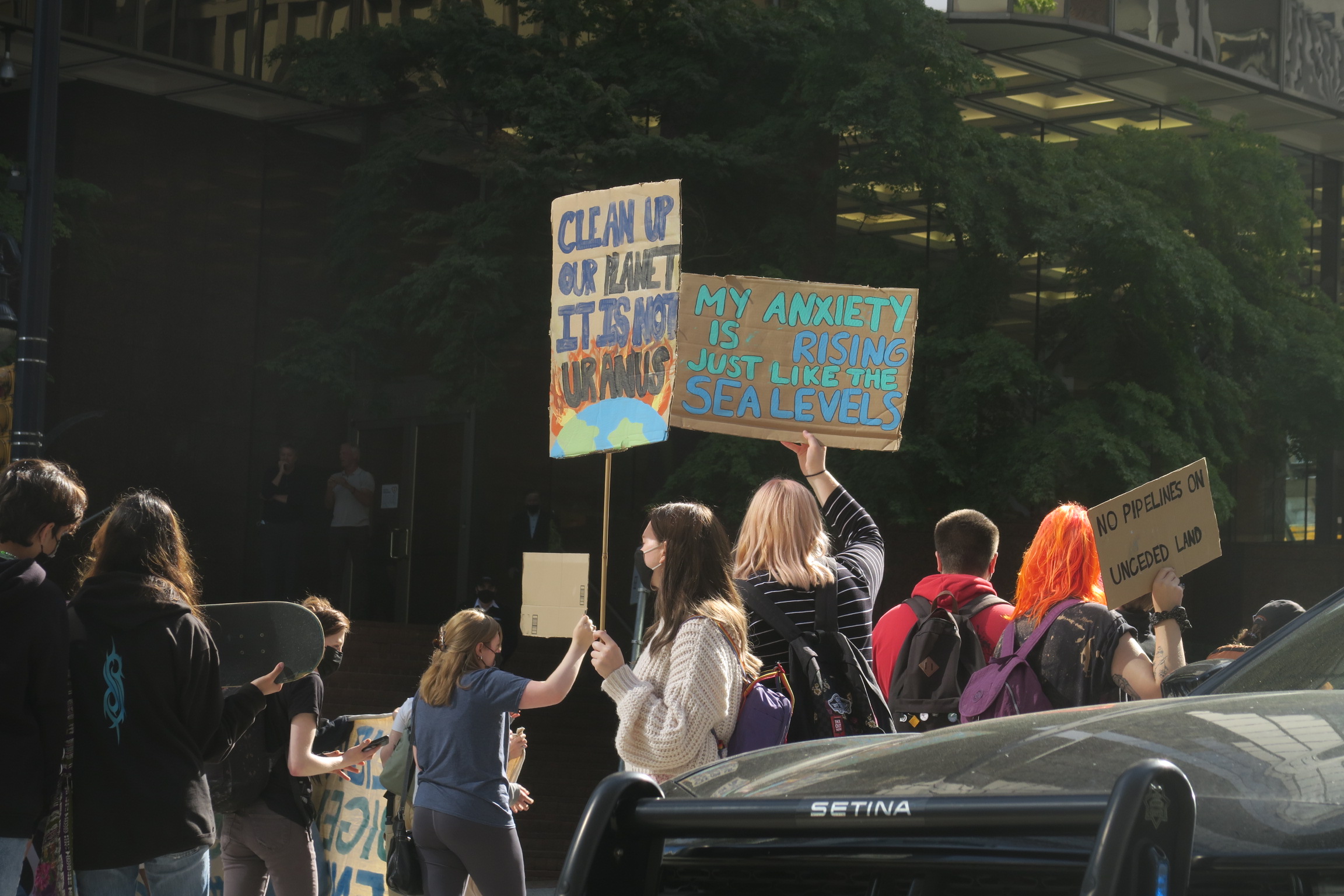
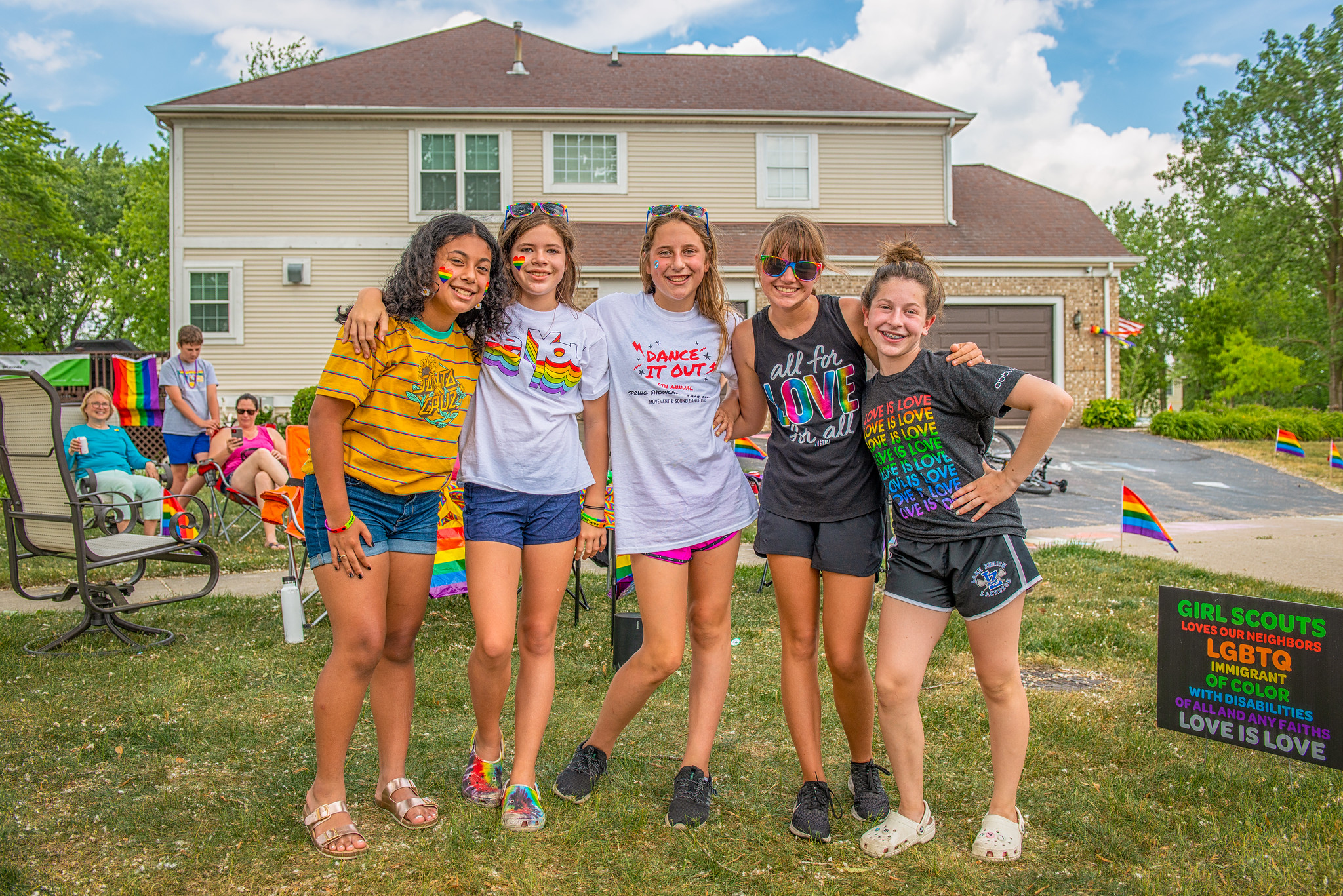
They’re back: Today’s Fridays for Future strike — the first in 18 months — will see youth activists taking to the streets again to push progress on solutions to climate change.
Here’s what you can do to raise awareness and seek solutions where you are.
UNESCO launches global media literacy week with concern over disinformation, elections and “lost generation” of youth
By Macy Quinn-Sears
GSS correspondent
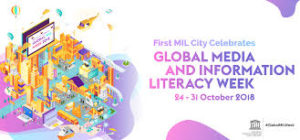 KAUNAS, Lithuania — UNESCO’s Global Media and Information Literacy Week kicked off today with keynote speakers, students and citizens talking about a world at war between truth and disinformation, changing everything from education and governance to the shape of tomorrow’s cities.
One speaker raised fears of “a lost generation” that doesn’t have the patience or the skill to process news, fake or otherwise.
 “Reading in complex texts is no longer considered interesting,” said Ineta Dabasinskiene, vice-rector for international relations at Vytautas Magnus University, site of the Global Media and Information (MIL) Literacy Week’s Feature Conference. “It is considered a waste of time.”
Lithuania’s own road from Soviet state to liberal democracy was a focus. This year also marks the 100th year of Lithuania’s establishment as an independent nation.
Until 1991, when Estonia, Lithuania and Latvia broke off from the Soviet Union, “we were living in an isolated, restricted, ideologically repressive space,” said Irena Vaisvilaite, ambassador and permanent delegate from Lithuania to UNESCO.
Now Lithuania is “fighting against disinformation as a political act,” she said.
Other speakers addressed the need for greater resources for teachers, parents and schools; for interventions aimed at cyberbullying and hate speech; and the need for media literacy as a way to help citizens engage with complex problems such as civic engagement and climate change.
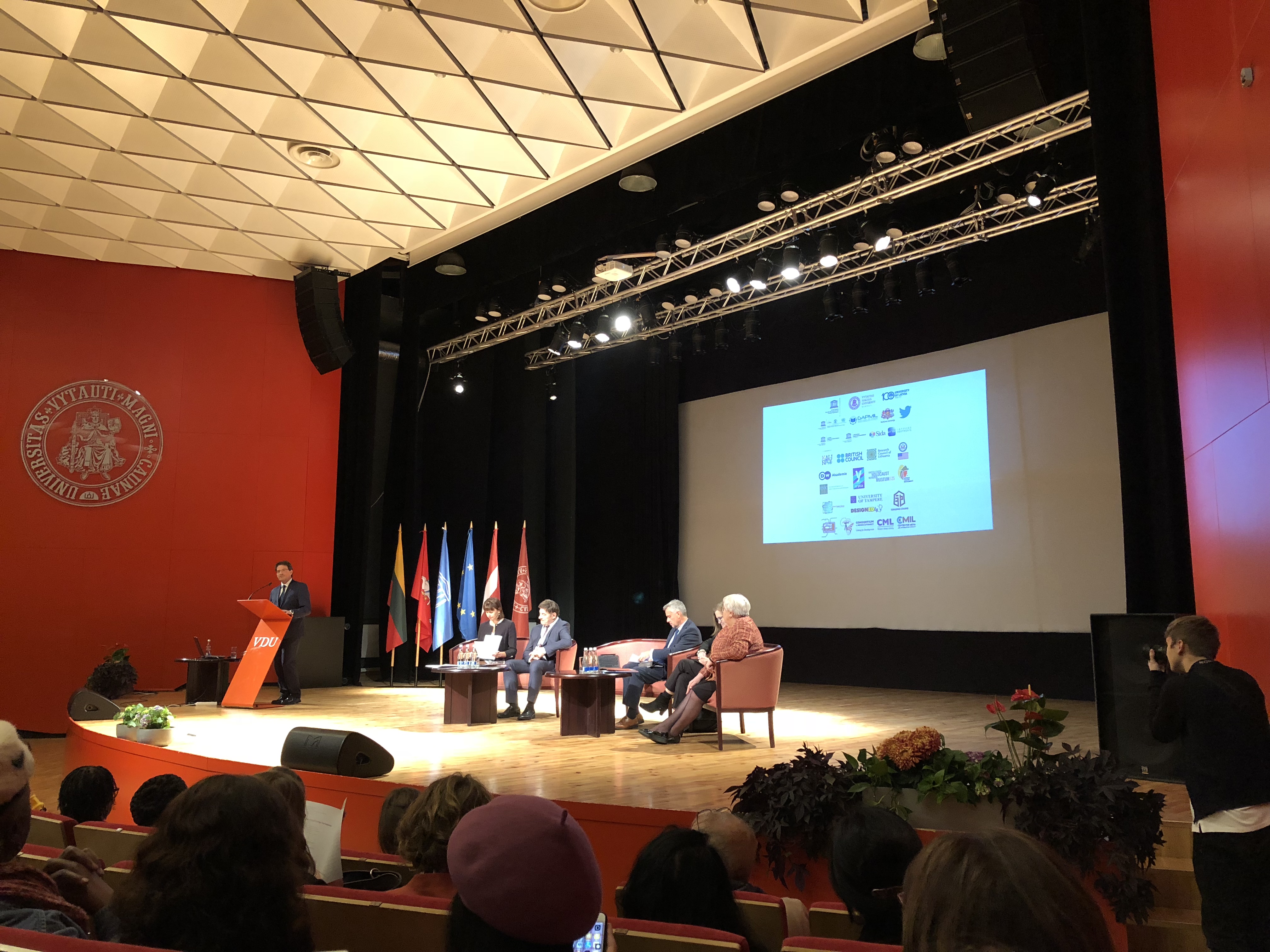
“Media literacy is literacy for life in the digital age,” said Moez Chakchouk, UNESCO Assistant Director-General for Communication and Information. “Smart cities supported by (artifical intelligence) … require smart, well-informed inhabitants, and (media and information literacy) is the key.”
Sifting through a sea of digital disinformation was a common theme, with several speakers voicing concerns about upcoming elections in the U.S. and in Europe and “armies of trolls” actively working to sway or even dupe voters.
“We hope our democracy will not be at stake because of people who are posting disinformation online,” said Anni Hellman, deputy head of Unit I4 of the European Commission’s Directorate-General for Communications Networks, Content and Technology (DG Connect).
Keynote speaker Divina Frau-Meigs, a professor at Sorbonne Nouvelle University, analyzed news feeds on Facebook and Russia’s Vkontakte platform and concluded that many of the stories that influence voters focus on “wedge topics” that “polarize societies,” such as refugees and religion.
“You can see some issues that we thought had been solved … are being pushed back to bring narratives of nostalgia, that the past was better than the present,” she said.
Complex as media literacy has become, there was a consensus that educators are on the front lines of what’s ahead.
“(In) my generation, we … learned that what we read is true,” said DG Connect’s Hellman.
“We were taught to read (books) and we learned them by heart. And I think it’s rather tragic that the children of today, first we teach them to read, and then we teach them, well, what you read, (that) may not be true.
“How do we make reading and learning essential, while at the same time we say, well, what you’re reading may not be true?”
Global MIL Week continues tomorrow in Kaunas and Friday with a Youth Forum in Riga, Latvia.
—Video by Maria Trinidad Giner Soler/European Youth Press. Reporting assistance by GSS editor Beatrice Motamedi.

Related Posts