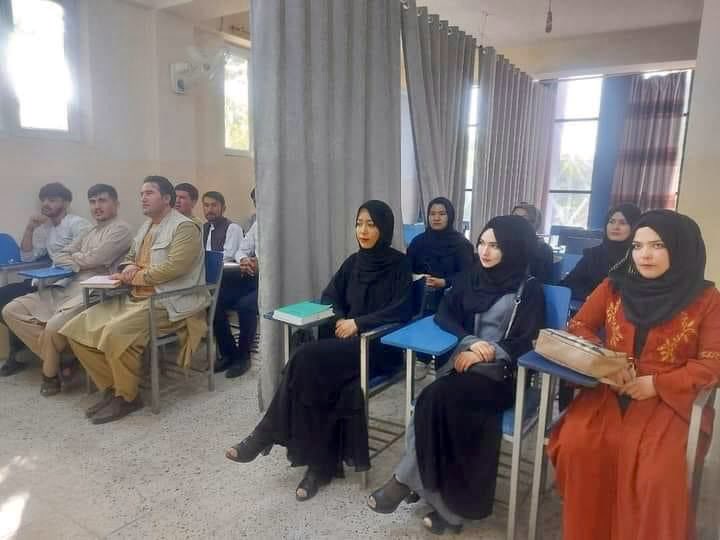
They’ve gone dark: Afghans who helped the U.S. military, trained as American-style journalists and rode the wave of women heading to higher education are destroying the diplomas, transcripts and résumés that prove how they built civil society in the country that the U.S. has left behind.
OPINION: Breaking the cycle of poverty in Africa requires education — for teachers, too
By Ana Madero
GSS Correspondent
PARIS — According to the World Factbook, slightly more than 1 billion people worldwide are illiterate. Too often, a lack of education has a direct link to poverty.
The organization Room to Read estimates that 171 million people would no longer live in poverty if every child had an education. Given this link, the best way to combat poverty is to target the global education crisis.
Working in a remote, poor village in the Kalahari desert of South Africa last summer showed me how large an impact education has on so many aspects of a community. The village I visited, called Ganap, has no indoor plumbing, no heating, and a substantial part of its population affected by HIV/AIDS.
However, unlike students in wealthier parts of the world, who often see education as a hassle, the children of Ganap were very eager to come to school.
On our last day, I sat with these children and asked them what their dream for South Africa is. In almost perfect unison, they responded, “I want the people of my country to be educated.” One boy stood up and said that once the people of South Africa were educated, the rest of their problems would go away.

There is no denying the global education epidemic, and the issue of utmost importance is education for young girls.
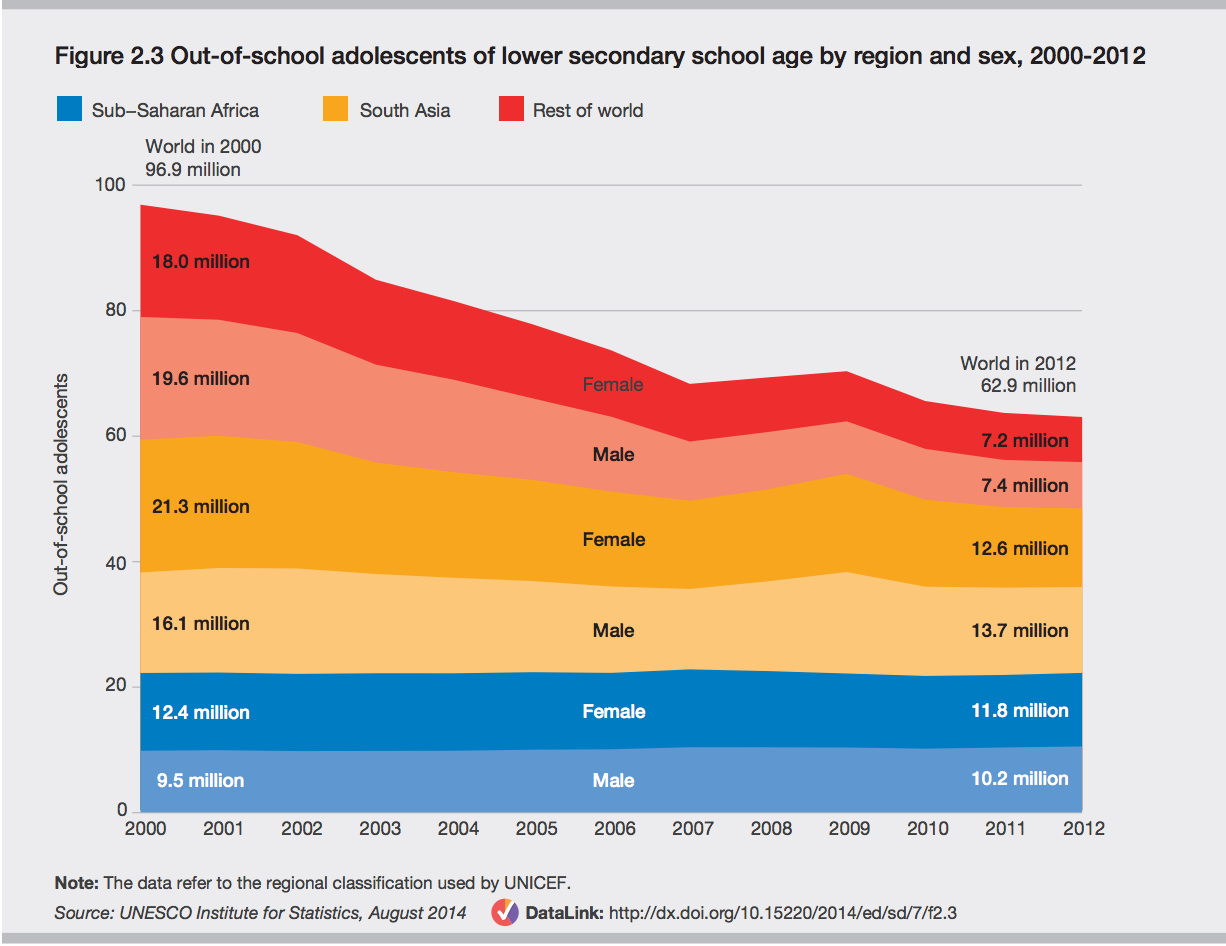
Girls’ education involves more than just literacy and poverty. Preventing a girl from becoming educated can increase her chances to suffer from disease and hunger, child labor and rape. UNICEF estimates that in 2013, 32 million girls who should be in primary or secondary school dropped out of school.
Gender equality in the education sector is an enormous problem. By 2015, less than 50 percent of countries will have achieved gender parity in education.
Educating a girl changes everything about her life: she is less likely to marry young and against her will, she is more likely to have fewer and healthier children, and perhaps most importantly, an educated woman will be more likely to encourage her children to pursue an education, thus breaking the cycle of poverty.
The problem for children all around the world, and the children I worked with, is that they do not have sufficient resources to improve their education standards. Although the kids of Ganap were eager to come to school, their school, like others in poor regions, was poorly built, the desks were falling apart, and their teachers are not well versed in the topics they are teaching.
I believe the best way to improve education is to focus on that last point — the teachers. If we can help more local teachers with their own professional development, they will be more encouraged to help the young learners of their communities. Once teachers have the knowledge to successfully support their students, the cycle of inadequate education can stop.
We do not have to spend large quantities of money sending people to these countries to replace the teachers in these communities. By sending outsiders to these communities, we are showing them that they do not have the power to change their own lives. Empowerment is such a large part of education, so we must instill those values from the very beginning. Instead of sending people to replace the teachers, we need to send people to coach the teachers.
If we want to reduce the percentage of people living under $2.50 a day — a number estimated by the World Bank to be as high as 50 percent of the global population — we have to start with education. We have to focus all our efforts on training teachers in the affected areas, not in some office miles away. Encouraging local teachers to become better educators would be the most cost-effective way to combat illiteracy and reduce poverty.
The kids I worked with in South Africa all wanted to become teachers. As one of the founders of the Kalahari Education Experience told me, “paint fades but an education lasts forever.” If we can motivate other young learners around the globe to become great teachers, we can end the education crisis.
 —Madero, a senior at the American School of Paris, served as editor-in-chief of Munificence, the student newspaper of the Paris Model UN conference from Feb. 13 to Feb. 15. Opinion columns published on GSS represent the views of the author only and not Global Student Square. Contact Madero at anmadero@asparis.fr.
Photo of Madero (left) by student Luigi Maruani/American School of Paris.

Related Posts