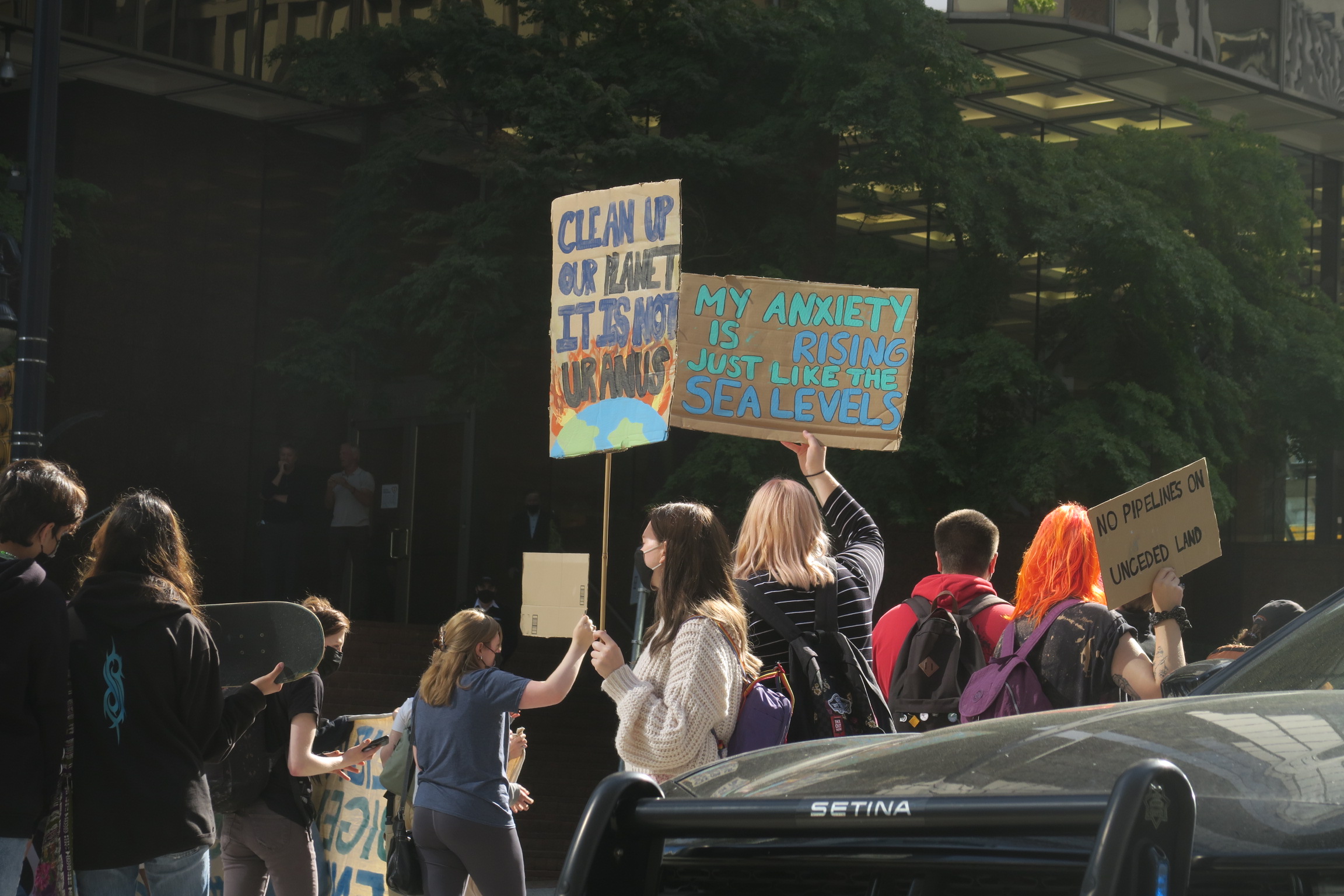
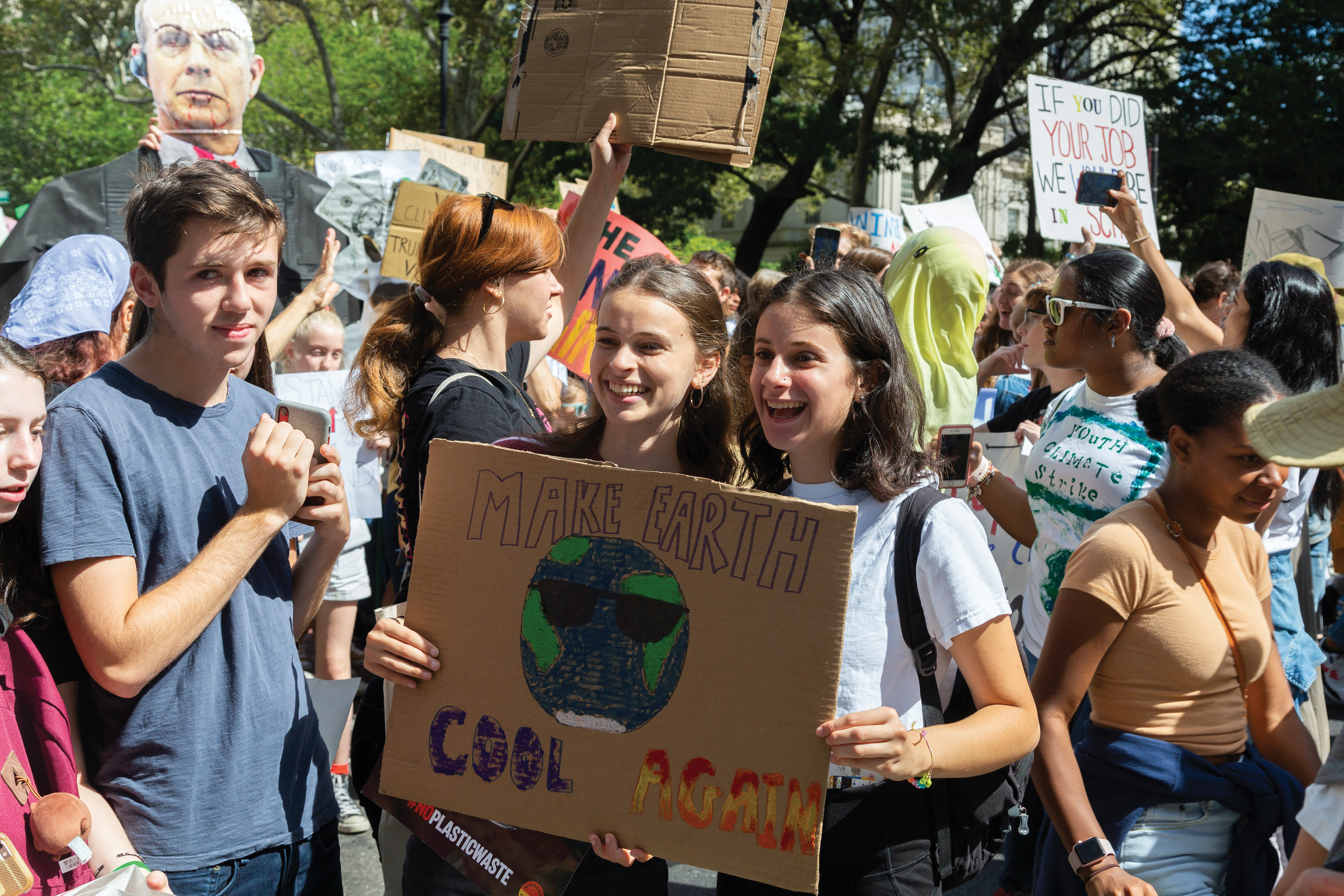
They’re back: Today’s Fridays for Future strike — the first in 18 months — will see youth activists taking to the streets again to push progress on solutions to climate change.
Here’s what you can do to raise awareness and seek solutions where you are.
“An Inconvenient Truth” more timely than ever
By Louis Grelot, GSS film critic
PARIS — “An Inconvenient Truth“ is an Academy Award-winning documentary released in 2006. Technically, it is a recording of a presentation by Al Gore, who lost the U.S. presidential election to George Bush in 2000. Gore’s talk focuses on the then-quite measurable risks of global warming.
What this short description doesn’t say is that “Truth” shakes every single one of its viewers to his/her core in what can only be described as a truly terrific and just as terrifying account of the truth about what we have done to our species to our own planet.
The craft of the film itself is quite straightforward — an intertwined story that includes a semi-biographical account of Al Gore and his crusade to communicate the reality of global warming to the world, and secondly, the way he lifts the veil on this scientific problem, namely, the power of PowerPoint.
Does it sound simple? It is, and the documentary makers appear to be aware of that simplicity, and are willing to go beyond it and focus on content.
This review is short, not just because “Truth” has been around for awhile but because the need to watch this film surpasses the simple act of reading about it. The only possible criticism the film could receive is that its one-and-a-half hour length will feel much longer than it is. But that is due to the sheer volume of information and knowledge that must be shared.
At a time when newer films such as Naomi Klein’s “This Changes Everything” are hitting the market and COP21 has grabbed the headlines, one might think that “An Inconvenient Truth” is outdated.
Not so. It presents, with simplicity and with unparalleled efficiency, the issue whose consequences — if we ignore them — will affect every single one of us as a member of the human species.
Despite being nearly a decade old now, there is surely no better film than “An Inconvenient Truth” to explain those stakes.
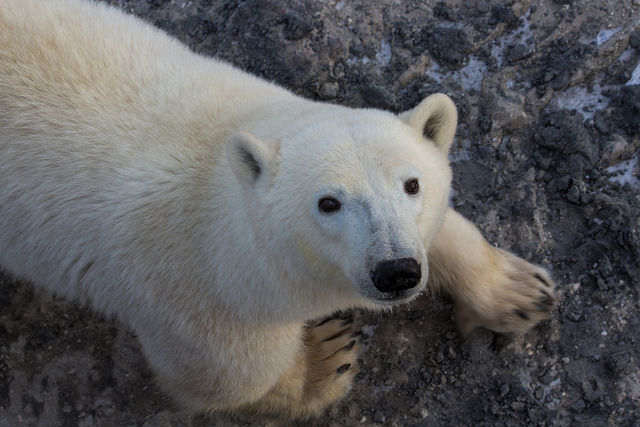
Photo: Wild polar bear in Canada’s Hudson Bay. Concerns over global warming and thinning ice have led researchers to study polar bear populations and habitats around the globe. Photo by Alex Berger/Creative Commons 2.0 at Flickr.com.
—Louis Grelot is a senior at the American School of Paris. Email Louis at logrelot@asparis.fr.

Related Posts