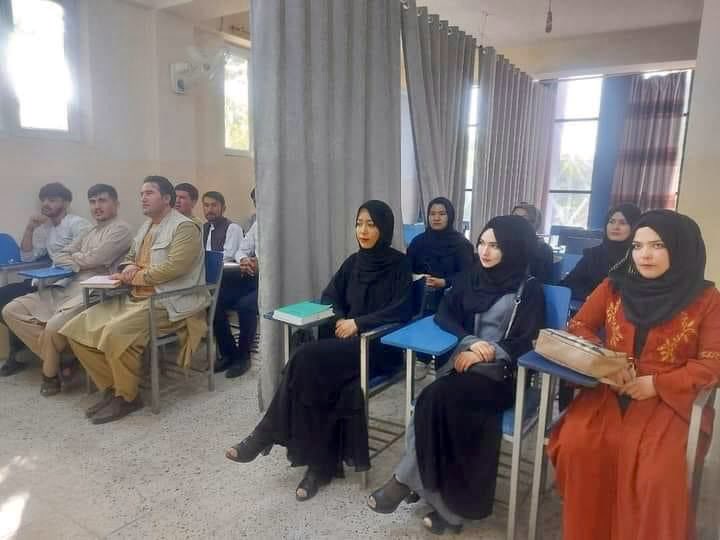
They’ve gone dark: Afghans who helped the U.S. military, trained as American-style journalists and rode the wave of women heading to higher education are destroying the diplomas, transcripts and résumés that prove how they built civil society in the country that the U.S. has left behind.

Skating into the future: The growing sports scene in Nanjing
By Tianshuo He, Siyuan Liu, Yujun Wang, Xiaofan Zang, Hanyong Zheng, Yiwei Xu and Haoze Zhu, Nanjing Foreign Language School
NANJING, China — The crowd cheered on July 8 as China’s Zhang Shuai struck the final shot, defeating Dayana Yastremska in a three-set match, 6-4, 1-6, 6-2, and earning her first-ever position in the quarterfinals at the 2019 Wimbledon tennis championships.
The next day, Zhang would lose to Romania’s Simona Halep in two sets, 7-6(4), 6-1. Yet back in China, her performance was considered a success.
Once thought an exclusive Western sport, tennis has grown in popularity among the Chinese public in recent years. Thanks to retired tennis star Li Na’s legendary career including two grand slam titles, Chinese people are discovering a once-neglected sport and hitting local tennis courts.
In Nanjing, it’s becoming increasingly difficult to find a place to play, especially on weekends. Players often need to reserve a court three days ahead of time, according to Annie Sang, a tennis player who has weekly lessons.
“Tennis is my life, I come here every Sunday morning,” said a man who gave his name as Zhang, a gentleman who plays on court one at Nanjing Olympic Center every Sunday morning. He noted that “the courts are free in the morning and we have so much fun participating in this sport.”
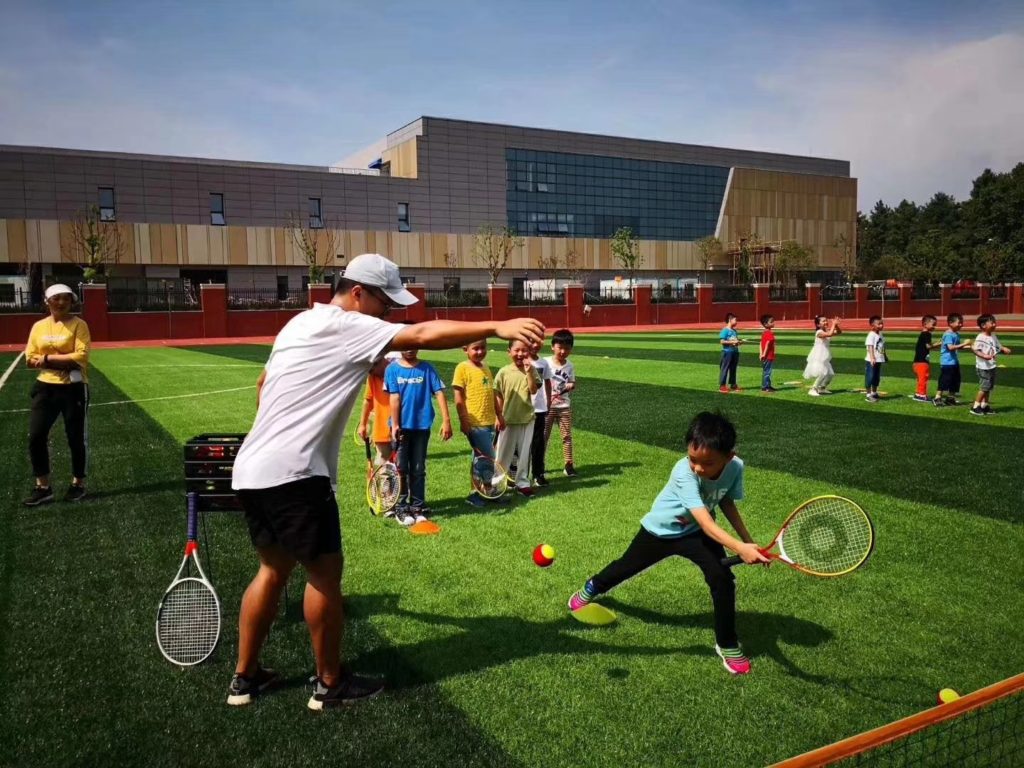
On a recent visit, a group of children could be seen not far from court one, beginning first tennis lesson. With the coach tossing the tennis balls at the service line, the children were giving their best effort to swing the heavy racket in hopes that theirs shots would go over the net. Parents shouted encouragement while the children competed to knock down colored cones.
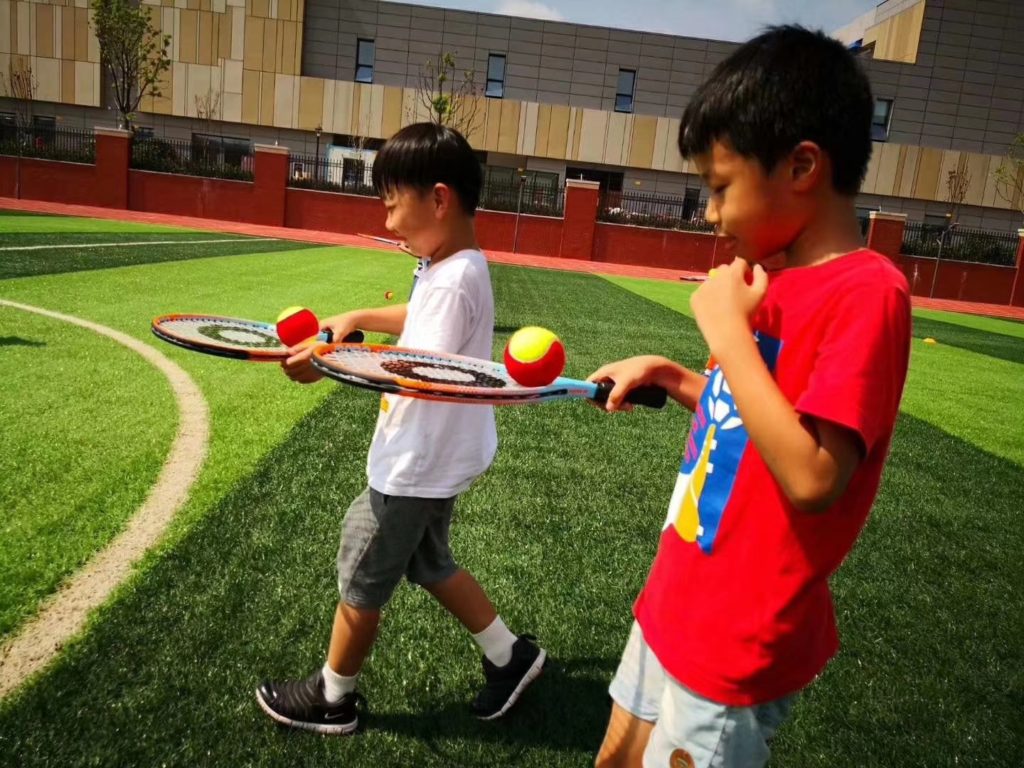
According to a China Market & Media Survey report, the number of people participating in tennis has increased by over 400% in the last five years and the number is expected to reach 40 million by the year 2020. (Editor’s note: Shenzhen hosted the 2019 Women’s Tennis Association finals at the Shenzhen Bay Sports Center from Oct. 27 to Nov. 3. It was Shenzhen’s first time as host city.)
Jack Guo, one of the boys playing in the monthly tennis tournament hosted by the Olympic Center, said that he first learned about the sport by watching Li competing in the French Open final in 2011, where she won one of her two grand slam titles. Guo was intrigued by the intensity of the game, along with the immense physical strength and powerful mindset required to succeed. As a result, he has been training at Nanjing Olympic Center twice a week ever since.
Many players at the center have similar stories. They learned about tennis by watching national stars and were inspired to get involved. As more people like Guo join the sport, more talented professional Chinese players are likely to appear and drive tennis forward.
Studying abroad, bringing baseball back
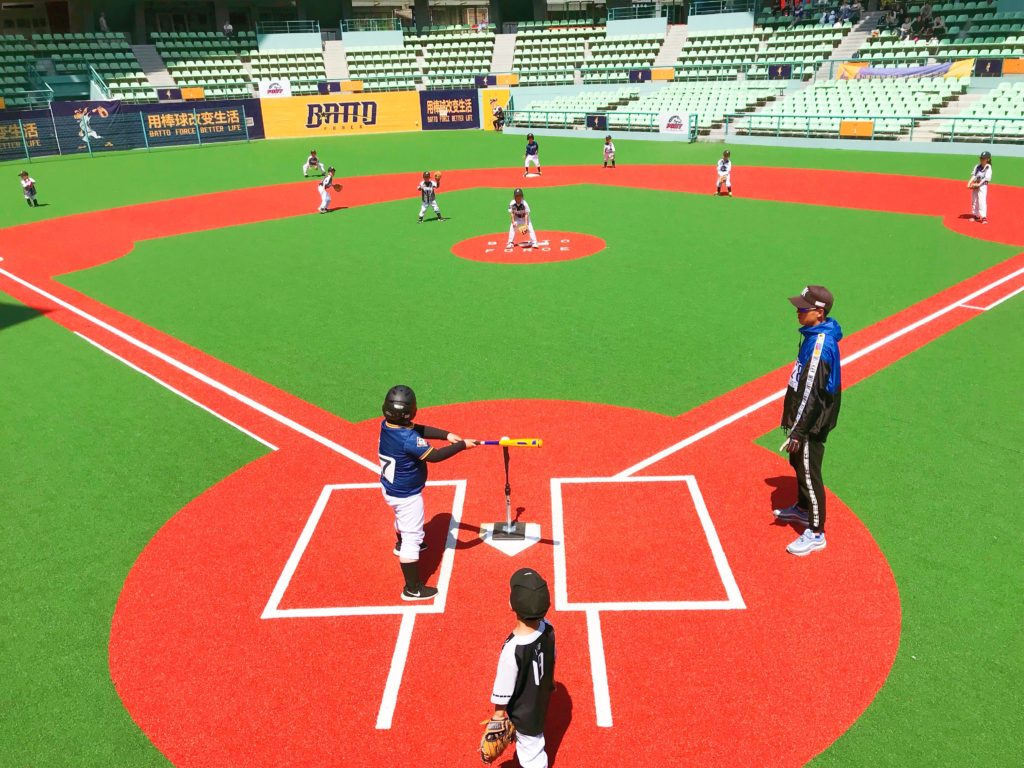
Unlike tennis, China’s national baseball team was never one to come out on top. However, participation in baseball is growing rapidly. In Nanjing, schools such as Jingling Hexi Middle school and Eton Primary School and kindergartens are collaborating with baseball clubs to establish clubs for their students.
“People from all walks of life are getting the chance to experience and enjoy baseball,” said Zhu Ye, spokeswoman of Batto Force, a baseball club in Nanjing. “But more importantly, people’s views are changing. In cities like Shanghai, which are more internationally in touch with the rest of the world, (residents) are comparatively more open-minded (and) therefore more inclined to try out various sports.”
Asked if baseball will continue to gain popularity, Zhu nodded.
“Being more open-minded means that parents have more likelihood of encouraging their children to try activities that were originally unfamiliar,” she said. “It also means that more students study abroad, where they grow into the habit of playing sports like baseball.
“Many of (them) will continue to do so when they return to their native country — China,” Zhu predicted.
Skating towards a goal
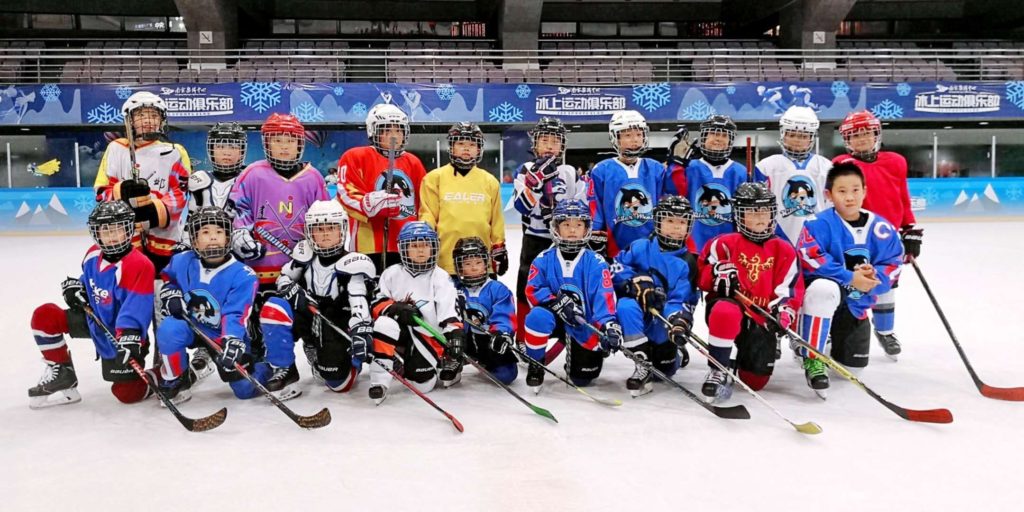
Thanks to Beijing’s plans to host the 2022 Winter Olympics, ice hockey is gaining attention. A sport known for sometimes violent physical contact, until recently hockey has been on the sidelines in Chinese sports. Since its first Olympic appearance back in 1920, the Chinese national team has appeared only rarely.
In recent years, however, the establishment of new hockey facilities, the introduction of summer hockey camps and collaborations withschools have built interest in this North American sport.
Constructed for the Tenth National Sports Meeting in 2005, the ice rink in Nanjing Olympic Center is now open to the public and serves a series of winter sports, including ice hockey. As the only standard-sized arena in Nanjing, the center regularly cooperates with several local schools, including two nearby middle schools. Five teams have been formed, three of which competed in the National Ice Hockey Tournament this year, representing Nanjing.
“I believe that it is necessary to encourage people to try new sports,” said Yuan Jun, director of the hockey club at Nanjing Olympic Center. “I think only by being good at different sports, can we truly be a strong sporting nation.”
“I’m trying to work with surrounding elementary and middle schools,” Yuan added. “The next step is to see if we can create a school hockey league.”
While China has taken huge strides in strengthening participation in team sports, it still has a long way to go if it wants to compete at the highest levels on the global stage.
But as hockey icon Wayne Gretzky once said, athletes aim for the future, not the past: “I skate to where the puck is going to be, not to where it has been.”
—This story was reported and written by students who participated in JEA China‘s 2019 Youth Observation Contest, where it received a superior rating. It has been edited for publication by Global Student Square and is published with permission.

Related Posts