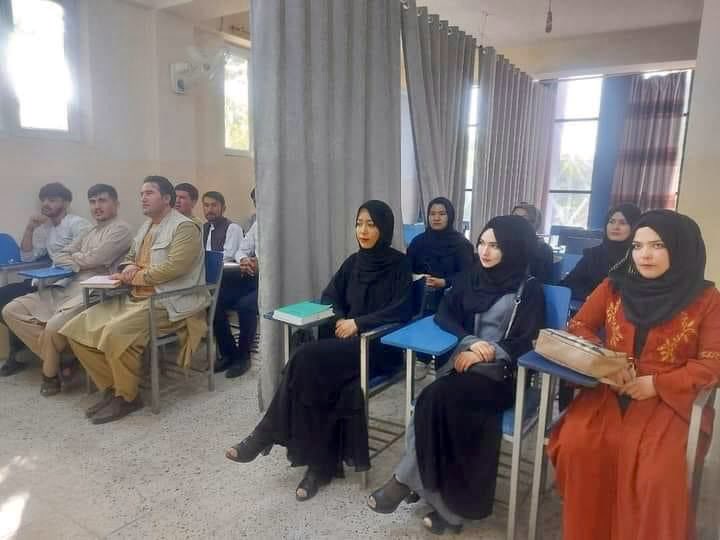
They’ve gone dark: Afghans who helped the U.S. military, trained as American-style journalists and rode the wave of women heading to higher education are destroying the diplomas, transcripts and résumés that prove how they built civil society in the country that the U.S. has left behind.
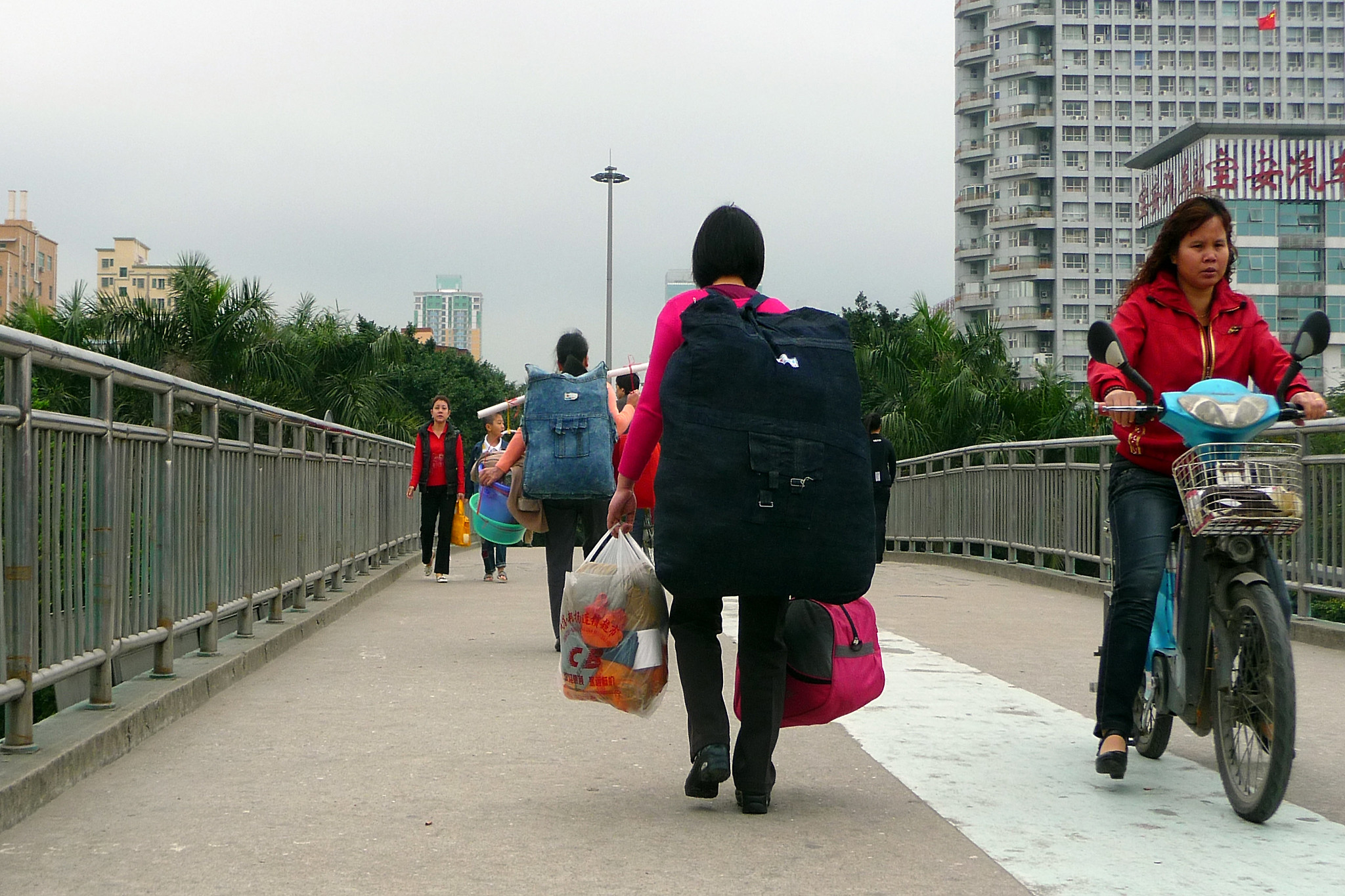
A floating life: The migrant workers of Zhonghuayuan
By Hao Yang, Hongxuan Huang, Tianwei Lin, Shengxiang Jin, Hao Xu, Siruo Wang, Lu Chen and Wuxi Jia, Kang Chiao International School, East China Campus
KUNSHAN, Jiangsu Province — It was a Sunday morning in March in the Zhonghuayuan residential quarter of this city west of Shanghai. A hunchbacked landlady guided student reporters up to the sixth floor of a decades-old building.
“Most migrant workers don’t stay long; some (are) just (here) for a weekend,” she said.
Standing in the doorway, we reporters could see six dwelling compartments crammed in a space equivalent to two apartments.
Light bulbs and exposed wires hung from the ceiling. A strong odor emitting from the only public bathroom penetrated the hallway.
Doing her management job as always, the landlady knocked on doors and shouted at tenants. Behind one rusty door came an answer.
“Come on! What’s going on there?” the man muttered with a shivery voice. “I haven’t gotten up yet! I told you I’d find a job tomorrow!”
The landlady didn’t show any empathy. “You’re supposed to move out immediately!” she yelled. She opened the door, trying to make it clear that the man could no longer stay in the space.
Inside the tiny room, there was an L-shaped space filled by a single bed.
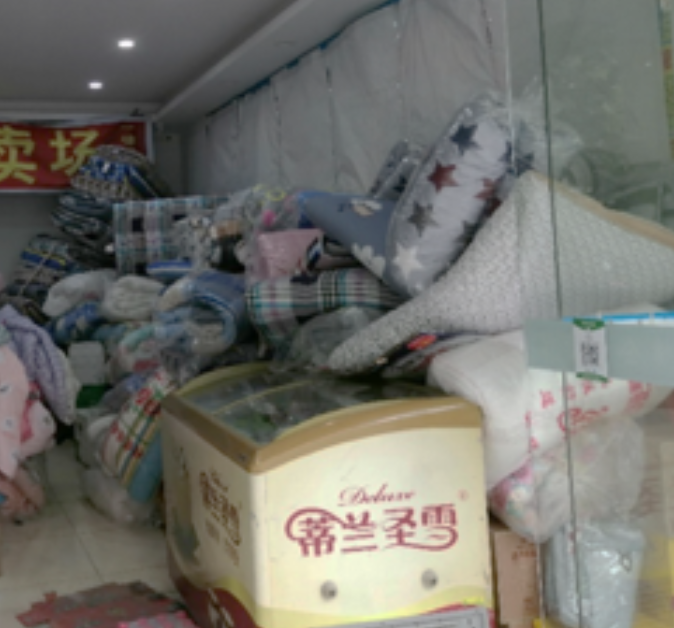
The man owned nearly nothing; even the pillow belonged to the landlady. The window was not larger than a piece of ordinary letter paper. The iron bars outside the window hindered ventilation, making the room damp and musty. In one corner, there was a huge red-and-blue striped plastic bag loaded with the man’s belongings.
It seemed he had already anticipated an unknown journey after losing this shelter, where he could temporarily hide from the sizzling sun and stormy rain.
Migrant workers and their communities in Kunshan
Incidents like this may not be strange to migrant workers within China. In China, migrant workers often are young people leaving their hometowns and hoping to find good jobs in cities.
Kunshan, where this incident took place, is a manufacturing hub in the promising Yangtze River Delta and one of the destinations for workers from rural areas of China. From our survey, most laborers in Kunshan come from nearby relatively poor towns. Most of them are recruited as workers at assembly lines in factories in Kunshan’s industrial zones.
Kunshan Industrial Zone, situated between Suzhou and Shanghai in the Yangtze River Delta, was established by the government in 1984 to drive local economic growth. The accessibility to considerable low-cost labor, an excellent geographical location, loose regulations on pollution discharge and a large Chinese market have attracted a huge amount of overseas investment. Industries in Kunshan are mostly labor-intensive electronics manufacturing and assembly, which require a large amount of workers. As a result, Kunshan city has seen a rise in its population of migrant workers.
Many reasons drive migrant workers to Kunshan. Interviews with workers showed that some consider Kunshan to be a hub for manufacturing job opportunities, while others think it is a way to get away from their families and hometowns and earn a living. In Kunshan, labor resource institutions help migrant workers find jobs and connect with employers.
However, what some workers called the
But migrating to the next job is risky. “This job does not need an ID card, and you can get your job right away today,” said another human resources agent who showed off the latest local job opportunities. But when we asked about job insurance, she shook her head.
“Laborers are qualified to have insurance only if they have job contracts of more than two months from an employer, which means only long-term contracted workers are able to be insured,” she said. Most workers living in Zhonghuayuan, especially those working for high-risk manufacturers, still lack some crucial labor rights.
A migrant worker profiled
Xu Wenhao, 26, emigrated from Anhui province in east China, but he lives in Zhonghuayuan now. With help from a job agency, Xu found a job at an assembly line and settled down in Kunshan. His story shows the unpleasant reality of the working environment in Kunshan’s industrial zone, especially for assembly line workers.

Jobs in Kunshan’s industrial zones are labor-intensive; manufacturing work is stressful and repetitive, and the wages are sometimes lower than job descriptions. Labor conditions in the industrial zones are thought to be detrimental to the mental health of workers.
Apart from his working environment, Xu’s living conditions also are unsatisfactory to him. He lives alone, without the company of any friends. He is still not accustomed to the local food. His accommodation is a 15-meter-square room without a private bathroom. The only entertainment he has, in his scarce free time, is video games on his phone.
Despite the poor living conditions, Xu always reminds himself that “I came for earnings. I can’t just hide from challenges.”
Xu added that environmental protections, which have become part of national industrial policies, have become a requirement for manufacturers. As the cost of running factories rises, it is less likely that profits will be redistributed to workers, Xu said. Due to increasing operational costs, there might also be fewer factories and less demand for labor. Such a change could lead to a subsequent crisis of large-scale unemployment, making it harder for workers like Xu.
Dreaming about a better future
Communities for migrant workers are not permanent homes. When it comes to their planning for future careers and lives, most migrant workers still dream that they can get better living conditions, run their own businesses, and ultimately achieve an ideal lifestyle.
Lin Yuhao, 28, a worker at an assembly line, plans to start her own barbershop business with skills she acquired in her apprentice days. Running a barbershop, she believes, would be a dream job that has more time flexibility and could ensure her a better quality of life.
While jobs in Kunshan’s industrial zone offers double the wages that migrant workers could earn back home, the labor-intensive, low-skilled jobs limit how competitive they can be. Workers doing repetitive work such as assembling laptops can be replaced with any newcomers. What’s more, living costs account for most of their salaries, which hinders them from achieving goals.
Kuo Chiahsin, 27, has lived in Zhonghuayuan for three years and hopes to open a small restaurant in Kunshan. Although Kuo earns 5,000 RMB ($706 USD as of Oct. 19) monthly, she usually
Sighing deeply, she said that saving money to start a restaurant is very difficult.
The way forward
According to a 2018 report by the National Bureau of Statistics of China, there are about 288 million people categorized as migrant workers in China. These workers are powerless and usually have no choice but to adapt to
Over the past few years, the government has gradually improved
“All illegal job agencies near Zhonghuayuan have vanished or at least moved elsewhere in April last year,” a local grocery owner confirmed, adding that “such a change sounds great to workers because illegal (employers) will no longer take half of their salaries, and workers are no longer subject to unlawful and unstable short-contract jobs.”
When will the floating life of Zhonghuayuan’s migrant workers end? This is unanswerable. All they can do is keep floating, count on their youth, and believe that tomorrow will be a better day.
—This story was reported and written by students who participated in JEA China‘s 2019 Youth Observation Contest, where it received a superior rating. It has been edited for publication by Global Student Square and is published with permission.

Related Posts