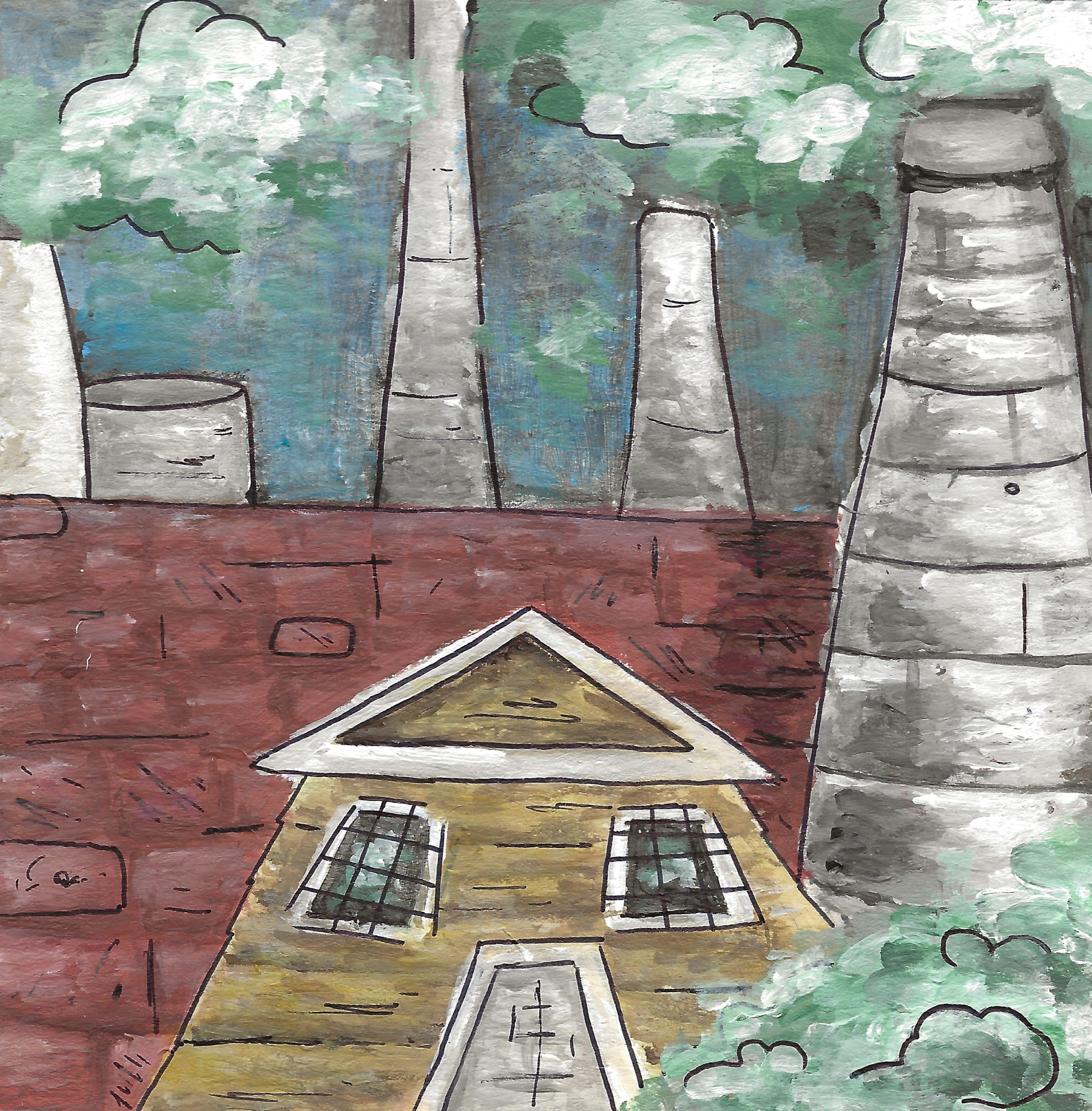
While climate change can seem overwhelming, everyday efforts can make an impact in a way that’s just as effective as a #ClimateStrike. Here’s how.
Living on the edge of the megacity: The female migrant workers of Shenzhen
By Zhang Hanyue, Shang Siyu, Zhuang Min and Liang Xinyue, Shenzhen College of International Education
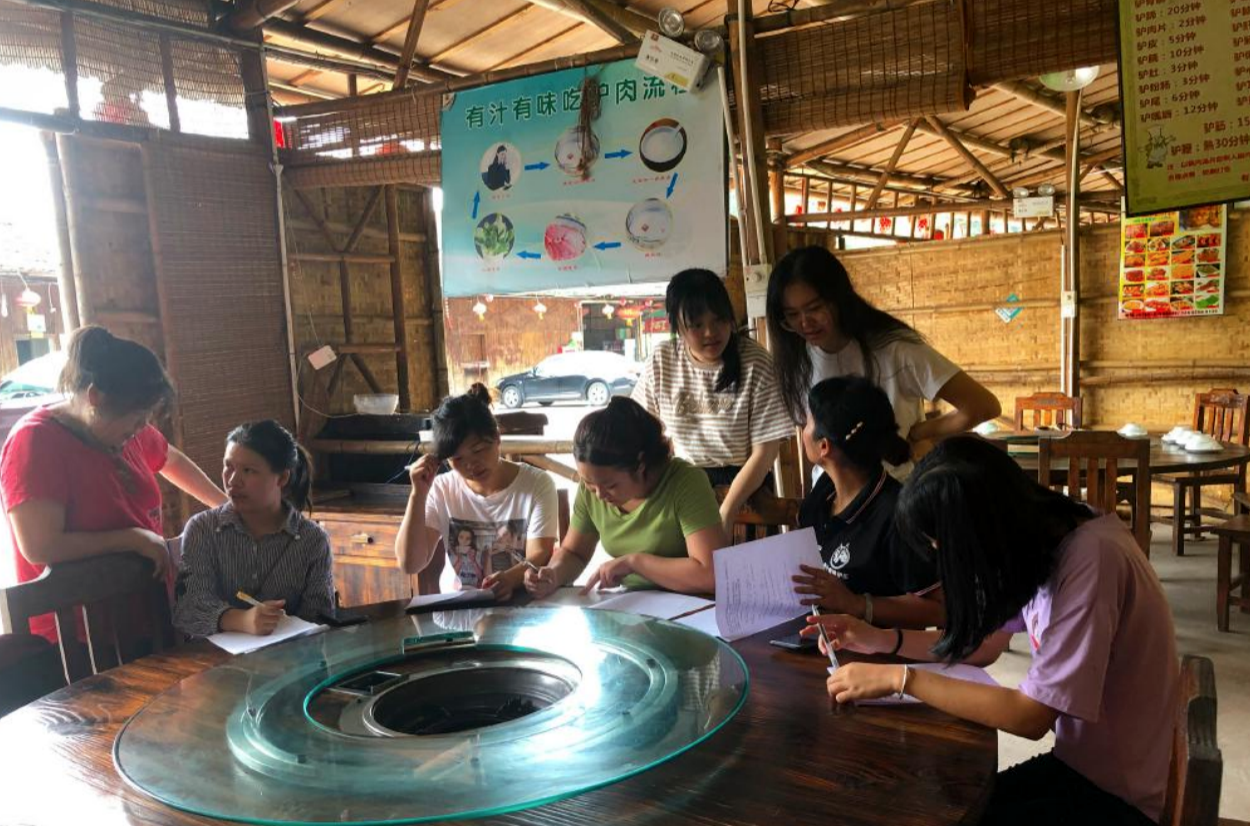
SHENZHEN, China — When the dawn fades and sunshine spreads across hills and lakes, including the Donkey Hotpot restaurant located in a Shenzhen suburb, dozens of migrant workers start getting up at dormitories provided by their bosses.
Women who work at the Donkey Hotpot — whose name indicates that it does indeed specialize in donkey meat dishes, a popular protein in China — typically serve as waitresses, clean the floors and arrange tables and seats.
“Most of us come from Sichuan and Hunan,” said a waitress named Hong, referring to the two provinces adjacent to Guangdong. “Our boss is from Sichuan, too. The working hours are pretty unsure. Sometimes we have to stay up till midnight when customers keep staying here having ‘yexiao’ (a late night snack), but we have no other choice.”
“We have no high-level academic qualification(s),” added Hong, who like many interviewed in this article asked to be identified by her last name only.
“Most of us have come to Shenzhen for at least three years and manual labour is probably the only thing we can do. Positions like managers are out of the reach of our hands and are the exclusive province of the (local residents),” Hong said.
In Shenzhen, a high-tech industrial hub that is one of the fastest growing cities in China, millions of female migrant workers silently go about their work, women who travel mostly from rural areas of China to Shenzhen seeking jobs and opportunities.
However, they rarely interact with the local population. Another reason for separation is that the migrant workers don’t possess a Shenzhen “hukou,” a household registration record that officially identifies a person as a resident of an area and includes benefits based on his or her residency status.
But it is these workers who are the foundation of Shenzhen’s growth as a city. Questionnaires and in-depth interviews with 17 female migrant workers in three different workplaces showed economic divisions between migrants and others in Shenzhen.
What can be the cause?
“We don’t expect that much”
In interviews, workers at the Donkey Hotpot restaurant admitted that they never thought about promotions. Having a stable monthly income is all they dare to hope for; plans such as buying a flat seldom are mentioned.
“Our income is too low,” Hong said. “We don’t expect that much.”
Nearly every worker interviewed said that staying in Shenzhen is better than in their hometowns, where many suffered from poverty.
However, a monthly salary of approximately 3,500 RMB (approximately $495 as of Oct. 29) isn’t enough for luxuries in Shenzhen. In fact, rather than visiting the city center when they have time off, they prefer to dance in the park near their dormitory, where workers gather.
In one of the world’s busiest cities, these workers have no access to metropolitan life. They exist in the periphery of the megacity.
Making ends meet
Thirty kilometers away, in the city center of Shenzhen, another group of migrant workers were interviewed at the Sichuan Building, a three-star hotel that serves Chuan cuisine.
Ten migrant workers introduced themselves. All of them had come from Sichuan to work in Shenzhen for an average of seven years, with most of them earning between 3,500 RMB and 5,000 RMB ($707) per month as managers in the hotel service industry.
“There are just a lot of pressure(s) (to) living here,” said an employee named Zhang. “Everything is so expensive. We can hardly afford the rents. Buying an apartment here is an impossible dream for us. You see, we cannot even save any money after spending on commodities every month.”
Zhang is not the only one who complained about the high costs of living among the group. Others said they live in the dormitory to save the cost of renting an apartment. Though workers said they were satisfied with their jobs, daily expenses can eat up 70% or more of their monthly income.
Life becomes even tougher with children. For three of the workers whose children also live in Shenzhen, the issue is public school.
By government policy, unless a child has a Shenzhen hukou, he or she must earn “credits” in order to study at a free public school. Credits are based on the length of time that parents have paid into the government’s social security system, and on whether or not the student is the family’s only child. It is difficult to obtain a place at a public school simply by saving up credits.
Private schools can be an alternative, but high tuition fees are a heavy burden given the migrant workers’ meager income.
“I have two kids, and the interest-orientated classes for them, like playing musical instruments or drawing outside of school, almost cost all my salary,” said Lai, 37, who declined to give a full name but is a trade union representative and manager of the Sichuan Building’s cafeteria.
“We can either sell (everything we own) to afford tuition costs for private schools, or wait and pray for good luck,” Lai said.
Creating “a true home” in Shenzhen
Workers earning higher salaries at companies offering more skilled work still have trouble creating a home in Shenzhen.
Five migrant workers at INONE — a technology company in Shenzhen that says it invests $15 million annually “for (research and development) input” and employs 2,500 salespeople in 24 countries — described their high-skilled jobs, from designing mobile application to managing human resources.
Yet most of the interviewees feared they might be excluded by the “xenophobic” locals because they are migrants. Local landlords sometimes impose higher rents on migrants, making it even harder for them to integrate with others.
Buying a house and having a sense of belonging are difficult. “Having a home here? Well, we just cannot afford the skyrocketing price of buying our own apartment,” said Lee, 39, an engineer and head of a design department. Like other workers, she declined to give her full name, citing privacy reasons.
“According to the Chinese traditions, if we don’t have our own house here, we don’t have a true home here,” Lee said.
As a result of feeling excluded by the local residents, the migrant workers then set up their own “exclusive” community as well where most of them interact with people from the same hometown or similar background.
“We have our own community and seldom interact with the natives,” said Wong, 27, a clerk in the human resources department, adding that a local park “is the place where we can socialize and seek companionship.”
Since most of the migrant workers come from poor family backgrounds compared with local residents or people who have academic degrees and study abroad, they are not the target group that is favored by Shenzhen government and receives a higher level of government benefits. The 17 workers interviewed claimed that government benefits for healthcare, education and housing rents were inferior compared to those received by local residents. Thus female migrant workers in Shenzhen describe life as a struggle, including loneliness and homesickness instead of a sense of belonging.
But help from the government could offer hope, for instance, by ensuring that migrant workers who receive low salaries get housing, health insurance and other economic subsidies. In this way, female migrants could enjoy a better quality of life in the vigorously developing city of Shenzhen.
—This story was reported and written by students who participated in JEA China‘s 2019 Youth Observation Contest, where it received a superior rating. It has been edited for publication by Global Student Square and is published with permission. Student Zhang Hanyue of Shenzhen College of International Education provided additional research and factchecking.

Related Posts