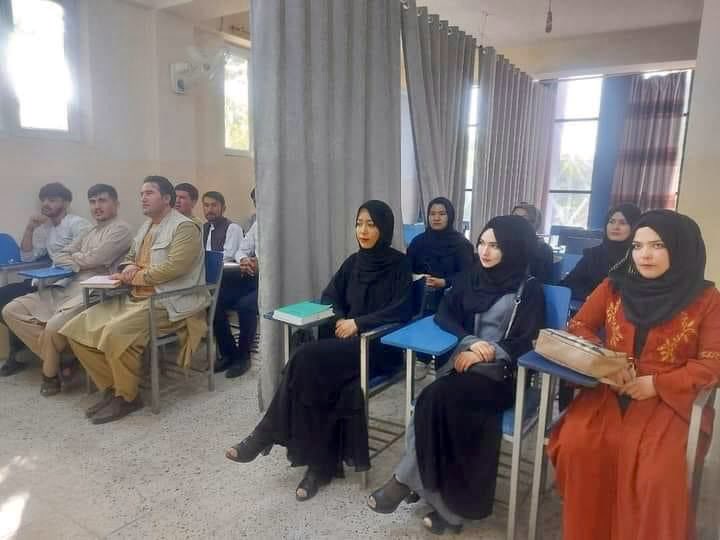
They’ve gone dark: Afghans who helped the U.S. military, trained as American-style journalists and rode the wave of women heading to higher education are destroying the diplomas, transcripts and résumés that prove how they built civil society in the country that the U.S. has left behind.
My (short) life as an election judge
By Margaret Redfern
Newsroom by the Bay Now 2020
STEAMBOAT SPRINGS, Colorado — Election Day (and night) found most of America glued to cable television, doom scrolling on phones, attending Zoom parties or maybe even hiding under the bedcovers as races were loudly called, predicted and contested. Controversies, scandals and lawsuits erupted, especially in swing or flipped states with razor-thin margins such as Georgia, Pennsylvania and Wisconsin. Red, blue or somewhere in between, you likely spent the day and night in a state of frenzied anxiety.
But for me, a first-time election judge in Routt County in northwestern Colorado, Election Day was … blessedly boring. It was hour upon hour of slow, silent civic homework. With my co-judges, I spent my time quietly checking ID numbers, scanning cards into the voter database and doing it all over again for the next person. True, it was for an important cause. But the work itself was anything but glamorous.
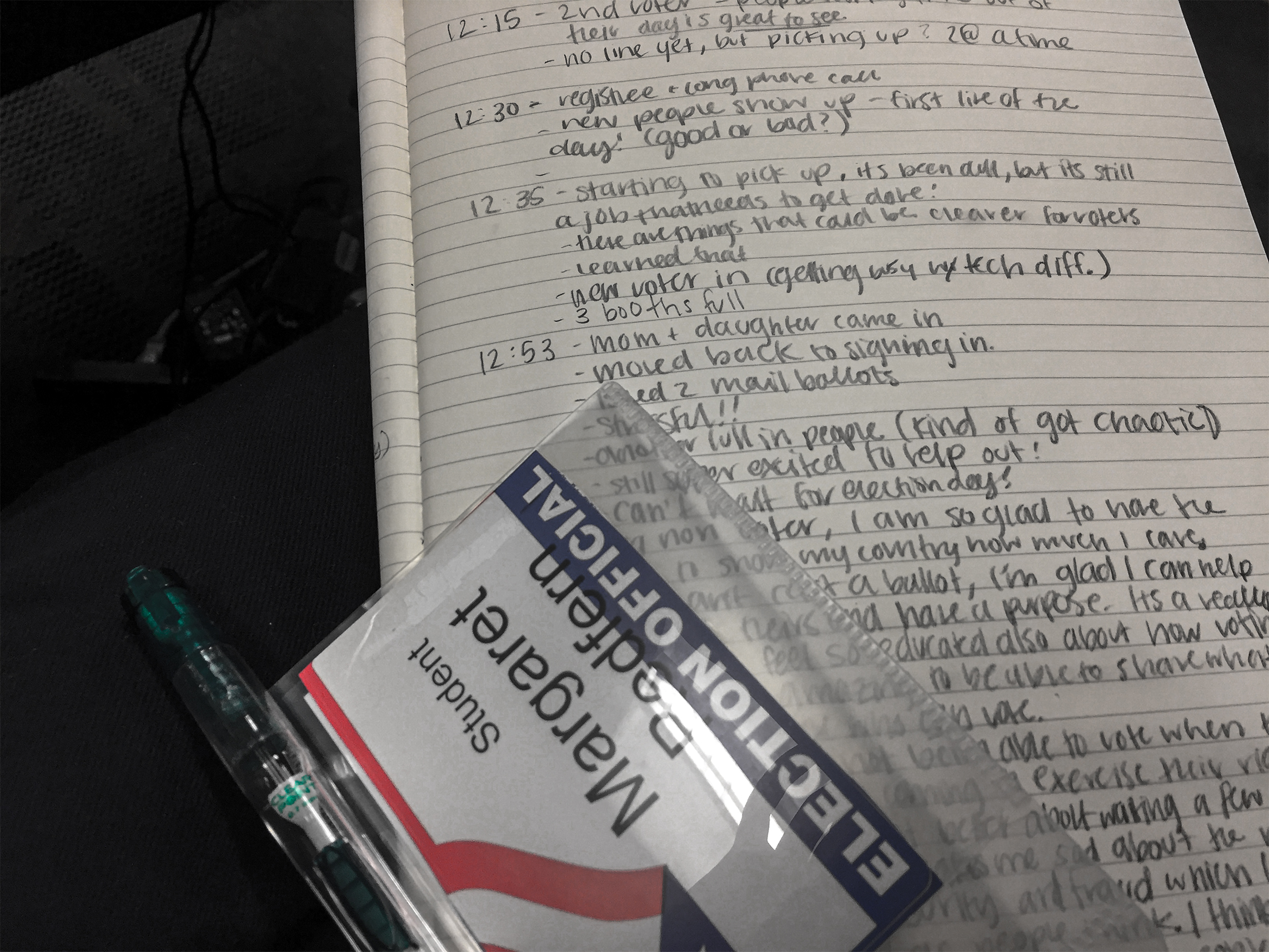
From my first shift on Oct. 19 to the last on Election Day, my behind-the-headlines perspective was different. I’m a high school junior, so naturally, I took notes through it all. Here’s a diary of my (short) life as a citizen in the front row of a historic election.
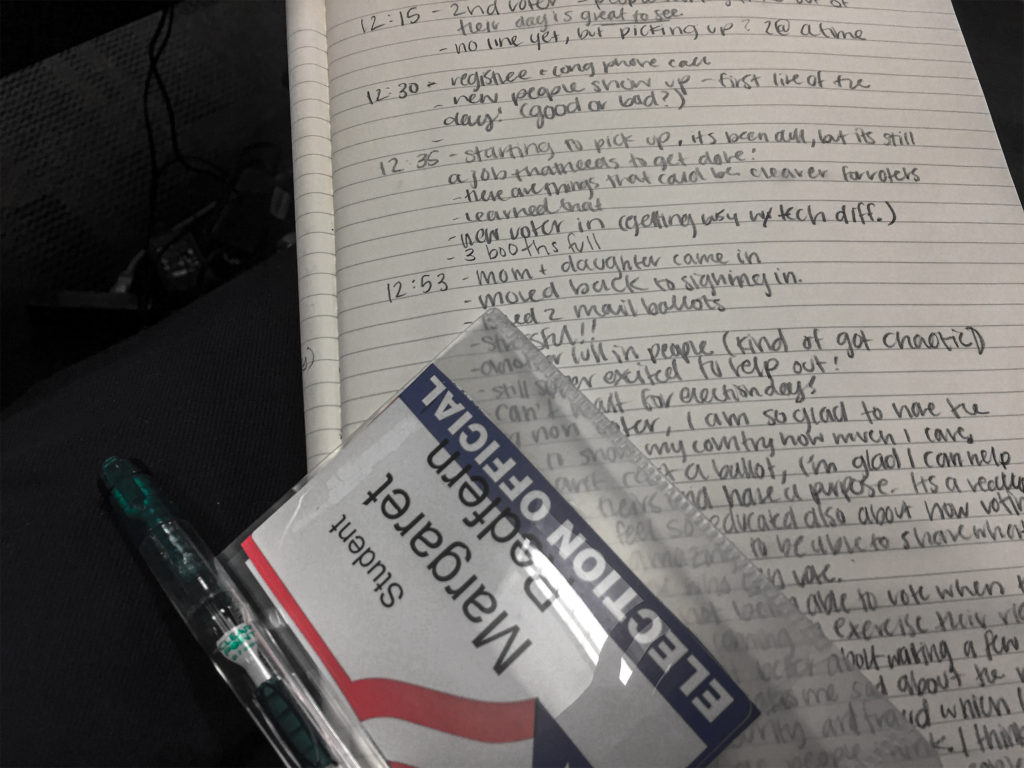
Day 1: Saturday, Oct. 31
9:30 a.m.: I arrive at the Routt County Courthouse 15 minutes early for my shift. I met the recording supervisor and motor vehicle deputy at 9:30 a.m. to open the sealed doors. The polls open at 10:00 a.m. that day and we are the only three scheduled to work.
The first job of the day is to unseal all of the doors. Since there is sensitive information on the computers, there are seals on all of the computers, ballot boxes and doors. Each seal has a unique number that has to be written down on a corresponding log. If every seal is found unbroken and then accounted for, as they are today, we know no one has been tampering with the ballots.
9:57 a.m.: The first voter arrives and knocks on the door. He is three minutes early, but eager to vote, so we let him in.
12:35 p.m.: The lunch rush comes and we have the first line of the day. I find myself feeling pride in my work, knowing that because of me and my election judge co-workers, someone’s voice is being heard, though sometimes the work we’re doing seems too simple to be as important as it is.
Day 2: Monday, Nov. 2
12:37 p.m.: The gap between voters quickens from one arriving every 30 minutes to one every five minutes. Still, we thought we would get more voters today than we did, which sets up uncertainty for tomorrow.

Day 3: Tuesday, Nov. 3
5:40 a.m.: I wake up after a short night’s sleep. Today is Election Day, and I am excited but nervous.
6:30 a.m.: My fellow judges and I arrive 30 minutes before the polls open. There are two early voters waiting outside of the door. We are followed inside by a poll watcher, there to take notes on line lengths and the number of voters at the top of the hour. We are set up by 6:45 a.m.
6:57 a.m.: There is a line out of the door, but our judges are moving quickly! There is a tense feel in the polling center. As someone who’s not old enough to vote, I notice that I feel as if I’m relying on each and every person who comes in to make the election happen, because they are representing me and my non-voting peers.
8:37 a.m.: Things are starting to pick up. We had 22 voters over the one and a half hours we’ve been open — half of what I saw for all five hours the day before.
11:14 a.m.: One particular voter stands out to me: I ask for his Colorado driver’s license, and after a few minutes of looking through his wallet, he looks at me and tells me he doesn’t have his license or any other acceptable ID. Frustrated at himself, he steps out of line and assures me that he’ll return. Sure enough, two hours later, he comes running in the door, license in hand. We fill out his paperwork, and I issue a ballot and send him to the electronic booths to vote.
I think the experience, for everyone involved, spoke to the urgency of this election and the recognition of that by young people. I am sure that this voter and many others walked out of the polling place with pride in his heart knowing that he just directly influenced his future.
3:25 p.m.: I personally handed out 102 ballots of the 190 total that we issued today according to the voting machines. It’s been steady enough to call busy, but time goes by quickly when you’re helping people.
6:48 p.m.: I spend my dinner break in the polling center’s kitchen, checking exit polls on my phone. I’m worried. Though as an election judge I can’t let my nonpartisan guard down, I am a Biden supporter. And in this moment, I am realizing how important other people’s choices are. It’s been a long day and I know that final results won’t come for maybe a week. But I’m anxious anyway.
7:30 p.m.: I’m in the car with the recording supervisor with all of the election materials on our way back to the courthouse to drop them off. Colorado results come in over the radio, with the vote running 60% for Biden and 30% for Trump. I’m relieved, but I know it isn’t over.
The past three days, we were told to stay impartial and not express opinion over a vote. Early on, I was able to mask my partisan emotions, and even on Election Day, I showed no emotion regarding how people may have voted. But when I got home, it was a breath of fresh air to be able to talk about the events and express my feelings.
Saturday, Nov. 7
Today, multiple news outlets called Pennsylvania — and the entire election — for Joe Biden. Though as a judge I never shared and did not act on my political preferences, once I was at home and the result was known, I cried with relief and I felt so overwhelmed with happiness. However, it wasn’t until I heard (Vice-president elect) Kamala Harris speak that night that I realized that I had a part in the victory. She looked at the camera and thanked the poll workers and I felt so proud of myself and my country and my fellow workers. I could not have been more happy with my choice to serve this democracy.

Related Posts