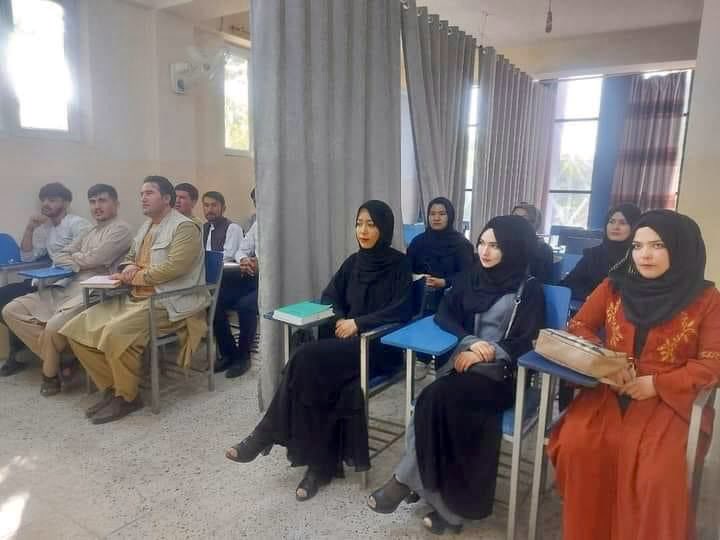
They’ve gone dark: Afghans who helped the U.S. military, trained as American-style journalists and rode the wave of women heading to higher education are destroying the diplomas, transcripts and résumés that prove how they built civil society in the country that the U.S. has left behind.
Lost at sea: Latest count of refugees missing or feared dead crossing the Mediterranean
By Léa Moukanas
GSS Correspondent
PARIS — Bodies on a beach, frantic faces in a crowd, tired eyes of travelers who hope for an end to their journeys but may get none.
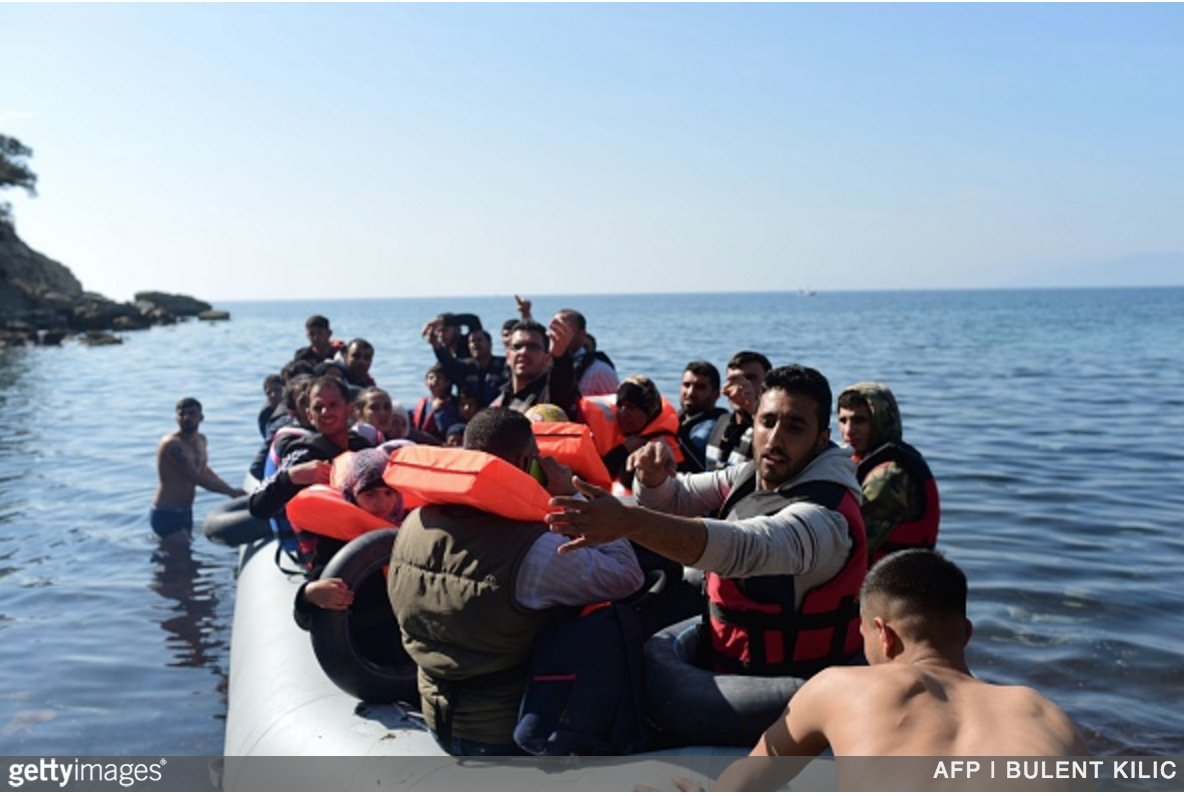
Children and their families who are migrating from the Middle East — often, the victims of dramatic shipwrecks — are at the gates of Europe. Meanwhile, EU border operations such as Triton and Mare Nostrum have failed to stem the tide.

As of April 1, at least 620 migrants have died trying to cross the Mediterranean Sea, according to the International Organization for Migration‘s Missing Migrants Project. Just how many people are arriving each day is difficult to determine, yet Europe gets 8,000 refugees daily, according to the United Nations.
Newspaper headlines capture the drama: “EU Blamed for Migrant Chaos,” “Carnage in Calais.” The images, alerting and shocking, are reminders of the three-year-old Syrian boy, Aylan Kurdi, lying dead on a beach after a shipwreck.
Like Kurdi and his family, migrants come from the Middle and Near East, as well as Sub-Saharan Africa, fleeing political instability and economic difficulties. Others have already escaped from their countries and live in refugee camps in border countries such as Jordan, Libya, Iraq, and Lebanon, where Syrian refugees represent 25 percent of the population.
In an interview, Armand de Durfort, a volunteer for the Agency for Technical Cooperation and Development, a French humanitarian aid organization, said that conditions for those who have left their homes for fear of violence are precarious: “Refugees (are) not even allowed to work in the camps nor to act freely.”
“Schools are built by (non-governmental organizations) but not even 40 percent of the kids attend classes,” de Durfort said, adding, “why would they go to school if they are not allowed to work after(wards)?”
With governments less and less willing to accommodate the tide of refugees, it seems likely that more Syrian refugees who are unable to get visas will risk their lives in makeshift boats as they attempt to cross the Mediterranean.
In Europe, the massive arrival of migrants is causing social and political upheaval.
On Sept. 23 in Brussels, the 28 members of the EU agreed to raise at least 1 billion Euros for United Nations agencies assisting Syrian refugees. The decision came in the wake of the agreement on the distribution of 160,000 refugees between EU states.
Yet faultlines have opened up across the European Union — both east and west, and north and south — because of the migrant crisis. Some countries, under Germany’s aegis, are willing to give asylum to migrants.
For instance, Vesna Pusic, foreign minister of Croatia, said on Sept. 4 that her “country would give asylum to a few thousand migrants.”
On the other hand, Hungary — a hotspot for migrants — refused the European Union Commission’s proposal for mandatory quotas. Indeed, Hungary installed razor wire fences between boundary countries and Hungarian riot police fired water cannons and tear gas at refugees.
Today, the migration process and the ensuing crisis are becoming exponentially impactful in a world where every political action has social and humanitarian repercussions.
With the Islamic State’s rise to power, and the political instability of the actual regime, the prospect of an outcome to the war seems more distant than ever. It remains unclear whether the European Union will come to a consensus in the following months.
Only one thing is sure: The world’s eyes remain riveted on Europe.
—Featured photo: Syrian migrants sit in a dinghy as they attempt to cross the Aegean Sea to the Greek island of Lesbos from the Ayvacik coast in Canakkale on Feb. 28. Close to 120,000 migrants have already arrived in Europe so far this year, according to the UN refugee agency. Photo by Bulent Kilic/AFP/Getty Images via Camayak.
 Léa Moukanas is a junior at Institut de la Tour in Paris. An earlier version of this article appeared in the February issue of Munificence, the student-led newspaper of the Paris Model UN Conference. Contact Moukanas at leamoukanas@gmail.com.

Related Posts