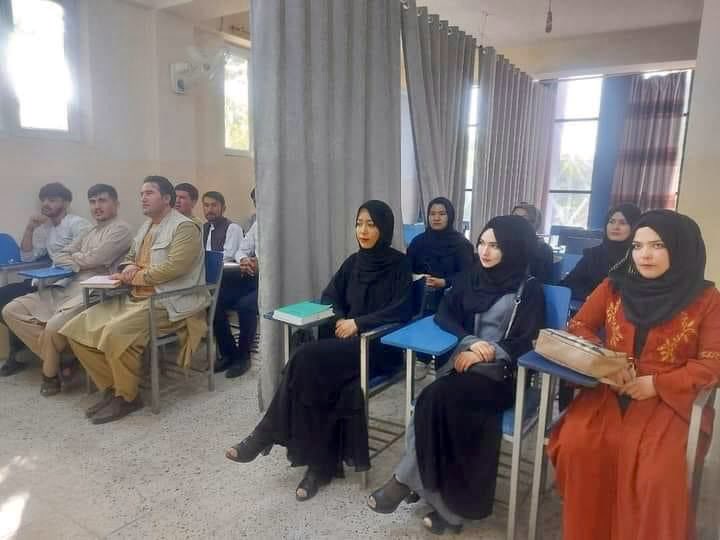
They’ve gone dark: Afghans who helped the U.S. military, trained as American-style journalists and rode the wave of women heading to higher education are destroying the diplomas, transcripts and résumés that prove how they built civil society in the country that the U.S. has left behind.

Internet could lift more young Nigerians out of poverty, author suggests
 By Minjin Kim
Chadwick International School
Incheon, South Korea
GSS Correspondent
A comfortable bed, warm food, nice clothes. To many around the world, that describes everyday life.
But others aren’t so lucky. In the novel, “The Spider King’s Daughter,” by Chibundu Onuzo, a character named Runner G is forced to give up his education to support his family. His girlfriend, Abike, is a Nigerian aristocrat.
Though they are in love, Runner G and Abike are on different sides of an economic divide. “What do you know about poverty?” Runner G rages to Abike.
 In a recent Skype interiew, Onuzo discussed the plight of the poor. She shed light on the environment that created the character of Runner G.
In Nigeria, “individuals have to take the (responsibiity) that the state normally provides,” and “the infrastructure is not there” to free young people like Runner G, Onuzo said.
As many young Nigerians live in poor conditions, and cannot afford their school fees, the education rate of Nigeria is shockingly low. According to World Education News & Reviews (WENR), only 47 percent of young people go to middle school and a mere 10 percent go to college. By contrast, according to the World Bank 96 percent of young South Koreans go to middle school, and 98 percent of students who graduate from high school enter a college or university.
Even worse, WENR reports that only 58 percent of Nigerians go to elementary school. The others go to work instead.
This situation causes many young Nigerians to live without dreams that their counterparts in South Korea have. In South Korea, students can dream of being a doctor, lawyer, or even the president of South Korea. Yet, young Nigerians only think about surviving each day, and earning enough money to support their lives.
“If you are poor, you will have less access to education. And that has ripple effects on how you think,” said Onuzo.
In “Poverty and Youth Unemployment in Nigeria,” published in the International Journal of Business and Social Science, researcher John O. Aiyedogbon wrote that Nigeria’s poverty is “chronic and rising.” The 50 percent rate of unemployment causes youth to suffer, especially when they are responsible for supporting a whole family.
Like many other countries worldwide, Nigeria also suffers from a growing economic gap. The total income for the richest 20 percent is 55.7 percent of GDP, while the poorest 20 percent account for only 4.4 percent. Nigeria has a profitable oil industry, but it “does not employ a sizable number of unskilled workers,” according to Aiyedogbon. So young people who cannot complete school cannot get these jobs.
However, Onuzo offered a possible solution to youth poverty. “The internet is a helpful tool,” she said. “Many more people have access to it, not just the rich people.”
Internet usage and access are growing among young Nigerians. The Nigerian news website Business Day Online found that Internet usage grew from 0.06 percent to 38 percent between 2000 to 2013. Also, 84 percent of Nigerians use the Internet as a source to gather information.
The Internet offers opportunities for online businesses, advertisers, software companies, and Internet service providers. Internet shopping malls such as South Korea’s Gmarket could lie ahead, as well as smartphone apps to fit Nigerian needs. Especially for the information technology industry, possibilities are endless.
Non-governmental organizations such as ANJIMS (Access Nigeria Job Information Management System), which works with the World Bank and local universities, also are working to improve the job skills of Nigeria’s youth for the IT industry.
While traditional education may be out of reach for youths like Runner G, today’s Internet might be an alternative and an opportunity to break out of poverty.

Related Posts