They’ve gone dark: Afghans who helped the U.S. military, trained as American-style journalists and rode the wave of women heading to higher education are destroying the diplomas, transcripts and résumés that prove how they built civil society in the country that the U.S. has left behind.
Editorial: Thank you, Bali
PARIS — For months now, the ASPire journalism program at the American School of Paris has been planning to cover COP21 for Global Student Square, an international student journalism network. The opportunity to cover COP21 and possibly see world leaders in action, such as U.S. President Barack Obama, was what drove our organizational structure at the beginning of the year.
We were all aware that this climate change conference was undoubtedly going to be one of the biggest news events ever. Based in Paris, we were in a unique position to cover the events, and give authentic student-based insight.

However, none of us anticipated the events that befell Paris on Nov. 13, when a series of terrorist attacks killed 130 people.
That night, as we returned from afterschool events and a sports tournament in Brussels, we got onto Twitter and WhatsApp and started sharing everything we could learn with ourselves and the world. We stayed up until 2 a.m. and fell into our beds, exhausted.
During a show in support of Paris that aired 48 hours after the events, HBO comedian and news commentator John Oliver referred to the events as “the deadliest attacks” on French soil since World War II. We hoped it was no joke when he said that France would endure.
But endure we did: The COP21 conference went ahead as planned on Nov. 30, though with heightened security measures. However our school, like many other institutions all over Paris, also adopted a more careful security plan. Unfortunately, these heightened security measures prevented us from attending many conference events, including Youth and Future Generations Day on Dec. 3.
COP21 is the 21st conference of parties of the United Nations framework to curb global warming. The expected outcome is an multilateral agreement among political leaders, but also between economic agents and individual citizens, to protect the environment, and keep global warming below two degrees Centigrade.
Despite fringe dissent driven by political agendas, the general consensus in the scientific community is that global warming is indeed happening, and it’s a threat to all of our livelihoods.
Rising sea levels threaten over 40 percent of the total world population that lives near the coast. And desertification, alongside the amplification of natural disasters, threatens many more. Many of these people live in the southern hemisphere, in nations without the economic capacity to curb the effects of global warming on their own.
When ASPire journalists found out we couldn’t attend the major gathering of COP21 at the Le Bourget conference center north of Paris, we were all heartbroken. Luckily, we found an unexpected partner.
The Green School of Bali, Indonesia, already had plans to attend COP and they were going forward with them. Their reporters and our editors have partnered to produce stories for this Blue Zone package.

Though we ASPire journalists could not attend many of the COP events, the Bali students could. Together, our two teams pitched, planned, reported, edited, and published stories, logos and graphics that neither of us could have accomplished alone.
COP21 is a turning point for humanity. Our capacity to exist and coexist on this planet is at stake. If civil rights was the cause of the generations that ended the 20th century, then ensuring that our species can survive to see the next one is ours.
However, as we learned from our partnership with Green School Bali, this isn’t something any one nation can accomplish on its own.
Just as the coverage of COP21 is impossible for any one team to do alone, climate change is an issue that commands the collaboration of individuals from all over the world, many who are strangers to one another, and many split by class and political divides, but all united in the hope of a more sustainable way of life.
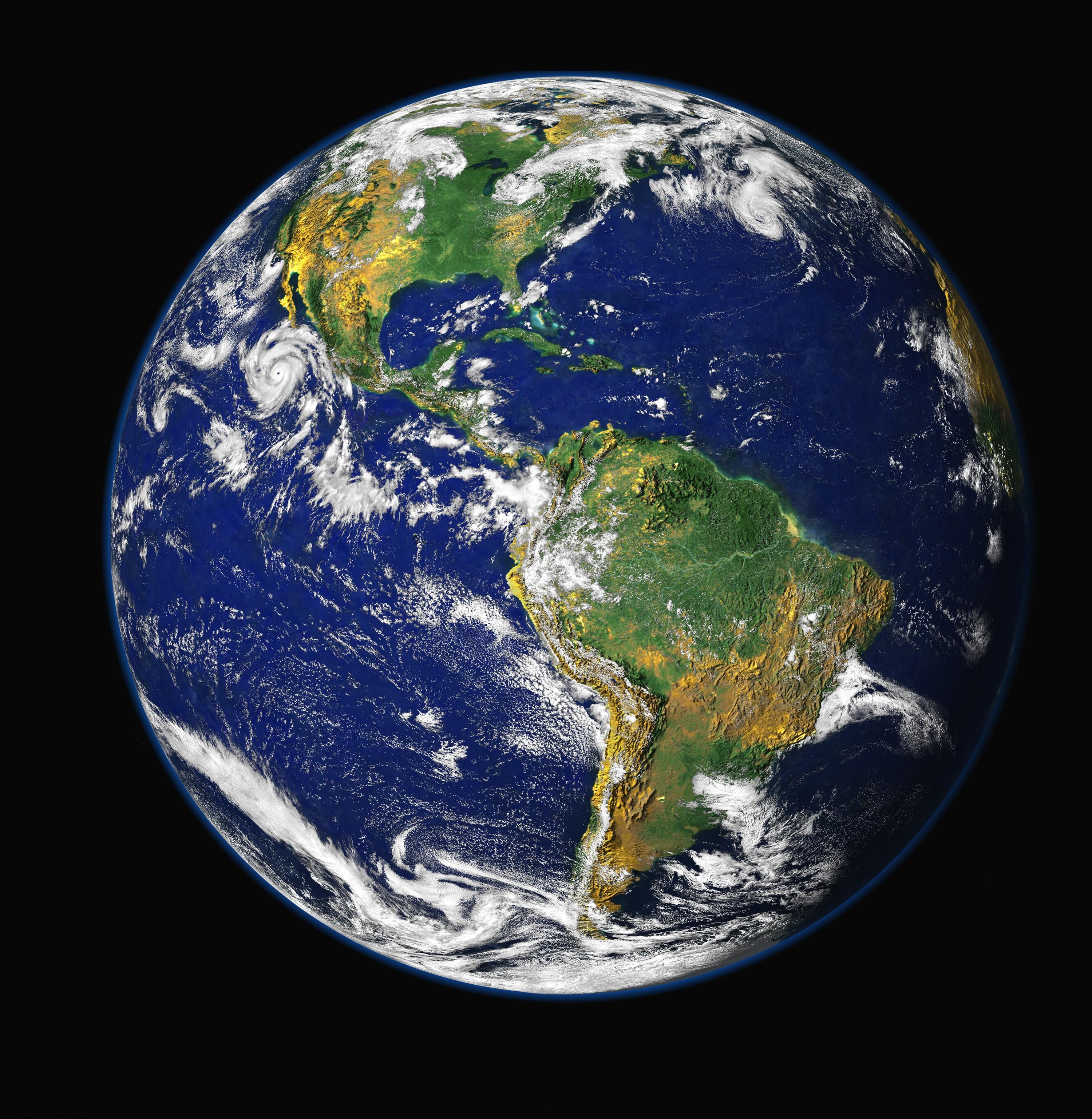
—Photo of the western hemisphere of planet Earth by NASA/public domain. This editorial represents the majority view of the ASPire journalism staff at the American School of Paris. Contact ASPire at newsaspire@gmail.com.

Related Posts