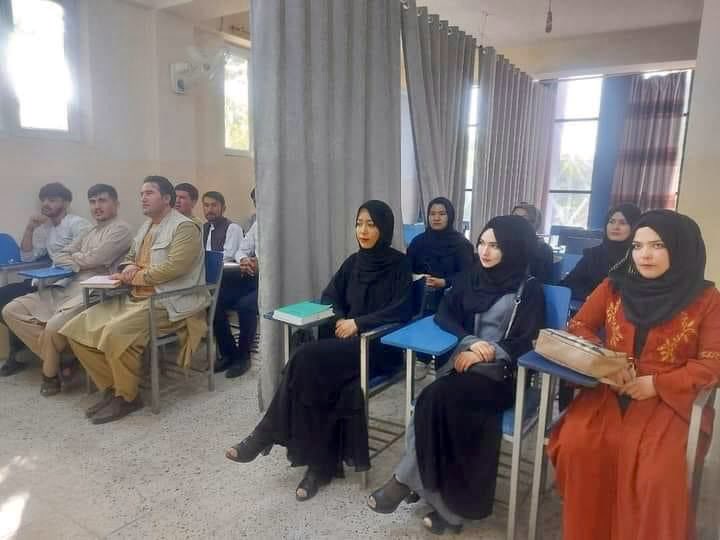
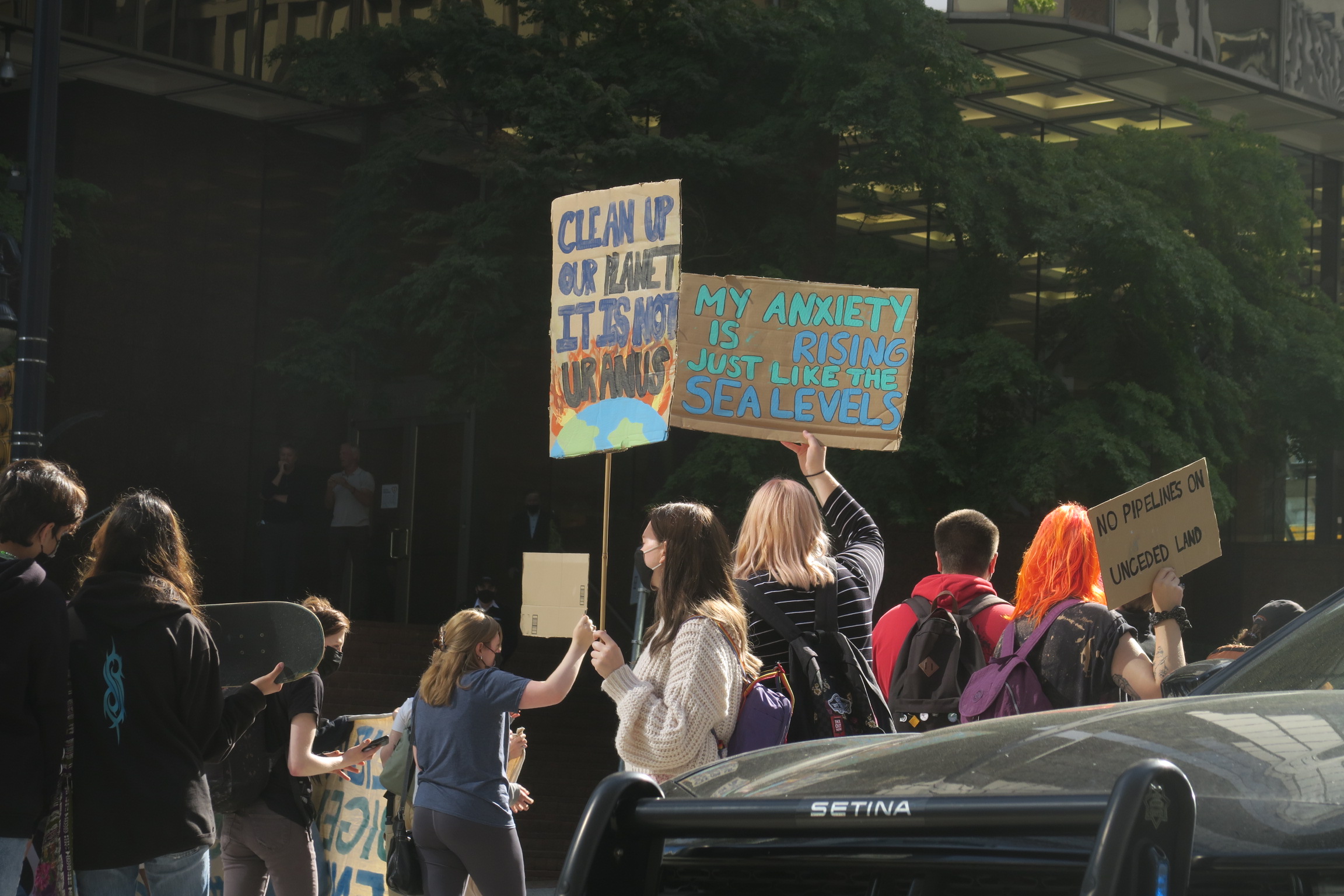
They’ve gone dark: Afghans who helped the U.S. military, trained as American-style journalists and rode the wave of women heading to higher education are destroying the diplomas, transcripts and résumés that prove how they built civil society in the country that the U.S. has left behind.
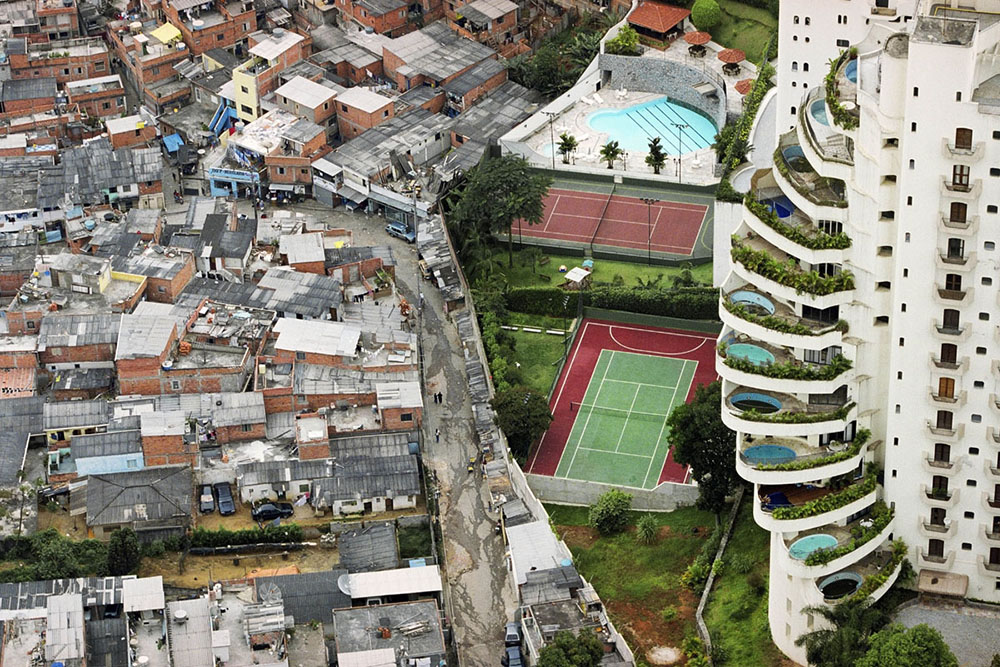
COMMENTARY: A look into the two worlds of São Paulo’s Paraisópolis
By Reagan Meek
American School of Paris
SAINT-CLOUD, France — Have you ever longed to live in a luxury apartment building, with a pool just outside the living room where you binge watch your favorite Netflix show?
What if that apartment overlooked a favela where people exist on an average monthly income of $240?
Would you still want to live there?
Sitting in class on a Friday afternoon, exhausted from a week of pre-calculus, English essays and science lab reports, I was listening to a lecture when I recognized the photo on the screen as one I’ve seen on Facebook and Instagram for years.
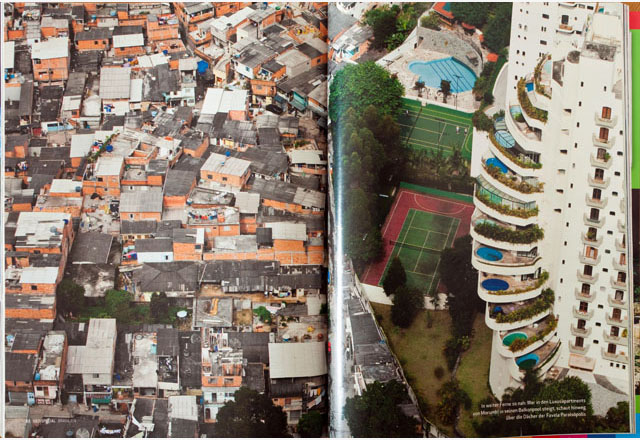
It was the photographer Tuca Viera’s photo of Paraisopólis, the opulent white of the building contrasting against the dull colors of the favela in São Paulo. It was a sight I’d seen over and over again. But it was only when we started to talk about how the inhabitants of the apartment complex and the inhabitants of the favela might interact that I got curious.
I wondered: Could the people of the luxury tower and the people of the favela see each other? Do they care or mind if they do? Do the children of the favela wish to live in a luxurious apartment one day like the ones they can see from where they live, or are they happy with what they have?
With the keyboard at my fingertips, I hopped online.
Within moments, I learned that Paraisópolis is the name of the favela located in the Vila Andrade, a wealthy neighbourhood of Morumbi, São Paulo, Brazil.
The favela has 50,000 residents according to IGBE, the Brazilian Institute of Geography and Statistics, but 100,000 residents according to locals. Its 118 hectares was initially planned as housing for upper-income residents in the 1920s. According to Vieira, the empty plots were swarmed by low-income families and immigrants from the Nordeste, the poorest region of the country.
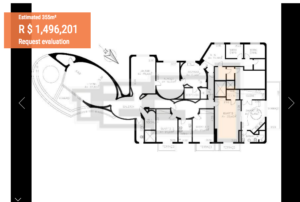
Digging deeper, I found the blueprint of the apartment complex, including twin buildings called Edificio Penthouse and Edificio Roof, along with the prices being charged to buy or rent apartments. Each building includes 12 apartments that have swimming pools overlooking the favelas.
To my surprise, I learned that from the apartments in the Penthouse, it is possible not to see the favela. The apartments are angled to look out onto the metropolitan area not pictured in the famous photo. Where the building turns to face away from the favela is where the living room is located.
The photos I found at a realty website for the Edificio complex also showed me interiors for one of the apartments listed in the building.
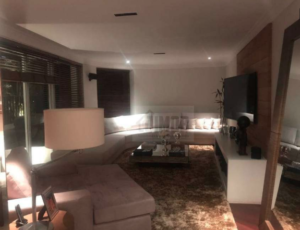
The spacious living room has a gorgeously pure white couch, which looks custom made for the curve of the building. Glass tables, modern chairs, urban art — clearly, no expense was spared to furnish this apartment, which costs R$740,000, or approximately 197,620 euros. Apartments in the building can cost up to R$1,650,000, or 440,680 euros.
Yet photographer Tuca Vieira says that despite the contrasts in his photo, what is shown is not a divide between extremes.
“In a way, this picture of Paraisópolis … does not show things as they are,” he has written. “It is not the richest who live in the building with swimming-pools, and they are not right next to the poorest, who by the way don’t live in Paraisópolis.”
Looking into the Edificio Penthouse deepened my understanding while also raising some questions.
I don’t know for certain, but I imagine that the people of the favela work hard every day to feed their families and survive. And next to them is the epitome of opulence, a luxurious apartment complex filled with glass chandeliers and custom marble counter tops.
I don’t know for certain, but I imagine that the people in the favela sometimes look up at the Edificio, and assume that the inhabitants of the apartment complex will never have to worry about money.
I don’t know for certain, but I imagine that the residents of the favela worry about the next meal they need to provide for their families or if their community is safe enough to inhabit.
But most of all, Viera’s Paraisópolis photo has taught me about how abundant the Internet can be, and how powerfully it can help us look deeper and know more about what we see.
—Featured photo (also at right): SAO PAULO, BRAZIL, 2005. The Paraisópolis favela (Paradise City favela) borders the affluent district of Morumbi in São Paulo, Brazil. Photo: Tuca Viera/Fair Use exemption.

Related Posts