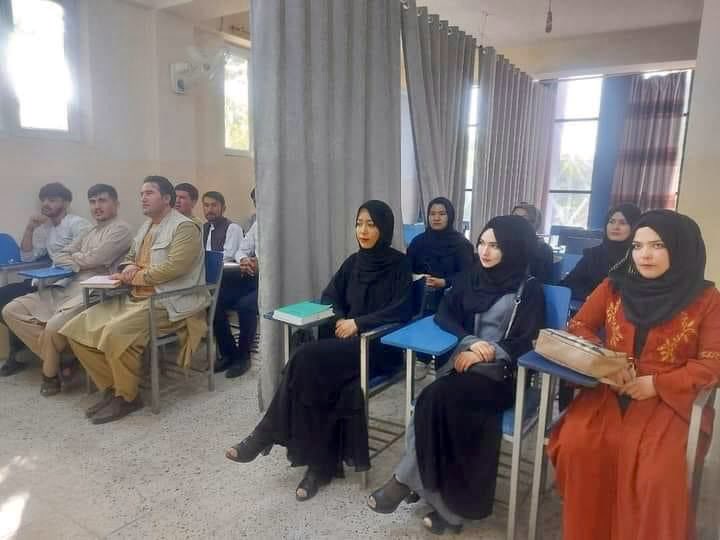
They’ve gone dark: Afghans who helped the U.S. military, trained as American-style journalists and rode the wave of women heading to higher education are destroying the diplomas, transcripts and résumés that prove how they built civil society in the country that the U.S. has left behind.
“Fly restaurants” offer a bite of Chengdu’s culinary heritage
By Jia Haoran, Yuan Xingfang, Xie Qinxin, Chen Yajie, Tian Xirui and Li Simiao
International Department of Shude High School, Chengdu Foreign Language School, Luneng Bashu Middle School and Chengdu Meishi International School
Special to Global Student Square
CHENGDU, China — Got only 5 renminbi (69 cents) in your pocket? That’s fine; you can still find yourself a small table and stool at what locals here call a “fly restaurant”.
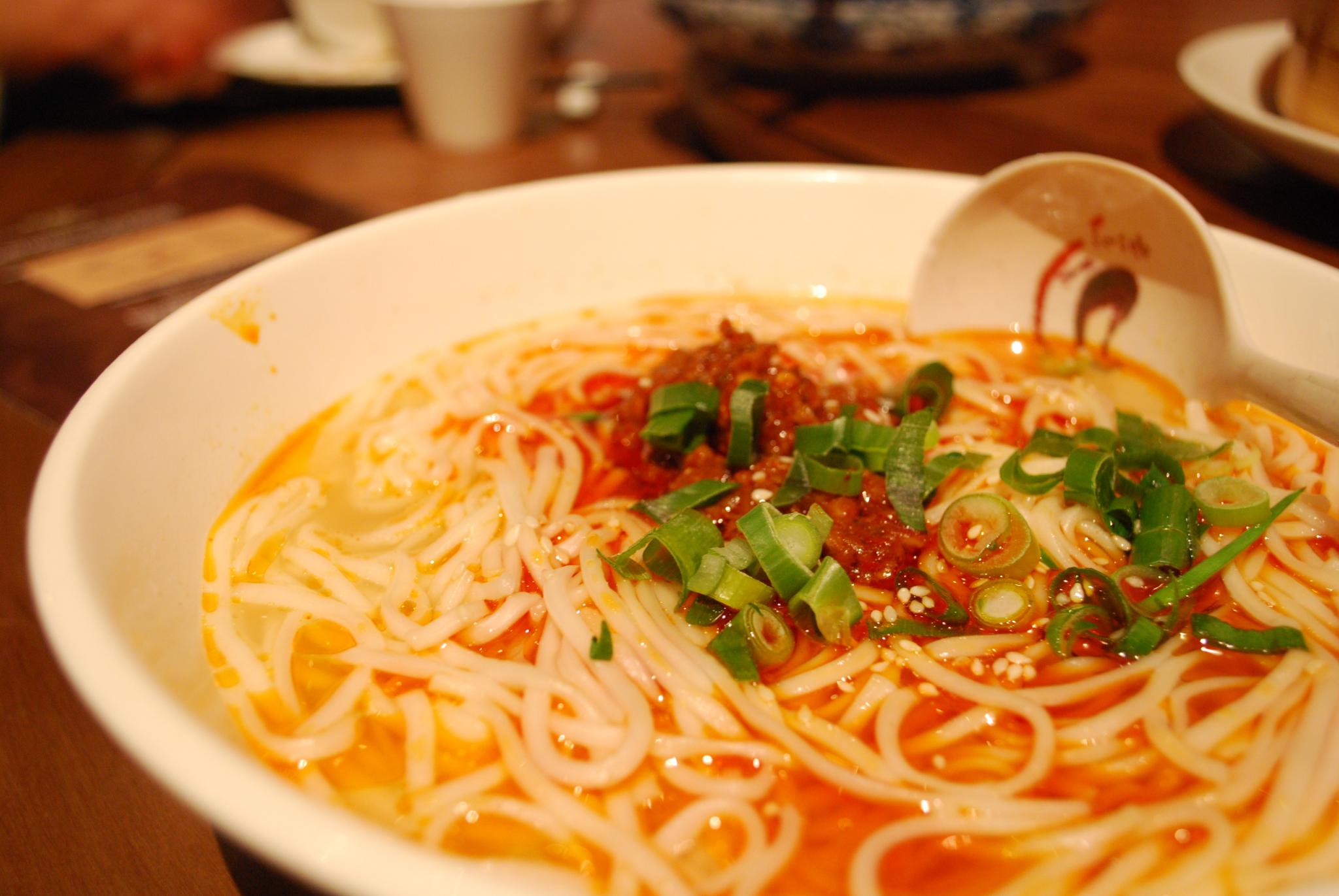
Typically, you’ll notice flies buzzing around, but the bowl of dan dan noodles in front of you will grab your attention. Red chili oil floats amid chopped green onion; cubed pork intestines poke out from the top of sweet potato noodles. Your chopsticks will disrupt this harmony because you can no longer wait.
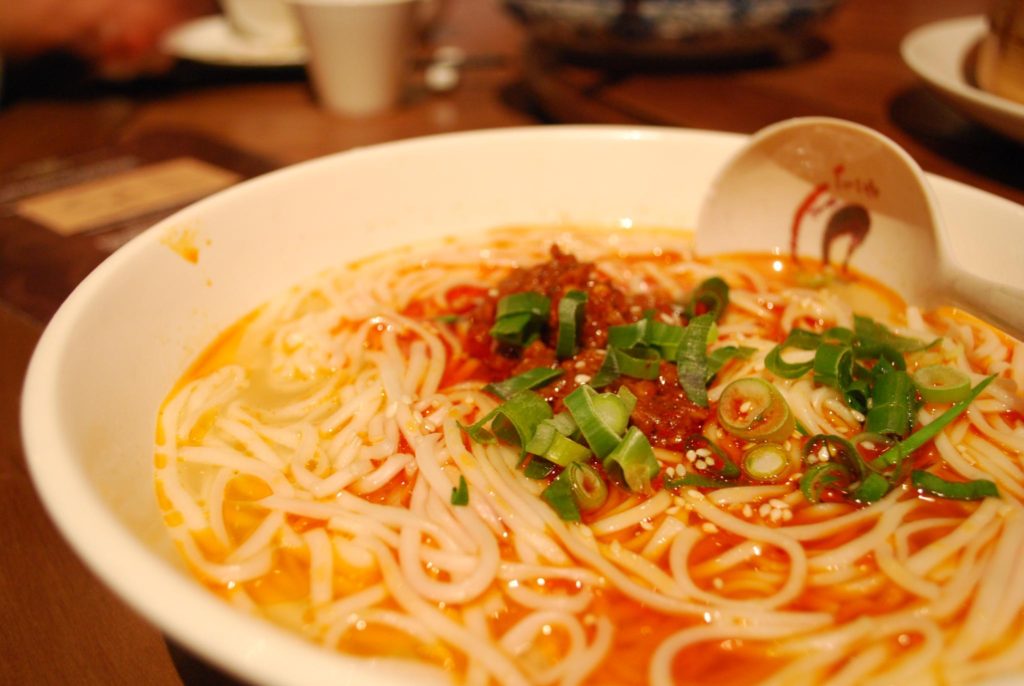
The moment that the spices tingle your tongue, you will be conquered by the magic of the fly restaurant.
Fly restaurant is a name Chengdu natives know very well, though it can confuse visitors. Though like many other street food stalls and family-owned restaurants that can take a casual approach to cleanliness, fly restaurants offer delicious traditional dishes at a low price.
The concept of the fly restaurant first emerged in the 1970s, when quality of life was poor. Food store owners paid little attention to the cleanliness of their stores, so people named these restaurants after a commonly-seen creature: the fly.
But as living standards improved and the yearning for traditional Chengdu cuisine remained, people now relate fly restaurants as gathering places that serve tasty dishes.
Locals love the fly restaurant atmosphere. Customers chat with waiters or each other like family members. Fly restaurants act as a second home kitchen for many locals.

Mingting Restaurant, located in Outer Caojia Alley No. 26 in the heart of Chengdu, is one of the most popular fly restaurants in the city, serving celebrated Sichuan dishes. Waitresses there said that in order to preserve the authentic taste, chefs are well-trained and experienced, and the staff rarely changes. Special culinary training is also the first prerequisite for people who want to be its chefs.
No matter how long the wait or how difficult the journey, customers — some of whom even come from the other cities — will not hesitate to line up for a meal at Mingting.
“The customers come from all social classes. Some people drive luxury cars, while some ride bikes,” one of the waitresses said.

Chengdu’s title as the “Paradise of Foodies” comes from its reputation for a type of hot pot called chuan chuan (where one skewers meats and vegetables on a bamboo stick and boils them in the hot pot soup) and more.
At Mingting, the flow of diners will reach its peak during the weekdays from 6 p.m. to 7 p.m. Lunchtime also is popular: At noon, diners walked into the restaurant in an endless stream. Most work in nearby office buildings.

However, Mingting has also met the problem that its flow of customers is decreasing rapidly.
“Many young people do not like our restaurant because the exotic culture has a promising market among them. They prefer Western cuisines over Chengdu local dishes,” a senior waitress said.
“From my perspective, the dishes are very hot in Chengdu’s fly restaurants which provide the pure traditional Sichuan dishes,” a 25-year-old diner said. “The youth who face heavy pressures today want to have a healthy diet and light food. But I like (fly restaurants) because today I want to reward myself for good performance in my company.”
Indeed, we did not see any customers who looked to be under 30 years of age. Many fly restaurants like Mingting are confronted with the same problem: the number of young diners is declining.
Jinjiang Restaurant appeared to be a typical fly restaurant in Chengdu, with its plain signboard and neat tables and chairs on a faintly oily floor. Dishes and pickles were lined up on a table near the road. A meaty smell wafted through the air.

Jinjiang Restaurant was established in 1994, but was relocated in 2016. According to a woman named Zhang, an employee since 1996, the restaurant had relatively few guests in the first year after relocation because many regular customers could not find the restaurant’s new address.
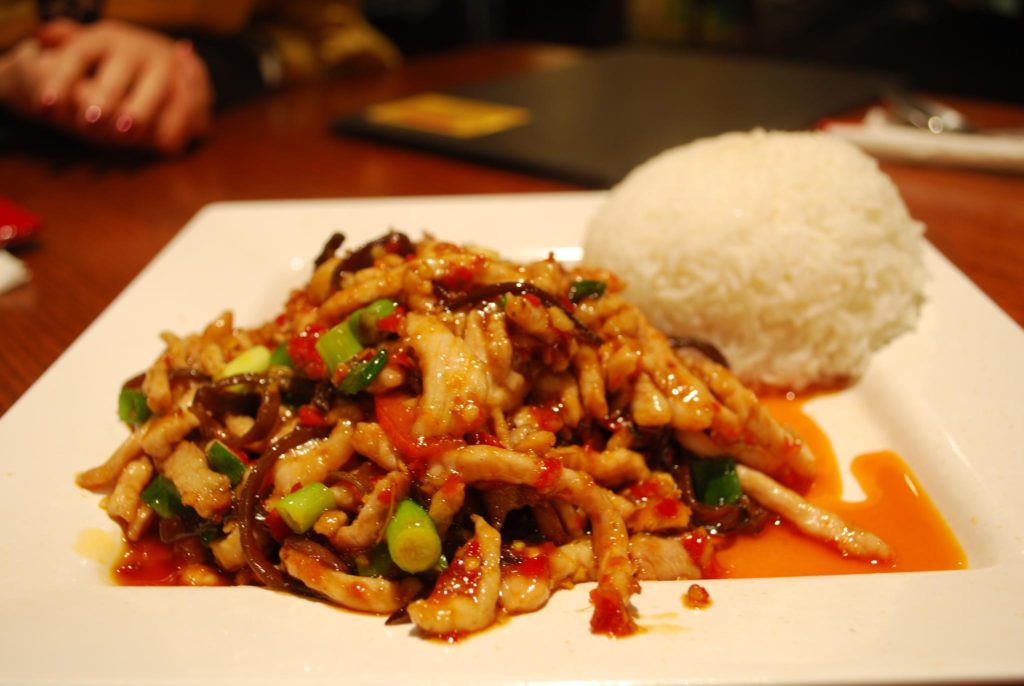
When we asked about the dishes, employees answered proudly that all their dishes were traditional and genuine Sichuan food, cooked in-house with exclusive recipes. Lotus root and rib soup, stir-fried pork strips in fish sauce, boiled meat slices and many other Sichuan classics are provided; guests can order any Sichuan dish they want.
Prices are relatively cheap. 100 renminbi (or $14.85 as of May 2, 2019) can easily buy a filling meal for two people. Specialty dishes cost a bit more, at 30-48 renminbi ($4.45-7.13) per dish.
Mr. Wang, Jinjiang’s chef, learned his culinary skills from the owner of Jinjiang Restaurant when he was 20 years-old.
“I studied cooking because I like it, and it seemed to be the only way that I could raise my family at that time,” said Wang, whose first name was not available. “Our boss is full of passion — he treats me as his apprentice and has taught me with sincerity.”
Fly restaurants are everywhere on the streets of Chengdu. But outside of Chengdu’s borders, you can hardly find any except in some old towns. The increase of glamorous, expensive Westernized restaurants has also driven out traditional fly restaurants that have long preserved Chengdu culture.
How to protect these priceless treasures will be a big issue to address in the future.
Today, many famous fly restaurants already get a lot of attention from people all over China. People share their experiences of eating in fly restaurants on social media platforms like WeChat, RED and DaZhongDianPing. A search for “fly restaurant” on RED brings up more than 1,000 posts. Using social media to attract more consumers who come from different cities or even different countries could be efficient and cost-effective for fly restaurants that need more customers.
Fly restaurants represent tasty food and Chengdu culture. They should be treasures not only for Sichuan people but for everyone. Have a bite of any dish and you will feel the charm and magic of traditional Chengdu cuisine.
—This story was reported and written by students who participated in JEA China‘s 2018 Youth Observation Contest, where it received a superior rating. It has been edited for publication by Global Student Square and is published with permission.

Related Posts