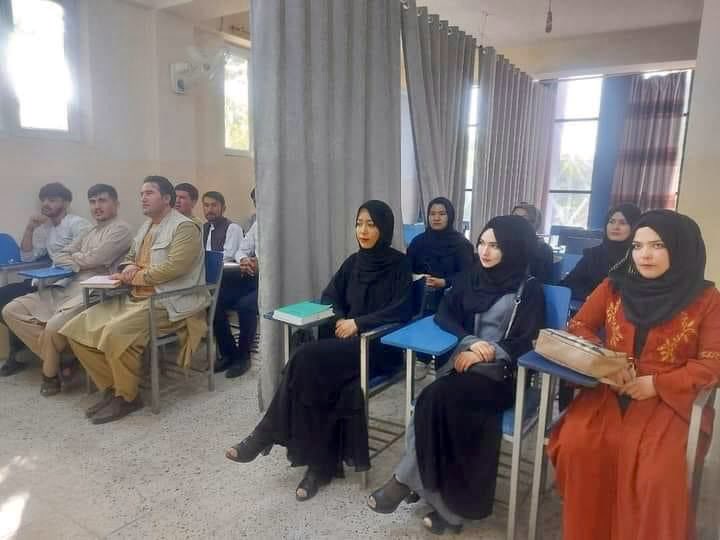
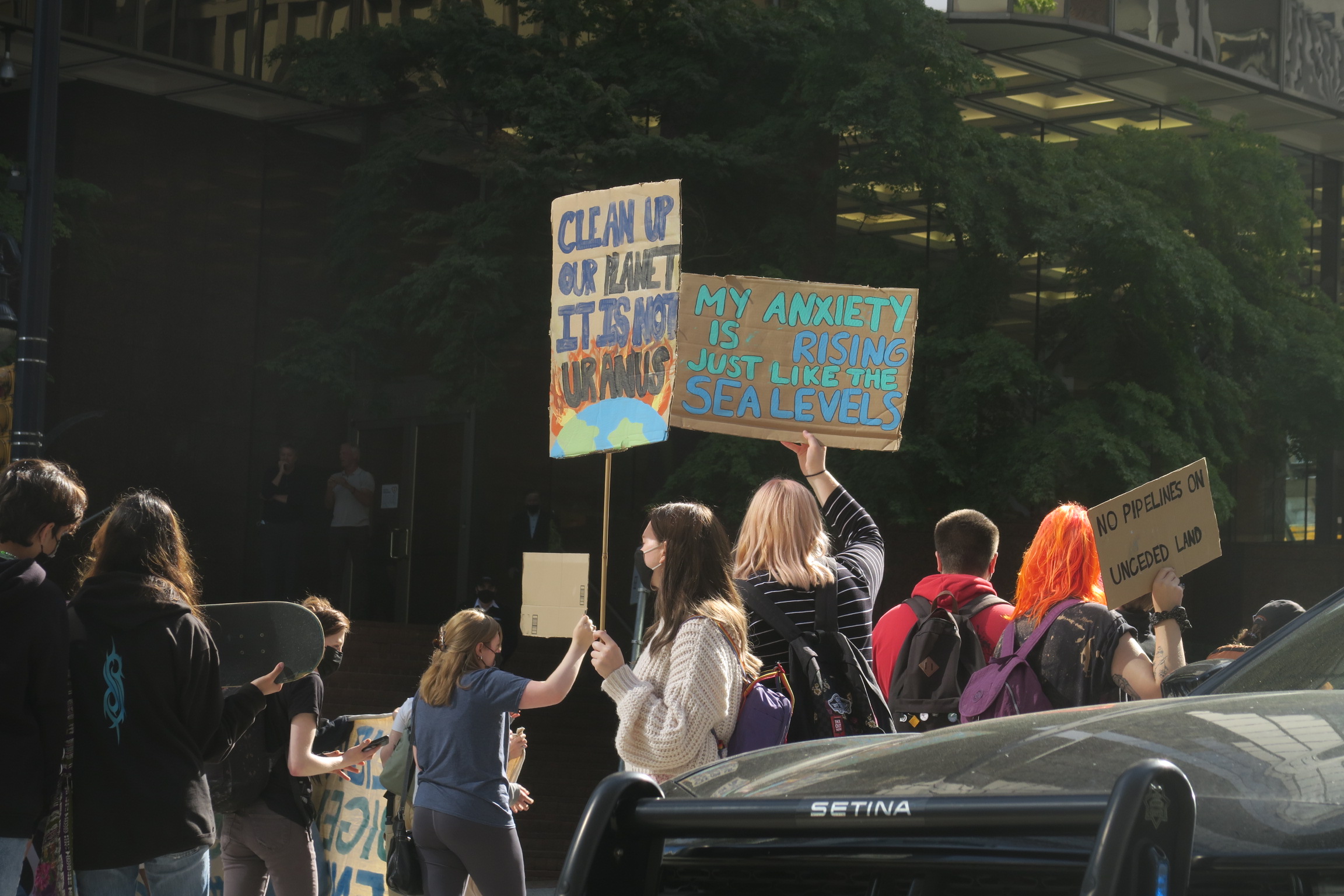
They’ve gone dark: Afghans who helped the U.S. military, trained as American-style journalists and rode the wave of women heading to higher education are destroying the diplomas, transcripts and résumés that prove how they built civil society in the country that the U.S. has left behind.
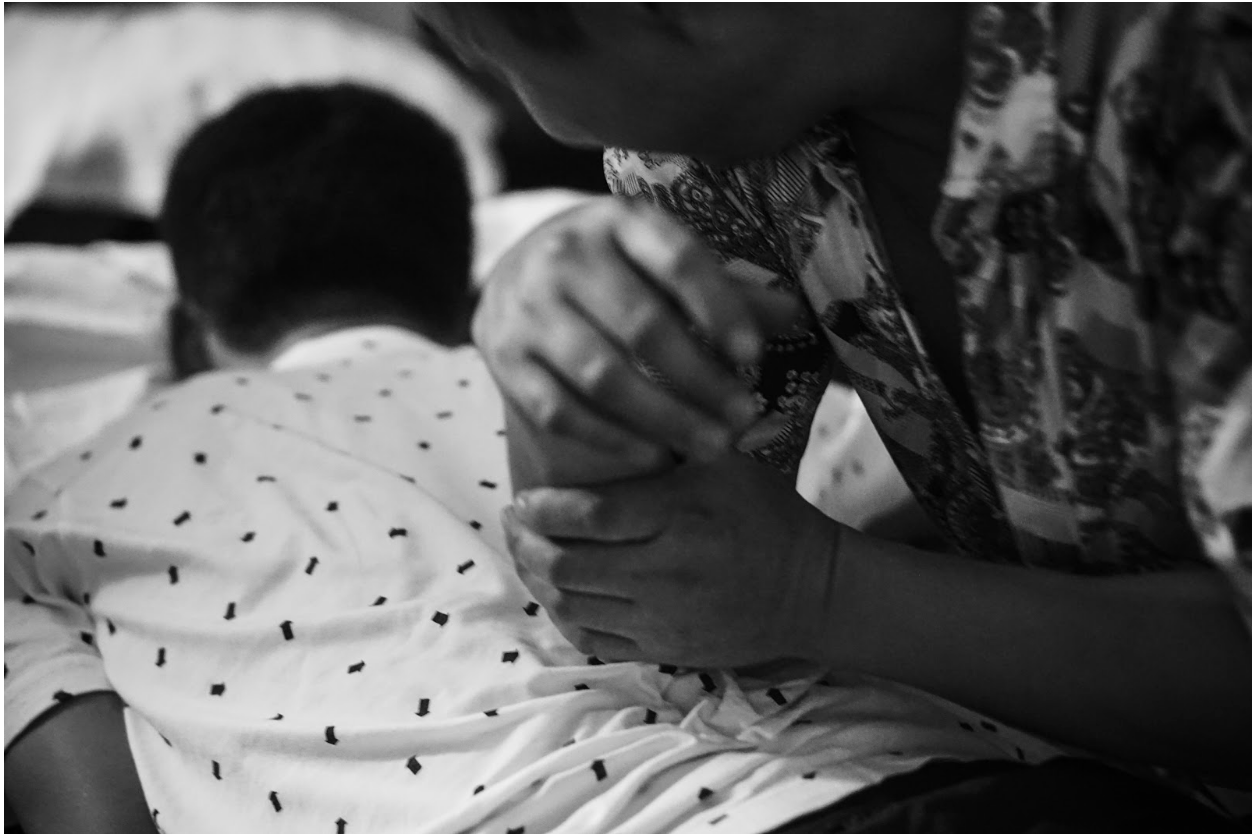
Living by touch: The blind masseurs of Chongqing
By Yueer Tang , Xiaoyue Zhang , Chenxi Yao and Xiaoran Liu, Chongqing Nankai Secondary School
CHONGQING, China — An old, shabby massage studio squats at one end of Dapingzheng Street. Located near the busy Times Square, it seems surprisingly quiet and secluded.
Massage therapists wearing dark glasses sit by the massage beds, waiting for their first customers. Even more than masseurs elsewhere, they are uniquely accustomed to precisely feeling each pain point and muscle with their hands; after years of living by touch, they understand the art of massage in a way few others do.
They are blind.
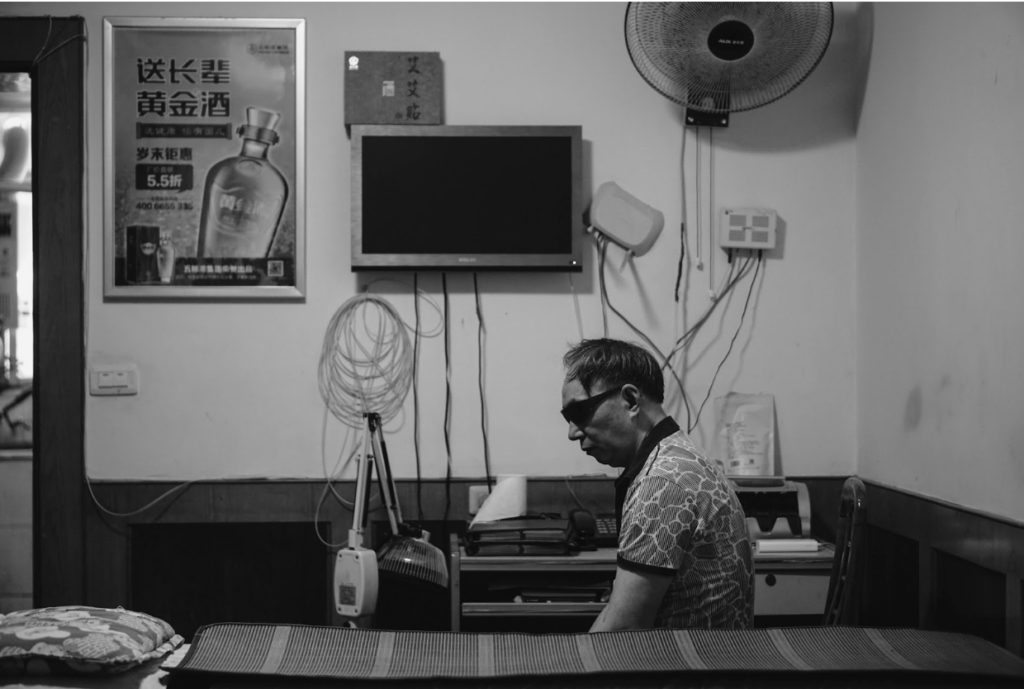
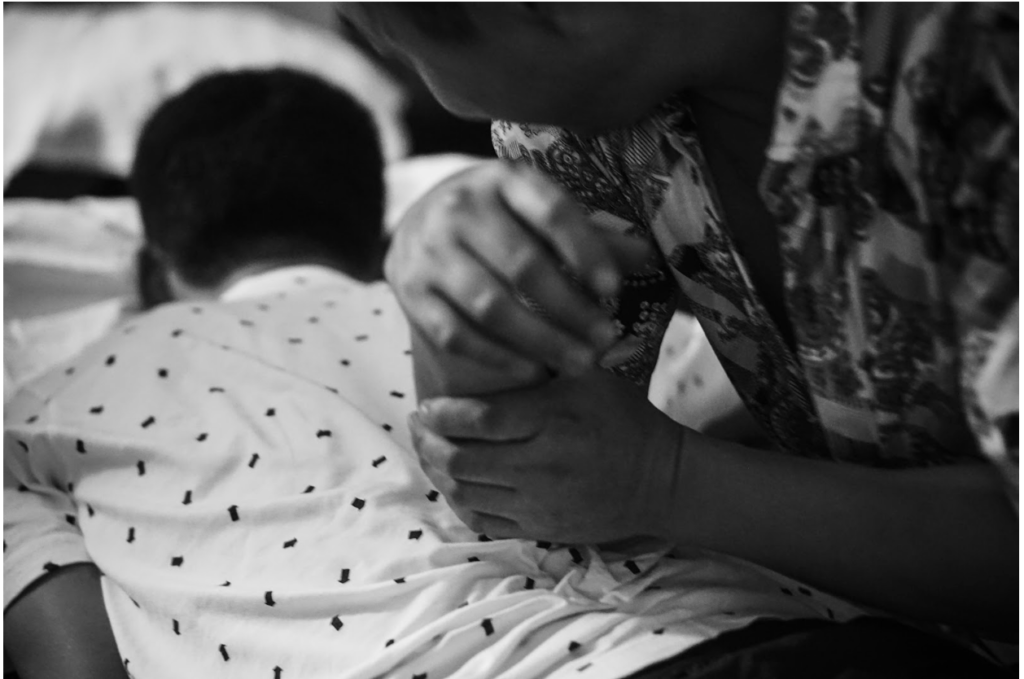
A massage therapist at Yuanyuan Blind Massage Studio in Chongqing, China, pauses between serving clients. A 16-hour work day is not uncommon. Photo by Yueer Tang.
Liu (whose first name is not available), a 34-year-old massage therapist employed at Yuanyuan Massage Studio, works on his client. Of all the therapists at Yuanyuan, he was the first to become blind, as a junior high school student.
Liu’s sight loss was gradual. He said that at first, he wasn’t able to clearly see what the teachers were writing on the blackboard.
“I thought it wasn’t a big deal,” he said. “Many students had the same problems.”
But soon, he couldn’t even see the text in books.
“I didn’t expect my eyesight would get worse that fast! I was astonished … and worried, of course,” he said. “Then almost everything began to blur, so I finally realized that things could be worse, far worse, than a common myopia.”
Born in a rural area in Sichuan Province, Liu was the only child in his family. After he was diagnosed with partial blindness, Liu dropped out from the local junior high school and joined the village opera troupe. But it wasn’t easy.
“I worked for a couple of months and it was hard to keep up with others (sighted people). So I decided to learn to play some instruments,” Liu said. “But one day, I heard on (television) that a massage studio was recruiting … so … as you see, that’s the very start of my 16 years as a masseur.”
As the case with many other blind masseurs, Liu came to Chongqing from nearby rural villages, seeking better living conditions.
In the city, he feels that his life has become “much easier.” The spread of the internet has allowed him to expand his circle of social connections and shop online. And Liu is satisfied with the basic living allowance provided by the government, especially as most masseurs live where they work.
“(I)t’s compulsory to provide workers with (a) residence,” Liu explained, opening the door of a room next to the massage area.
“We have a bathroom, a kitchen and two bedrooms. So this is actually not only the place we work, but also where we live. ”
The comfort zone
Chongqing is one of the world’s fastest-growing cities, with a population of 7.4 million. Massage studios, small shops tucked away in the hustle and bustle of a busy metropolis, are the blind masseurs’ comfort zone.
Liu rarely goes outside. In interviews, even the masseurs working in Daping, one of the most busy commercial areas in Chongqing, said that they stepped out less than twice a month.
The transportation system doesn’t help. In big cities like Chongqing, brightly colored raised bumps called tactile pavings guide pedestrians who are visually impaired. But a Sohu News’ report titled “Why Blind People Are Hardly Seen on the Street,” showed pavings leading into trees, parked cars and even ditches.
Liu said that the last time he went out was two months ago to meet other people.
Yet “(s)ame as you do, we have entertainment,” he said. “We have a QQ (a Chinese instant messaging app) group where many blind people make acquaintances with each other. Two months ago we hung out.
“When we get together, we can guide each other and it was much more comforting, ” Liu said.
He turned on his cell phone, sliding down his finger on the black-and-white screen. The synthesized voice from the phone read out what he was pressing. Liu seemed to be satisfied with the special mode designed for visually impaired people.
“The world is changing fast,” he said. “Maybe it will become easy for us to go out even in 10 years. Who knows?”
Hard work takes a toll

China has the largest number of visually impaired people in the world. According to a 2010 report by the World Health Organization, China has the world’s highest percentage of people suffering from low vision (55,400 per 1 million people).
The China Disabled Persons’ Federation reported that 20,796 blind people received professional training in massage and 19,257 health massage centers were established in 2017.
But while massage is an opportunity for visually impaired workers, the work itself isn’t easy. Pushing, lifting and kneading bodies takes a toll.
A 2012 report by Chu Hongbo and Xu Ming in the journal of Changchun University found that almost 95 percent of masseurs responding to a survey suffered from an occupational disease, ranging from spinal arthritis to inflamed tendons.
Sixteen-hour days don’t help.
“Technically, we work from 7 a.m. to 11 a.m. We don’t have weekends, though we can have two or three days off every month,” said Liu.
“We massage customers to improve their health. And after they leave, we massage each other, ” he added.
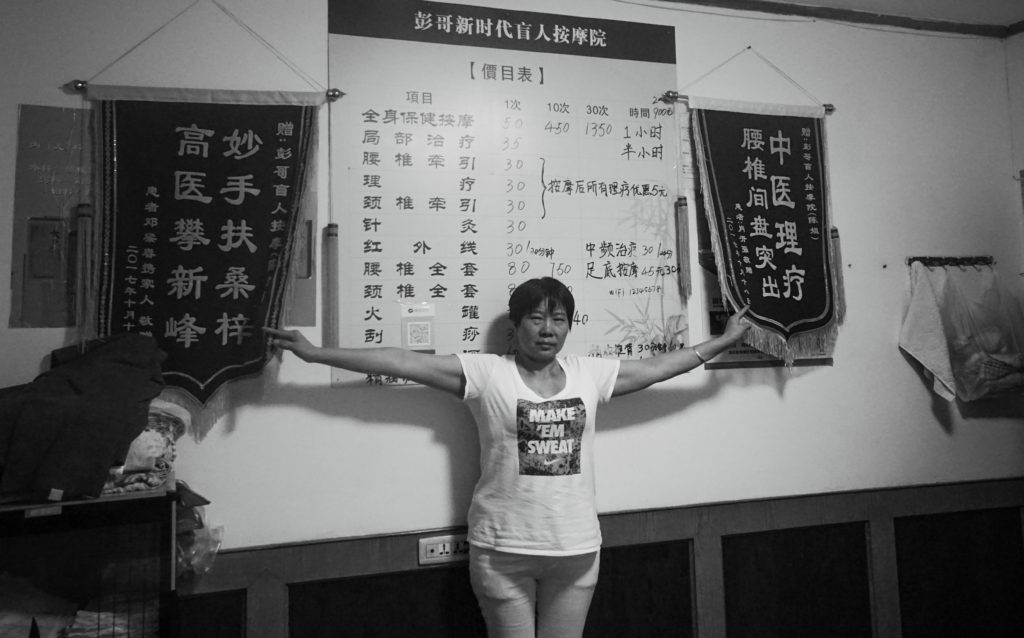
In Chongqing, the average monthly income of blind massage therapists is about 4,000 renminbi (or $555 as of March 19, 2019), said a massage worker. In comparison, the average monthly income in Chongqing is 7,177 renminbi (or $1,067.58), according to Zhaopin Limited, a Beijing-based career platform.
A way out of darkness
As the sun set, Yuanyuan Blind Massage Studio had welcomed four customers. After making up the massage table, Liu carried a chair and took a seat outside the door. Chongqing was in a heat wave, but the temperatures didn’t bother him.
Liu hoped that he could furnish his apartment by the end of 2018, which he hasn’t been able to do for the past three years, and study therapeutic massage for children.
“I was desperate when I thought that there were no paths for people like me to go,” he said. But things are not as bad as I expected— massage was the way out. ”
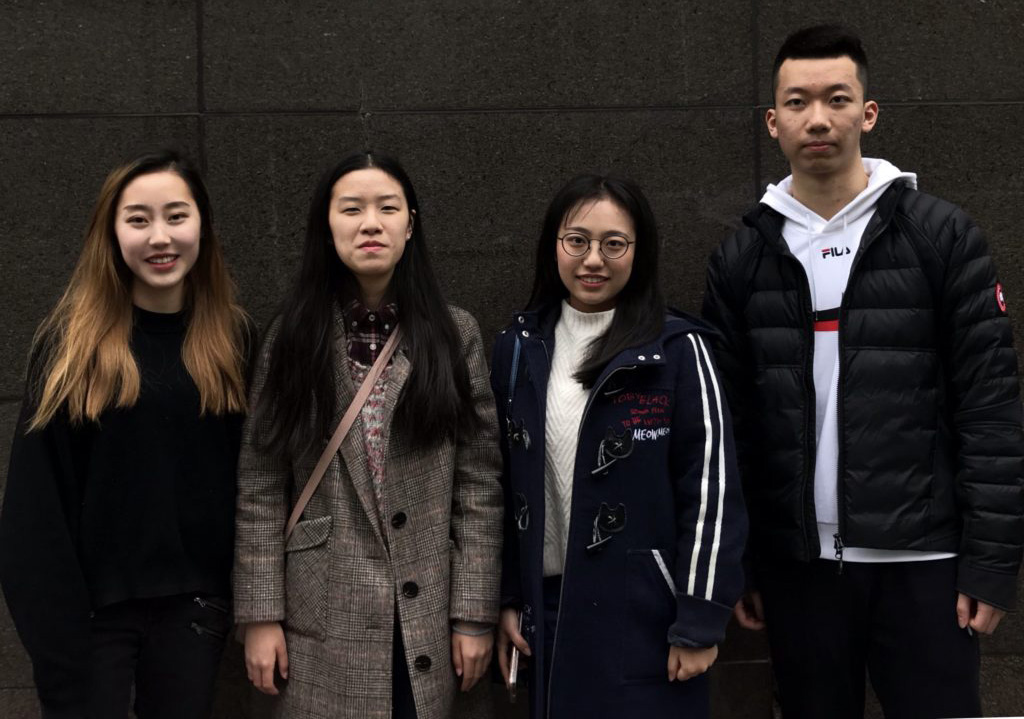
—This story was reported and written by students who participated in JEA China‘s 2018 Youth Observation Contest, where it received a superior rating. It has been edited for publication by Global Student Square and is published with permission.

Related Posts