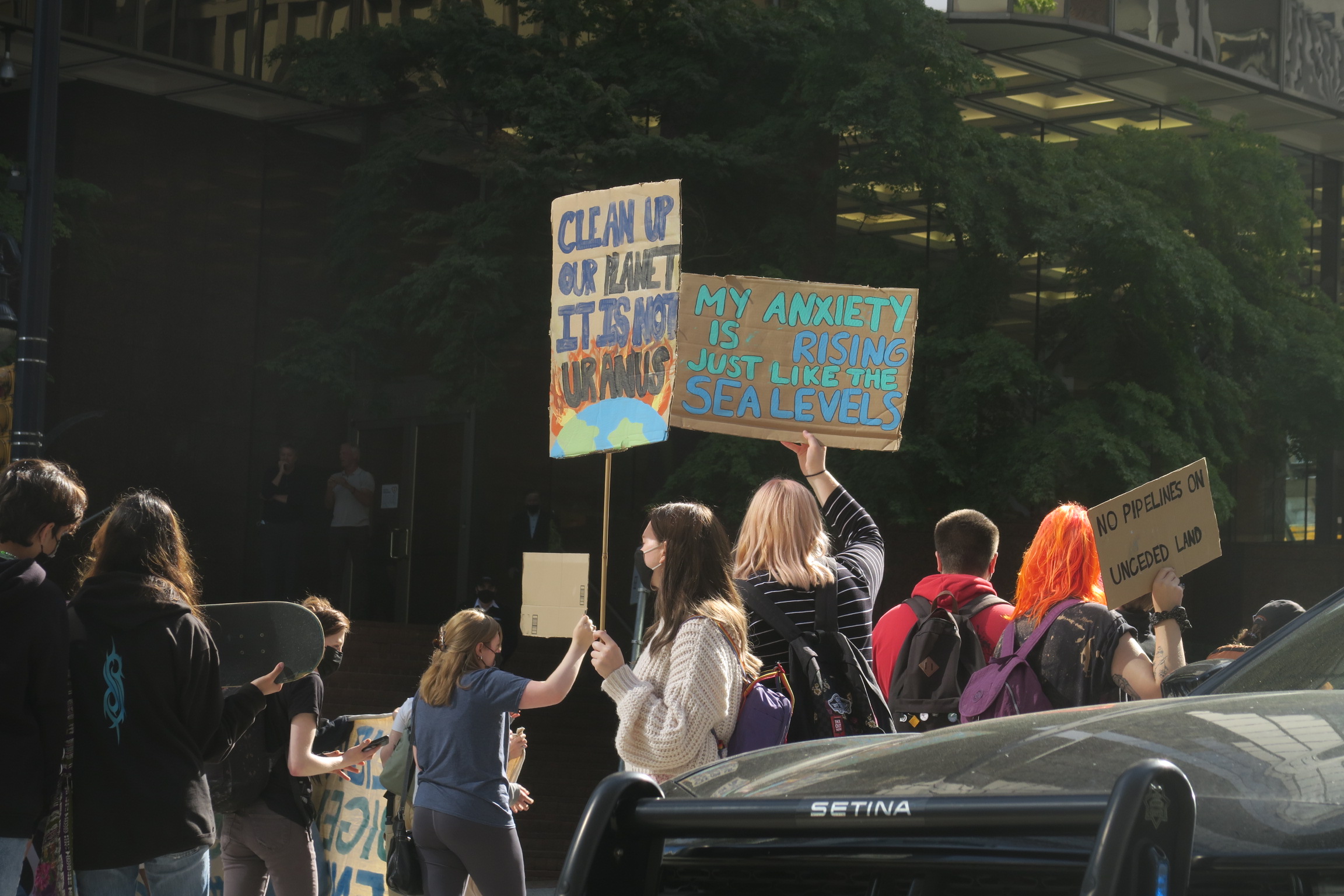
They’re back: Today’s Fridays for Future strike — the first in 18 months — will see youth activists taking to the streets again to push progress on solutions to climate change.
Here’s what you can do to raise awareness and seek solutions where you are.

Waste not, want more — Adidas, startups target plastic in bid to save the oceans
By Aélys Trouvé and Lily Hallenbeck
American School of Paris
PARIS — If there’s one thing humans are good at making, it’s garbage. And much of that is plastic, which turns out to be bad not only for humans but for the world’s oceans.
Fish and animals get caught in huge agglomerations of trash, such as the Great Pacific Garbage Patch, or swallow plastic, which then makes its way up the food chain to humans.
According to a 2015 report in the journal Science, 10 countries, eight of them in Asia, contribute to 50 percent of plastic waste in the world’s oceans.
Several startups that exhibited their products at the recent ChangeNOW summit at Station F in Paris are intent on getting rid of plastic waste and even turning it into something useful.
Among them were The Sea Cleaners, an organization whose goal is to “collecter les déchets plastiques en mer avant qu’ils ne se fragmentent,” or “collect garbage in the sea before it fragments.”

Their project is a ship that picks up 300 cubic meters of garbage per trip, and will be able to move extremely quickly through the sea. This ship is meant to sail in all of the oceans of the world, with the goal of picking up all the garbage in the water. Plans call for the ship to be built in 2020 or 2021. This project is partnered with Adidas.
Adidas is partnering with another sea-cleaning startup, Parley for the Oceans, which is working on another revolutionary idea: What if shoes could be made of trash? Designers have found a way to melt down gill nets and plastic that cannot be recycled, transforming them into sewable fibers.
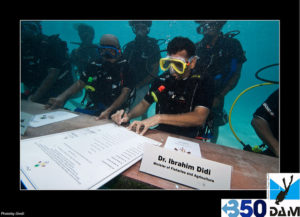
The first prototype of the shoe came out last year, using plastic from the Maldives. Since then, Adidas has partnered with Grenada and Jamaica to use the trash on their coasts and in their waters to make wearable shoes.
Plastic Odyssey is another startup that hopes to clean up the oceans. Their goals are to demonstrate and raise awareness and understanding of local recycling cultures and to initiate “human-scale projects” that can be carried out by one or two people.
Plans call for a 25-meter-long ship to launch on Oct. 31, 2019 and sail for three years. If it sets sail, the Odyssey will be the first vessel to travel around the world using plastic only as fuel.
According to Simon Bernard, cofounder of Plastic Odyssey, the ship will also be equipped with solar panels and will scoop up garbage as it goes: “The wastes will be harvested onshore during each call, then stored onboard, to finally be transformed into fuel and power the ship’s engines.”
All three of these startups are working on almost the same project, but in different ways. Two are building ships and one is making clothing, but all are fighting for a cleaner, greener Earth.
Reporting assistance by Pien Coenen/American School of Paris.

Related Posts