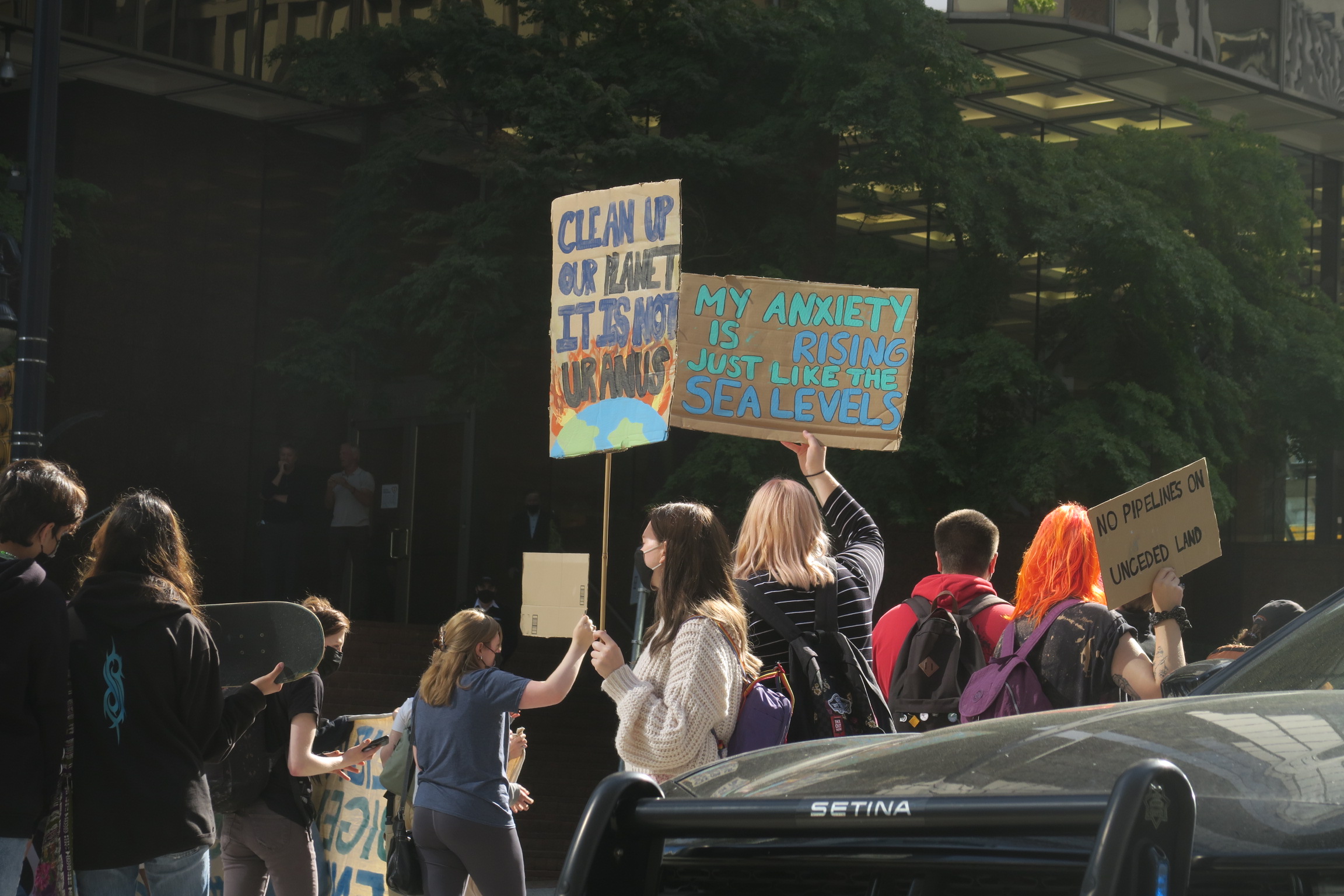
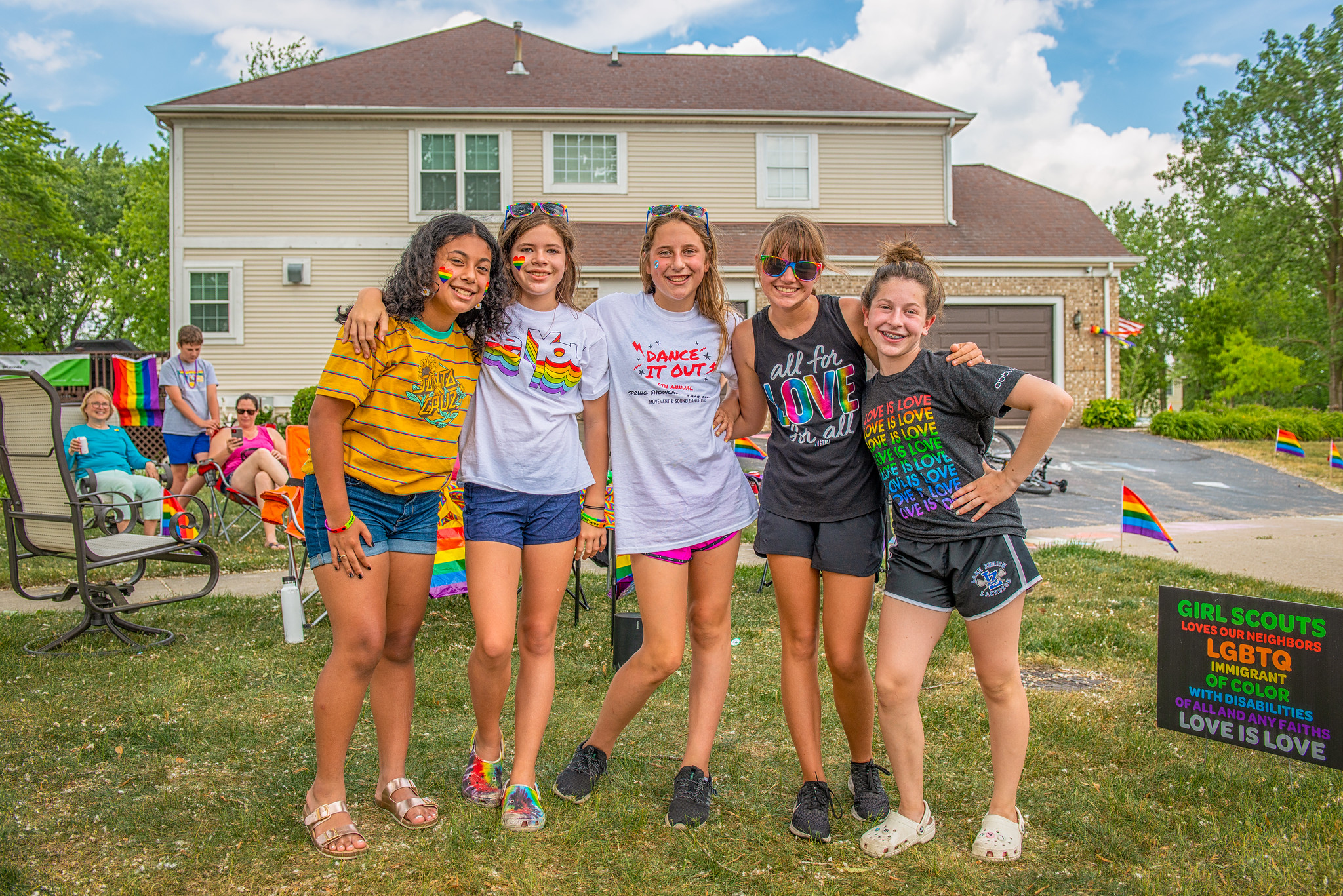
They’re back: Today’s Fridays for Future strike — the first in 18 months — will see youth activists taking to the streets again to push progress on solutions to climate change.
Here’s what you can do to raise awareness and seek solutions where you are.
As Trump becomes @POTUS, some still debate role of social media, fake news, memes in his victory
By Olivia Olander
GSS Correspondent
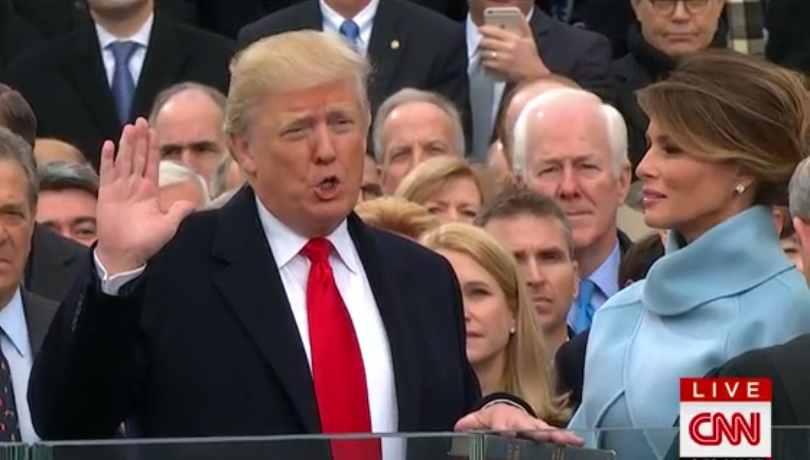
The Pope, pizza and partisan news: Donald Trump has just taken the oath of office to become the 45th president of the United States, but some are still debating the role of fake news, memes and social media accounts in his surprising victory.
The “fake news” phenomenon led Facebook officials to announce last month that they will implement tools for users to flag down fake news articles, and use independent fact-checkers to warn users if an article may be false.
That news came after mounting pressure on the social network, which was at first reluctant to take a stand on the countless false articles circulating through its pages. These articles sometimes spurred full-blown conspiracy theories, such as the “Pizzagate” incident on Dec. 4, in which a man fired at pizza restaurant Comet Ping Pong in Washington D.C., claiming he was investigating a widely debunked conspiracy theory about a pedophilia ring.
 Fake websites purporting to publish fact-based news also proliferated. In one such case, the website WTOE 5 News reported that Pope Francis had made “the unprecedented decision” to endorse Trump, adding that it would be “a dereliction of my duty” not to weigh in on the U.S. election. That story was later debunked by the fact-checking website Snopes.org in an article entitled “Nope Francis,” but was nevertheless shared on Facebook by nearly 1 million people.
One oft-quoted stat from Buzzfeed estimated that 38 percent of articles on three big right-wing news Facebook pages — Eagle Rising, Right Wing News and Freedom Daily — were at least partially false, while the same was true for 19 percent of three left-leaning pages — The Other 98%, Addicting Info and Occupy Democrats. The same analysis, published Oct. 20, also found that 19 percent of posts on “hyperpartisan” news pages had no factual content at all, meaning that they were usually jokes or memes.
Not surprisingly, a Stanford study released on Nov. 21 found that most teenagers were not able to distinguish between online opinions/sponsored content and news. This, combined with the scope of false articles that rippled through Facebook in the weeks and months prior to the election, has led some to wonder if fake news directly affected voters’ choices and students’ opinions.
Despite these statistics, those behind successful meme and hyperpartisan social media accounts are split on what they believe their impact to be. All political account holders said they do fact check their content in one way or another.
“I think the (Republican social media) accounts fueled some of the fire and got people motivated to vote more in Trump’s favor than Hillary’s,” said Nick, who declined to give his last name. The 17-year-old owns @AltRightKnight on Instagram (formerly @TrumpHQ), which has amassed about 12,100 followers and makes a business of selling Trump baseball caps:
“Social media was probably the main reason Trump got this far, and it’s amazing how technology did this,” added 16-year-old Alan I. of @ConservativePublic on Instagram (4,800 followers).
Some liberal account owners agreed.
“Democratic accounts undoubtedly helped to make the case for Secretary Clinton,” said Tony Nicholas Clark, 20, of @PeopleForProgressWorldwide (18,700 followers). “We were successful in getting important news and voters registration information to many folks who may have not gotten that information otherwise.”
“I also believe that we collectively did a marvelous job at countering the poor journalism that was present on various media outlets both on TV and the Internet,” he added.
“Social media affects young adults since they spend the majority of their free time on their phones,” said Leslie, 16, of @HillaryTheBoss on Instagram (5,600 followers), who also declined to give her last name. “I know it might sound that I’m over-exaggerating, but I believe that political social media accounts that give out news are modern day propaganda.”
However, other account owners did not see themselves as strong political forces.
“I do not believe our social media accounts have affected the elections in even a small fraction. Most of my followers are younger people who can’t vote yet,” said @Right_Conservative (40,200 followers), a 15-year-old who declined to give his name.
He estimated that “about half” of political Instagrams are run by teenagers 13 to 18 years old.
Some non-political humor account owners repeated this idea; Travis, the owner of @WhaleMart on Instagram (95,700 followers), said he doesn’t believe memes affected the election, “because most of my followers are under 18.”
Similarly, the head of Instagram humor accounts @TrapComedy and @NoChillHumor (296,000 followers total) said, “I don’t think memes changed the way the elections went; viewing the statistics made clear that a large part of the vote came from lower working-class males, most of whom I believe … never even heard of the word before.”
Nel, 18, of @YesFreeWifi on Instagram (70,300 followers), said she doesn’t think memes directly affected the election, but that “memes about politics are one of the reasons why the election got highly hyped on social media. I see political memes more as entertainment than trying to affect people’s choice.”
She also added that political memes tend to be popular, and “always give the opportunity for discussions.”
Overall, the majority of owners questioned said they thought political social media owners had the responsibility to fact check their content.
“Not only should political accounts fact check, but the viewer also has a responsibility to fact check as well,” the head of @UnitedConservatives (15,300 followers) said.
However, more humor-focused pages said they do not fact-check because they often avoid posting overtly political content.
“I don’t fact-check because if I were to post content that focused on blatantly claiming a certain truth, my page wouldn’t be a meme page anymore,” the head of @NoChillHumor and @TrapComedy said.
—Featured photo: Donald John Trump takes the oath of office on Jan. 20 at the U.S. Capitol Building in Washington, D.C., becoming the 45th president of the United States. Screenshot of CNN video by GSS staff.

Related Posts