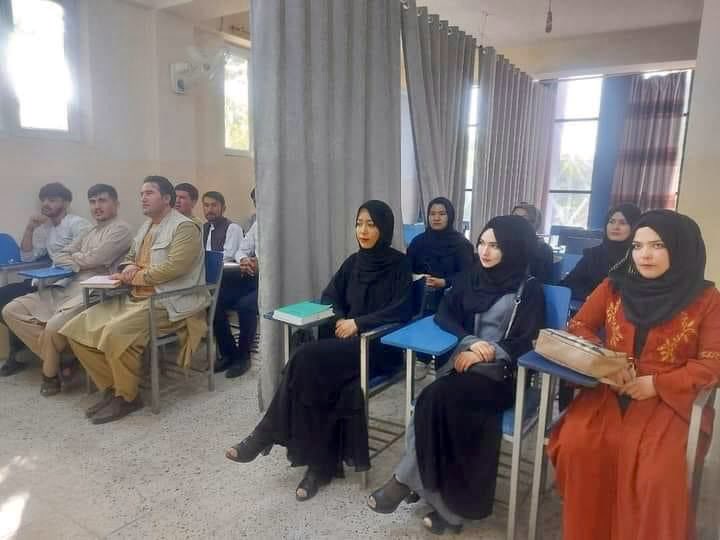
They’ve gone dark: Afghans who helped the U.S. military, trained as American-style journalists and rode the wave of women heading to higher education are destroying the diplomas, transcripts and résumés that prove how they built civil society in the country that the U.S. has left behind.
OPINION: Compassion, not numbness or fear, must answer #JeSuisBrussels
By Megumi Sano
GSS Correspondent
LONDON — It was just another English class, 3rd period on a Tuesday, when I read these lines from “Hamlet,” in which King Claudius ponders what he has done by murdering his brother:
“In the corrupted currents of this world/offence’s gilded hand may shove by justice/and oft ’tis seen the wicked prize itself/buys out the law.”
I read this line and thought: Shakespeare’s words have never been more relevant.
It was only this morning when my dad, a journalist, came racing down the stairs and started packing his suitcase. I immediately jumped on my computer to look for the headlines. Breakfast was set aside as I watched the appalling videos:
However, all this faded as I caught the bus to school. By the time a friend began talking to me about some new Snapchat filter, I had completely forgotten the terrible thing that happened this morning.
In fact, no one mentioned the attacks at all, until we came across Claudius’ soliloquy and my English teacher muttered, “How ironic.” Claudius’ guilt over murdering his brother in order to marry his wife — “my offence is rank it smells to heaven/It hath the primal eldest curse upon’t/A brother’s murder” — touched us more powerfully than any headline could.
When the Paris attacks were reported back in November, it was the topic of conversation for several weeks. As my school is located in the heart of London, we not only had grade meetings about terrorism, but we were also super-paranoid about fake gunshots and slash attacks — anything that seemed unsafe.
And four months later? We’ve become numb with fear.
When I asked her opinion on the attacks in Brussels, a friend responded with a long speech: “I’d like to say that these attacks in the heart of Europe – part of a campaign of fear and hate — have not succeeded. I’d like to say that I am not intimidated by these attacks. But that is not the truth. As I watched footage taken in the airport minutes after the explosions, as I heard the cries of the injured and read the stories of the survivors, I could not fight the feeling of fear, of angst, of apprehension … Terrorism is an imminent threat. It’s frightening.”
Others are slightly more optimistic.
“With London being so famous, it’s always a worry that it would be a target, but it’s important to remember that the purpose of these attacks is to create fear. So by not enjoying the city because of the small possibility that I’m killed by an attack is letting them win,” said one of my classmates confidently. “These attacks should encourage us to treasure and enjoy life even more as it is so fleeting, because the alternative is hiding and that’s a victory for the bad guys.”
“Campaign of fear,” “victory for the bad guys” — it seems that many of us understand, or at least we believe that we understand, ISIS’s intention behind these terrible crimes. The common belief is that ISIS wants to scare us so we can’t be paranoid about terrorist attacks; we must all be resilient.
But is it really resilience, or ignorance? What if the same attacks took place just five minutes away from our school? Would our resilience hold?
In my opinion, we often shut out what we don’t wish to see. How many teenagers know that four people were killed in Istanbul, Turkey just four days ago, by another suicide bomber for ISIS? Or that since January, there have been eight attacks directly linked to ISIS and two more “inspired” by it?
In his soliloquy, Hamlet wonders if it is better “to be or not to be” and if he should “take arms against a Sea of troubles.” If we maintain the air of numbness that I felt this morning, what steps can we take when they direct their guns right at us?

One of my friends is bringing flowers to the Belgian Embassy tomorrow, because she believes that “this is not just a Belgian or a French problem, but a global one.” Maybe what we ultimately need is neither fear nor resilience, but genuine compassion.
As of this writing, the bombings at Zaventem Airport and the Maelbeek metro station in Brussels this morning have claimed the lives of 31 and injured 200. We are a long way from Hamlet’s Denmark or Shakespeare’s day. In the corrupted currents of this world, we must stand firm, but with our eyes and ears wide open.
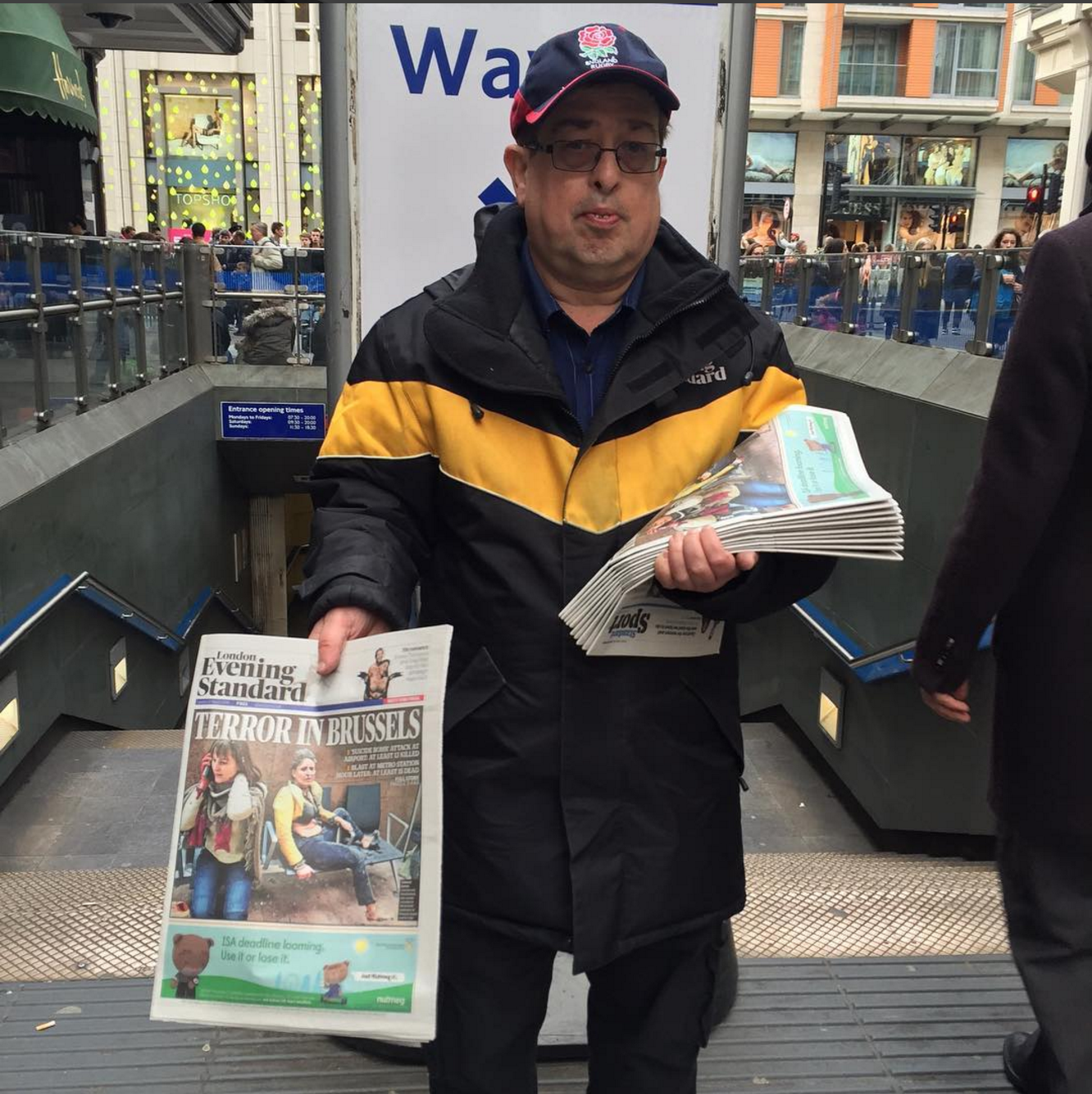
—Featured photo: A vendor in London in front of Harrod’s department store in Knightsbridge, London, offers sad headlines on today’s bombings in Brussels. Photo by GSS senior editor Jack Hennessy.
Megumi Sano is a student at Southbank International School in London. Opinion columns published on GSS represent the views of the author only and not Global Student Square. Contact Sano at megumi.sano@southbank.net.

Related Posts