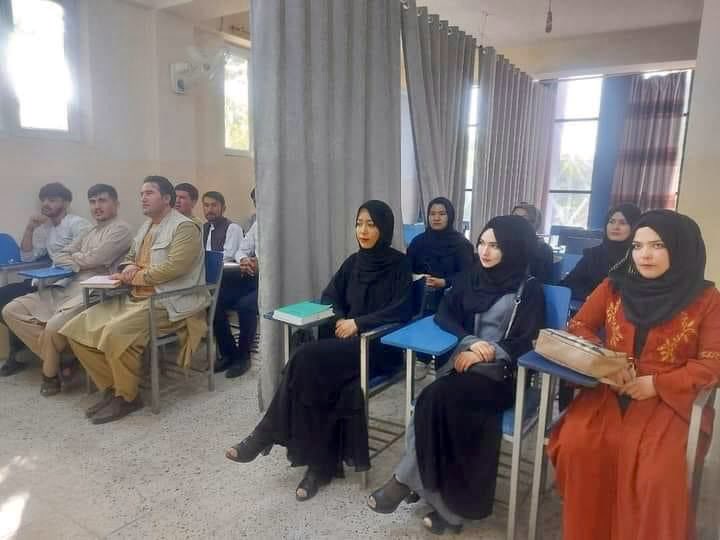
They’ve gone dark: Afghans who helped the U.S. military, trained as American-style journalists and rode the wave of women heading to higher education are destroying the diplomas, transcripts and résumés that prove how they built civil society in the country that the U.S. has left behind.
Opinion: Consider photos that have changed hearts, minds — and history
By Jack Campbell, GSS correspondent
PARIS — Empathy is a key feature of humanity; it makes us who we are. However, recent history has made us more isolationist than ever before. As the ongoing refugee crisis in Europe shows, society today centers on selfishness. We are losing our ability to empathize.And nowhere can this be seen more clearly than in the exodus of people from Syria.
According to a Sept. 3 estimate by the UN High Commission for Refugees, more than 2 million Syrians have fled their country since the beginning of the war in March 2011, yet the world has done nothing. To many of us in the West, numbers and statistics have become meaningless, despite the significance they have for the millions of people who are part of the Syrian “outflow,” as well as other migrants from Egypt, Iraq, Jordan, Lebanon and Turkey. Indifference has become the norm.

Aylan Kurdi changed all that.
Kurdi, a three-year-old Syrian boy, drowned in the Mediterranean Sea along with his brother and mother, as they tried to make their way from Turkey to a new home in Canada.
Photographer Nilufer Demir of Turkey’s Dogan News Agency, was crossing the beach on Sept. 2 when she saw Kurdi’s lifeless body.
“There was nothing to do except take his photograph … and that is exactly what I did,” she told CNN. “I thought, ‘This is the only way I can express the scream of his silent body.’ ”
The photo quickly went viral. And suddenly, the numbers had a face. One of of innocence and injustice, of a life not lived.
The cliché, “a picture is worth a thousand words,” exists for a reason. In our modern marketing age, photos have changed the way we act, from drinking while driving, to smoking, and more.
But can a photo create a change in the way we view the estimated 60 million refugees now searching for a safe place to call home? The following images are examples of photos that have changed hearts and minds over the years.
1972 Napalm Girl Photo

The Vietnam War was a failure of humanity; politics and ideological warfare took precedence over people. That is, until photos such as this one began to appear.
Associated Press photographer Nick Ut’s “1972 Napalm Girl Photo” shows nine-year-old Phan Thị Kim Phúc moments after her village of Trang Bang was bombed with napalm on June 8, 1972.
Her clothes ripped off by the heat of the bombs, Kim Phúc suffered severe burns. Immediately after capturing the photo, Ut, then 21, took Kim Phúc to a hospital where she was treated for for a year. She now lives in Canada with her two sons.
(Editor’s note: For more on Kim, including her work as a UNESCO goodwill ambassador, and her recent decision to seek laser treatment for her scars, click here for “The Girl in the Picture,” an interview by CBS correspondent Jane Pauley in October 2015.)
The photo of Kim Phúc won the Pulitzer Prize for Spot News Photography in 1973. It was instrumental in the anti-Vietnam War movement because it exposed the debate of leaving or staying in Vietnam as it truly was — a choice between life and death. No longer could war be glorified. Photojournalists could capture human moments and show a worldwide audience the reality they had tried to avoid.
Starving Girl in Sudan

Of all the challenges that humans face around the world, hunger is perhaps the most difficult to understand. According to a 2013 report by the UN’s Environment Programme and the World Resources Institute, consumers in industrialized countries waste 222 to 230 million tons of food each year — almost as much food as the aggregate harvest of sub-Saharan Africa.
This photo shows why that is wrong. Photographer Kevin Carter took it after arriving from Johannesburg on a plane carrying food. While her parents gathered food from the plane, Carter saw a vulture stalking a little girl. After taking the photo, Carter shooed away the vulture and left the girl alone, having been told not to touch anyone so as to not spread disease.
Published on March 26, 1993 in The New York Times, the photo provoked worldwide response and won the Pulitzer Prize for Feature Photography in April 1994. But Carter, who had been criticized for not aiding the girl before taking her photo, committed suicide three months later.
An Afghan life revealed

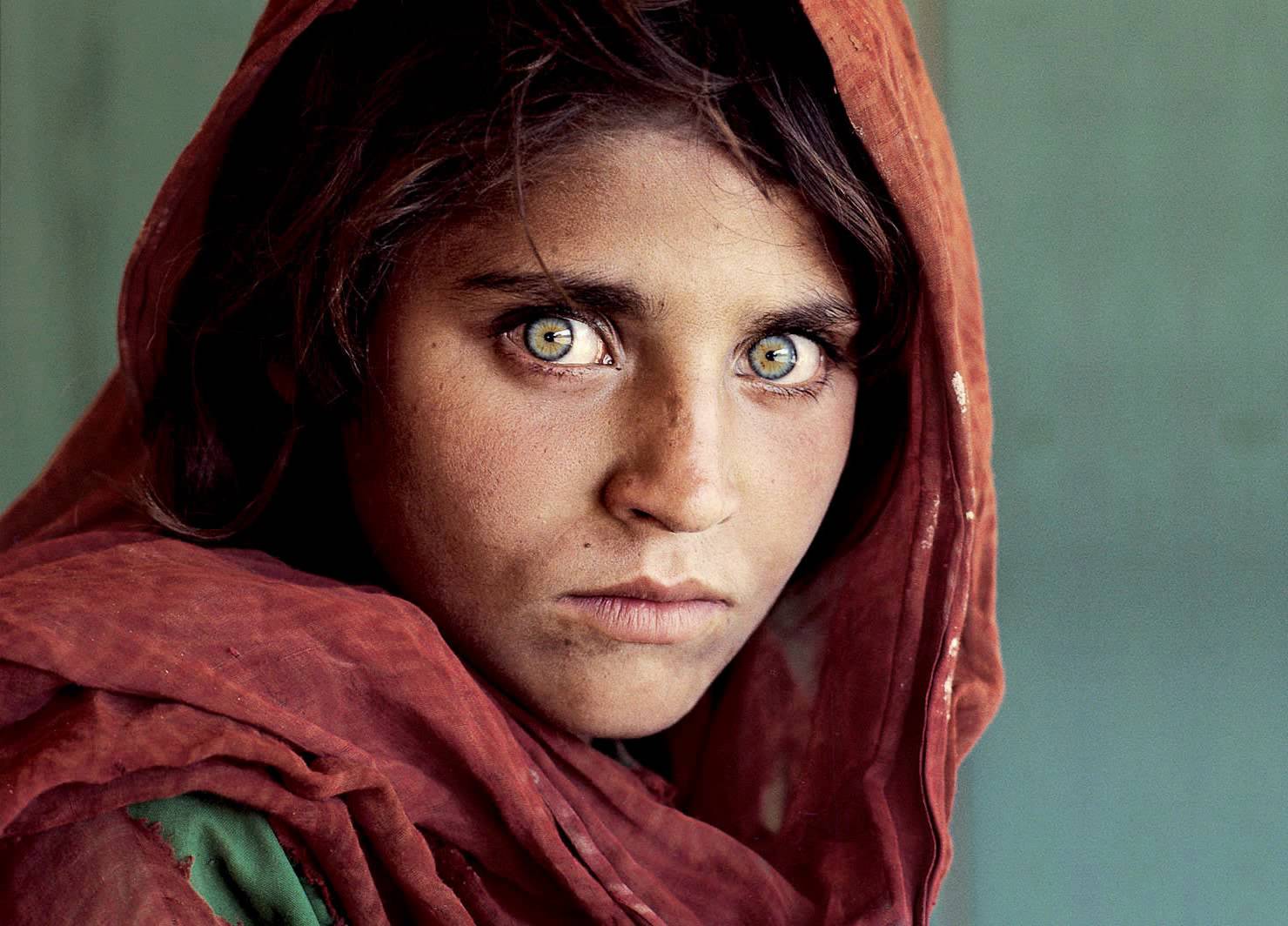
This photo of a 12-year-old Afghan refugee does not depict a gruesome scene, but that does not mean there is a happy story behind it. War steals homes, destroys families, and ends even hope. Sometimes, it can even steal a person’s identity.
The subject of this photo was a girl named Sharbat Gula. Taken by photographer Steve McCurry in a refugee camp on the Pakistan/Afghanistan border in December of 1984 during the Soviet invasion of Afghanistan, the photo was featured in the June 1985 of National Geographic magazine and became one of its most famous covers.
But for years, the identity of the green-eyed girl in the photograph was a mystery. McCurry had not asked for her name, and Gula was forced to flee to Pakistan with her grandmother and siblings after Soviet bombs killed her parents. Eventually, in 2002 a National Geographic team located Gula in Afghanistan; her identity was confirmed through iris recognition.
Gula’s photo is considered by some as one of the most iconic photos of all time, encouraging people to work with refugees, and serving as a source of Afghan pride.
Photos of Sharbat Gula (1984 and 2002) by Steve McCurry.
But perhaps it is no surprise that Gula’s own life has been one of constant struggle. “Time and hardship have erased her youth,” National Geographic reported in “A Life Revealed,” its account of finding Gula. “Her skin looks like leather. The geometry of her jaw has softened. The eyes still glare; that has not softened.”
—Jack Campbell is a senior at the American School of Paris. Contact Jack at jocampbell@asparis.fr.

Related Posts