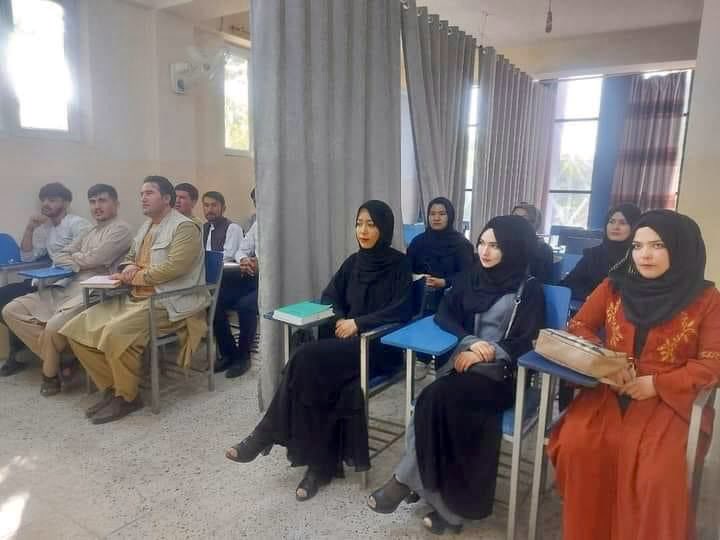
They’ve gone dark: Afghans who helped the U.S. military, trained as American-style journalists and rode the wave of women heading to higher education are destroying the diplomas, transcripts and résumés that prove how they built civil society in the country that the U.S. has left behind.

Coming out: What it’s like to be transgender in China
By Jin Yinuo, Liu Zhuoer, Li Yuting, Ma Yang and Pu Jun, Singapore Hwa Chong International School, Shanghai High School International Division and Shanghai Experimental Foreign Language School

SHANGHAI — In 2012, news of a Qingdao house fire went viral. The report, which was originally posted on news and lifestyle website Qingdao Shenghuo, was reposted over a thousand times.
The homeowner, a waste picker with long hair and amateurish heavy makeup, went on television and became the center of controversy. She was Liu Peilin, a 63-year-old transgender woman who had been raised by a foster family.
In a phone interview, Liu told us that she first wanted to become a woman when she played the part of a heroine in a primary school drama. The impulse would grow stronger in her 20s.
However, Qingdao in the 1980s was one of the most conservative times and places to be. Identifying as non-cisgender (having a gender identity different from the assigned sex at birth) would expose one to inconceivable malice from others, even danger. Thus, as a young woman Liu chose to keep her desire to become a woman a secret.
Liu had a family as a man before she came out as a woman in her 40s, according to Inkstone News. After her former employer went bankrupt, Liu sold her only home to raise money for her foster mother’s surgery.
Liu had accumulated more than 100,000 RMB (more than $14,000 USD) in debt. Liu soon learned to ignore others’ views towards her and began the life of a salvager.
Liu also began the transition to life as a woman, dressing in women’s clothes that she found in a trash bin.
“Strangers were spitting or cursing; I can only try not to take it too hard,” she said.
Public attitudes toward the LGBTQ+ community
Because topics on the LGBTQ+ community in China are still highly sensitive, most transgender people choose to stay anonymous — meaning there are no relatively accurate statistics on the current Chinese transgender population. Instead, the Beijing LGBT Center, a non-profit, community-based organization organized by Peking University, advocates and provides resources for the Chinese LGBTQ+ community.
The United Nations Development Programme’s National Survey on Social Attitudes towards Sexual Orientation, Gender Identity
Although more than 63% of respondents identified as LGBTI, trans people received the second-lowest tolerance as a minority from the public and other minorities.
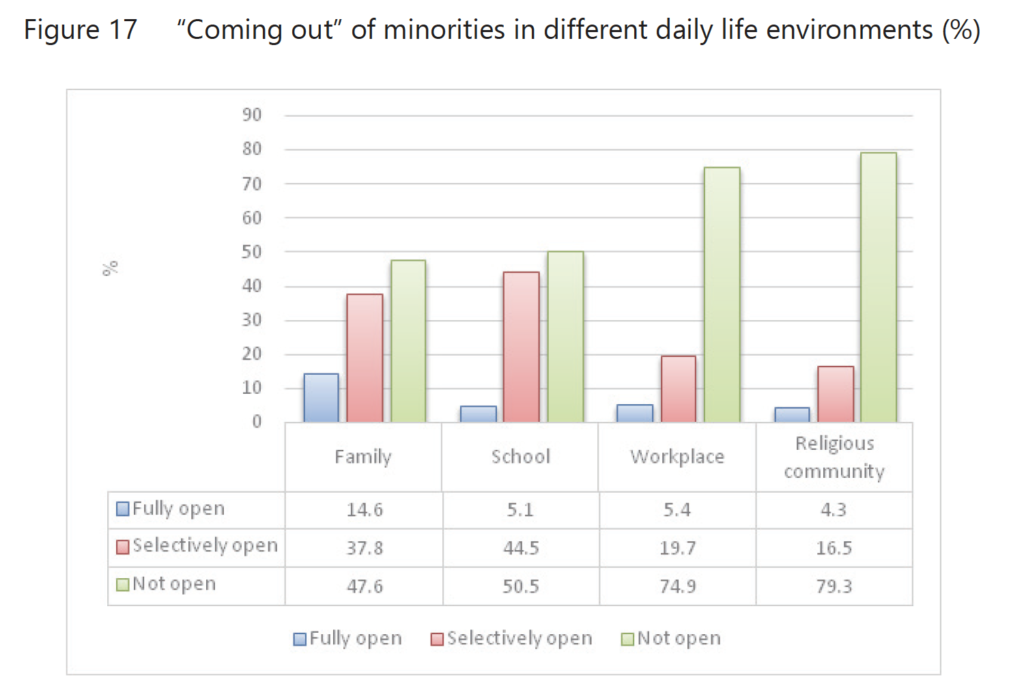
Survey results showed that nearly half of gender minorities chose not to come out to families, and 75% chose not to disclose their minority status in the workplace. Only a few hospitals in Shanghai and Beijing provide prescription hormones for trans people.
The pressure of family prejudice
Jerry Liu, a 27-year-old trans man from Hangzhou, told us he had resisted having feminine features, such as long hair, since he was five years old. But his mother refused to feed him unless he agreed to wear dresses. Jerry had to put on what his mother asked him to wear.
Jerry also felt increasingly anxious and uncomfortable when going to public lavatories. He believed that none of his female body parts belonged to him. Jerry felt humiliated, had low self-esteem and started to fail exams at school because of the stress caused by his struggle with his identity. Soon after, he became depressed.
In our reporting, similar stories came up time after time. Fu, who declined to give his full name due to privacy concerns, is a 22-year-old college student from Chongqing. In the 5th grade, he mentioned to his mother that he wanted to become a man through sex reassignment surgery.
“Her face suddenly turned pale; she probably thought I was some kind of monster,” Fu said.
Fu’s high school friend helped: After understanding his situation, she researched cases of other trans people to reassure Fu that he was not alone.
Chengdu resident Wang Zhou, 22, came out in 2017 after learning what the term “transgender” meant. Wang’s father threatened to commit suicide when he heard that Wang wanted to become a woman. Later, when Wang confessed to his family that he had received hormone injections, his father yelled that he would call the police and find out the source of Wang’s medicine.
Society’s attitudes towards trans people
Family is not the only origin of prejudice. Liu said that she tried to find a job after she came out, but no company would hire her after employers found out about her sexuality. Even her neighbors expelled her from her apartment.
In an attempt to fit in, Liu put on her only man’s suit and changed her hair to a crew cut, to look more like a man.
“It was so uncomfortable and embarrassing, like making a cisgender man put on women’s clothing,” Liu said dejectedly. “I can barely recognize myself — even talking coherently becomes difficult. But they still refuse to give me a job, or a place to live.”
Avery Zhao, 25, a trans woman now working in Shanghai, said that “transgender person” was used as a derogatory term between relatives when she was growing up.
“The public widely accepts the majority rule, but people don’t think that meanwhile, the minority (also) deserve to be respected,” she said.
Zhao said she was tormented during secondary school in Guizhou by bullies who targeted her femininity. “They pushed me to the railings and imitated the movement of intercourse,” she recalled.
Born in the late 1980s, Fang Yuran’s perception of gender was shaped by his parents until his third year in college. Joining an LGBT community in Beijing allowed the Hefei native to learn the term “transgender” for the first time. More importantly, the community was a refuge where Fang, 30, could be himself.
However, the sense of security was soon destroyed. Fang once shared his stories of being a transgender man with Phoenix New Media, a leading new media company in China, while working at the Beijing LGBT Center.
Afterwards, “(s)omeone made my personal contact information public,” he said. “People send messages to insult me, and they’ve threatened to expose my address to try to stop me from making the report.”
Malicious comments and online harassment contributed to the onset of his depression.
A minority within gender minorities: Genderqueer
Most of our interviewees described themselves as 70% to 90% of the gender they identify with, but Sa Yuri, who graduated from a university in the U.S., is different. Sa, 28, uses they/them pronouns, identifying as genderqueer or non-binary, a categorization for those who identify with more than one gender. Sa feels that they have both male and female traits.
Solitude is a word that almost every interviewee mentioned, and it comes with the discrimination that minorities have experienced for decades. Sa said the public believes that being
The future of LGBTQ+ communities in China
The gay and lesbian community is becoming the least discriminated group within the Chinese LGBTQ+ community, as mass media is beginning to report on and include more instances of gay couples. However, the public still holds profound prejudice and misunderstanding towards transgender people as a sexual minority.
When discussing potential changes that could benefit the LGBTQ+ community, many interviewees suggested building public lavatories for a third gender and widening the availability of prescription hormones. Zhao said that banks should offer optional or non-directional gender prefixes in online banking for customers to avoid offending customers.
However, others mentioned that if they changed their sex on their national identification cards after reassignment surgery, changing the gender printed on their diploma or finding a job could still pose major problems.
Among the interviewees, Zhao and Zhou specifically expressed their dissatisfaction with the status of LGBTQ+ people in China. Less than
“Gay people are getting relatively the most attention and support (in the LGBTQ+ community) in decades,” Zhou said. “If they are still being treated unfairly, equal rights for transgenders in China is (even harder) to imagine.”
Zhao said she was was questioned by police for two hours after posting her personal views toward the government on WeChat’s Moments feature, advocating to protect sexual minorities who don’t have a voice. Zhao and two other interviewees said that they have plans to encourage qualified transgender people to emigrate to a more LGBTQ-friendly country.
“The government has no energy to spare in attaching importance to sexual minorities yet,” said Ander Gon, 21, who attends York University in Canada. “The first step should be giving the public a correct understanding of (the term) ‘transgender.’”
In recent years, more of the younger generations have accepted the idea of being transgender. Our interviewees said that the most assistance and encouragement they get is from their peers. Though the support rate is still low, 60% of parents with transgender children in their 20s holds a neutral stance towards their child’s gender identity.
After a flurry of media attention, Liu now has over 3000 followers on Weibo and has become a positive public transgender figure. Readers send packages of dresses and cosmetics to her new home, built in Fuzhou by volunteers.
On June 19, 2019, the Nanjing Notary Office published an article on its official WeChat account stating that gay couples are now welcome to apply for voluntary legal guardianship, as are other minorities. Notary offices in Shanghai and Beijing followed suit, announcing their provision of legal protection for LGBTQ+ in their respective cities.
Though there are still many problems to be solved, China is working on treating sexual minorities in a better way.
—This story was reported and written by students who participated in JEA China‘s 2019 Youth Observation Contest, where it received a superior rating. It has been edited for publication by Global Student Square and is published with permission.

Related Posts