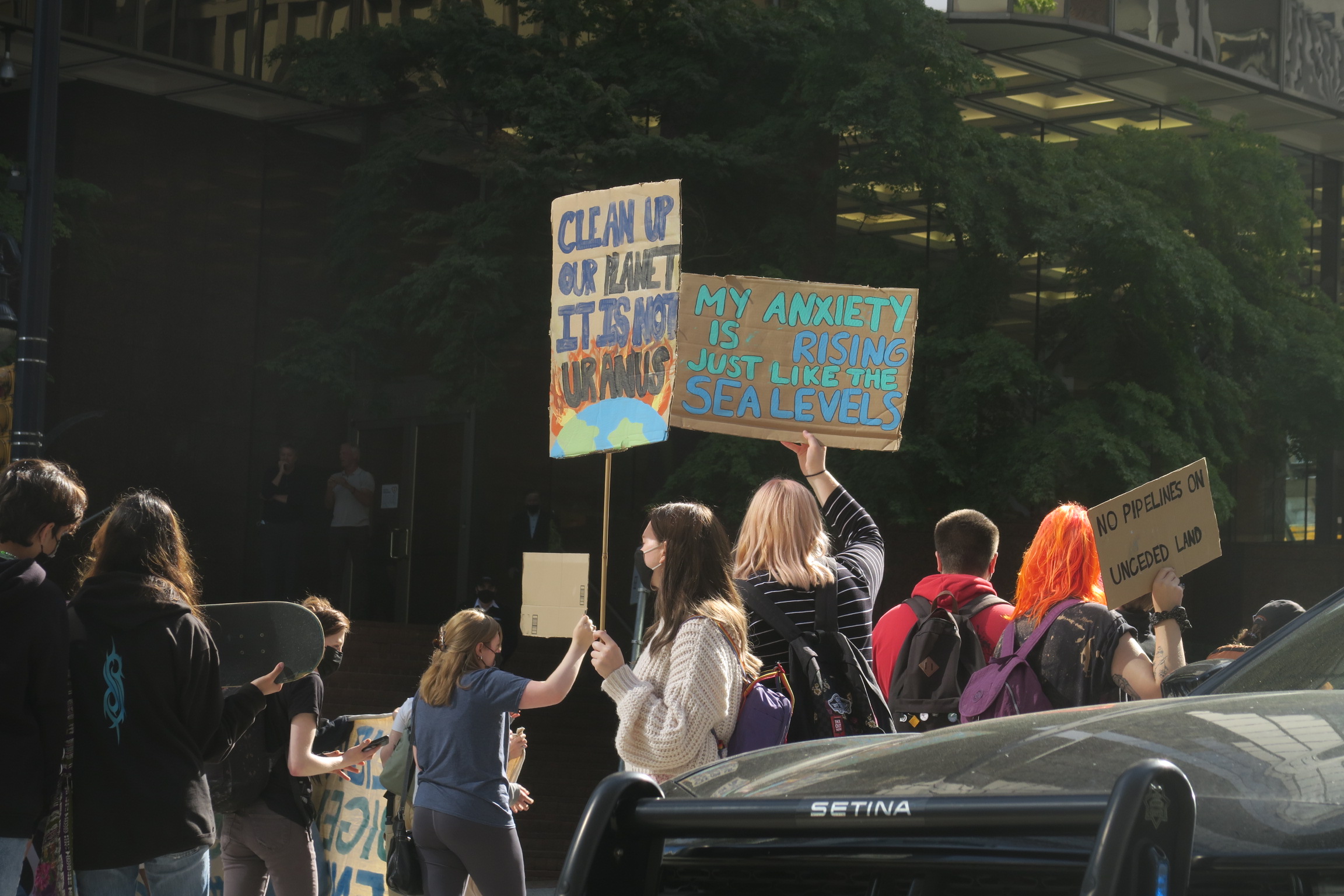
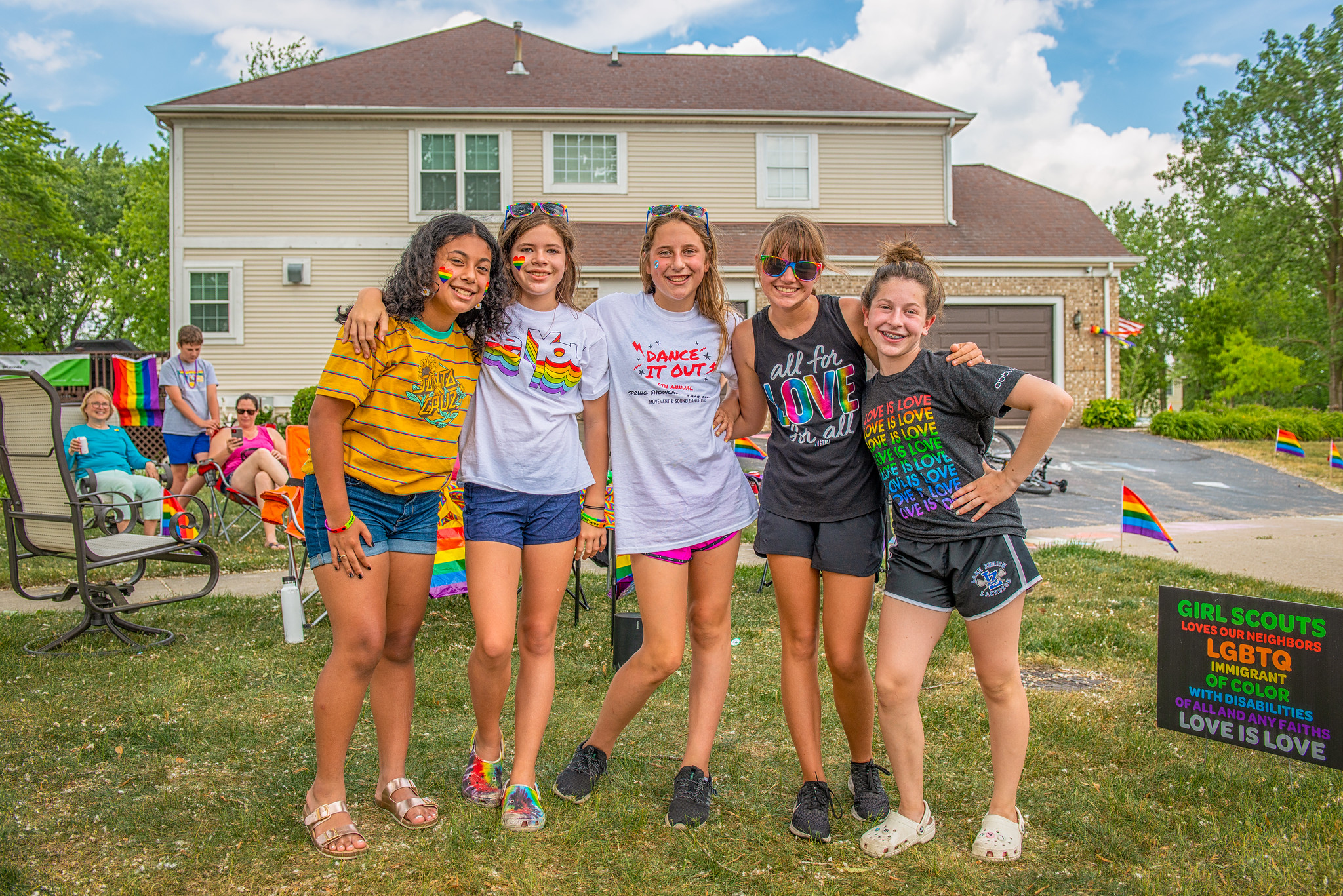
They’re back: Today’s Fridays for Future strike — the first in 18 months — will see youth activists taking to the streets again to push progress on solutions to climate change.
Here’s what you can do to raise awareness and seek solutions where you are.
Parents, teachers, students at New York’s March For Our Lives urge sensible solutions to school safety, gun control
By Izzie Ramirez
GSS East Coast editor
NEW YORK — It was a sister march, but it included brothers, parents, grandparents and teachers as well.
Approximately 175,000 people turned out for the March for Our Lives in New York, marching from the Upper West Side to Midtown and passing two Trump towers along the way. It was one of an estimated 800 sister marches that took place Saturday across the U.S. and around the world, along with a national march in Washington, D.C.
Organized after the events of the Marjory Stoneman Douglas High School shooting last month in Parkland, Florida, the March for Our Lives in Washington, D.C., was called for by the surviving students within three days of the attack.
Before the marching began in New York, local activists from anti-gun violence organizations to Black Lives Matter spoke at a stage located at West 72 Street and Central Park West and gave their condolences to the Parkland survivors and family members of the deceased. Volunteers at the march also helped protestors register to vote.
The grandmother of Gina Montalto, a 14-year-old student who was killed in the Feb. 14 shooting at Marjory Stoneman Douglas High School, recited the speech that her son prepared for his own appearance at the March For Our Lives in Parkland.
“We need action,” she said. “Vote to make schools safer.”
Parents such as Matthew Young, a father of 8-year-old twins from Westchester, New York, showed up to the march because they want their children to be safe.
“We love our children and we’re tired of the NRA railroading the whole argument, so we want to stop guns and stop gun violence,” Young said.
He recalled a playdate in which his children re-enacted an emergency scenario at school. “They’re so prevalent, those lockdown drills, that when they play(ed) school at our house … the first thing they did was a lockdown drill before they went to lessons,” said Young.
Lockdown drills have taken a toll. Long Island teacher Cary Epstein, 37, said the environment in his classroom has “absolutely” changed.
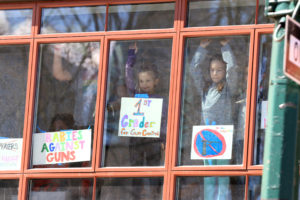
“My students are scared,” Epstein said. “They’re afraid of what’s to be, what’s going to happen next and who is going to be the next school shooter and who is next to be on the news. Schools should be a safe haven. It shouldn’t be a place where students are being killed.”
Epstein advocated for “common-sense” gun laws and school safety by taking assault rifles off the street and providing mental health resources to those in distress.
“Personally, I take it to heart with my school’s safety and my students’ safety, not just in my classroom but across the country,” Epstein said. “It should be a number-one priority.”
Alex, an English teacher who declined to give her last name but said she works in a Brooklyn middle school, said that while she doesn’t think the march will change anything on its own, it is part of a bigger movement — and that makes her hopeful.
“I’ve had to lead a lot of students in lockdown drills and shelter drills,” Alex said. “It’s really, really horrible to watch a bunch of 11-year-olds crammed into a closet silently. They don’t totally understand what’s going on. They shouldn’t have to understand what’s going on.”
She also mentioned how she used to be jaded when it came to thinking change could happen.
“I was a little bit resigned, but now all of a sudden, I’m feeling like maybe something could change,” Alex said. “Maybe there is actually energy and that people are coming together more. I think you need something to kick start it. I’m really, really proud of all the organizers, especially the younger ones. That’s the most important thing because they’re not going anywhere soon.”
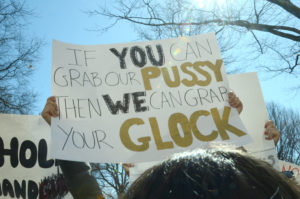
Alex is right: No matter what one’s politics, clearly students were at the heart of today’s march and a fast-growing political movement.
Isabella Diefendorf, a 16-year-old who attends American Heritage School in south Florida, said the Parkland shooting made her realize change needs to be made.
“I’m here because the Parkland shooting happened, like, 20 minutes away from where I go to school,” Diefendorf said. “I feel like, as a kid, it’s hard to be heard and to have a voice. So this is an amazing opportunity for me to feel like I’m contributing to my society and to my legal system.”
Diefendorf said almost no one came to school the day after the Parkland shooting.
“It’s still horrifying to see children your age be shot in school,” Diefendorf said. “The day after, nobody came to school. It was like me and three other kids. Everybody was one edge. It was such a horrible feeling just being in that environment. That’s when I knew things needed to be different.”
For Keith Brown, a 17-year-old from New Jersey, today’s march was a chance to support the students who became activists after the shooting.
“I’m also marching to support the students of Parkland, who were, in my opinion, demonized by the conservative media just for speaking their voices,” Brown said. “I’m just showing that I have a voice as well. We all have voices.”
But high schoolers weren’t the only ones in attendance.
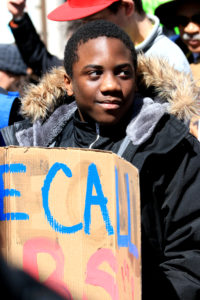
Middle schoolers Richard Bygrave, 13, and his friends Angelisa Cresel and Ashayla Theodore attend the Unity Preparatory Charter School of Brooklyn. Bygrave said his classmates have been talking about potential solutions in the classroom.
“We also have been talking about how it’s not right that Donald Trump to tell people that teachers should have guns,” Bygrave said. “That could be unsafe. Any child could walk up and take the teacher’s gun.”
Cresel chimed in, saying she has been thinking about her parents.
“At Unity in class, we’ve been talking about how it makes us feel knowing how our parents would feel if they lost us,” Cresel said. “We show appreciation on how everybody is marching for their kids that have been lost.”
Theodore said parents shouldn’t have to worry when dropping off their kids at school.
“We talk about how our parents just send us to school knowing that we’re safe and that nothing’s going to happen to us,” Theodore said. “They should know we should come home happy from school and learning what we should be learning instead of focusing on this.”
However, it’s hard to focus on school, especially when students don’t know if a lockdown is a drill or real. Ash Horn, 12, who attends The Center School in Manhattan, said that there’s no way to tell. And that’s scary.
“It could always be you, you know? I’m here just to show people that anyone can really do this,” said Horn.
“Anyone can protest. Our lives aren’t insignificant. Our lives are (more) worthy than just the fun of shooting or the right to bear arms. It’s that my right to learn and my right to live is more important than someone’s right to bear arms.”
Additional reporting by Devin Wright. Additional photography by Lea Marchl, a student at Lycee Français in New York.
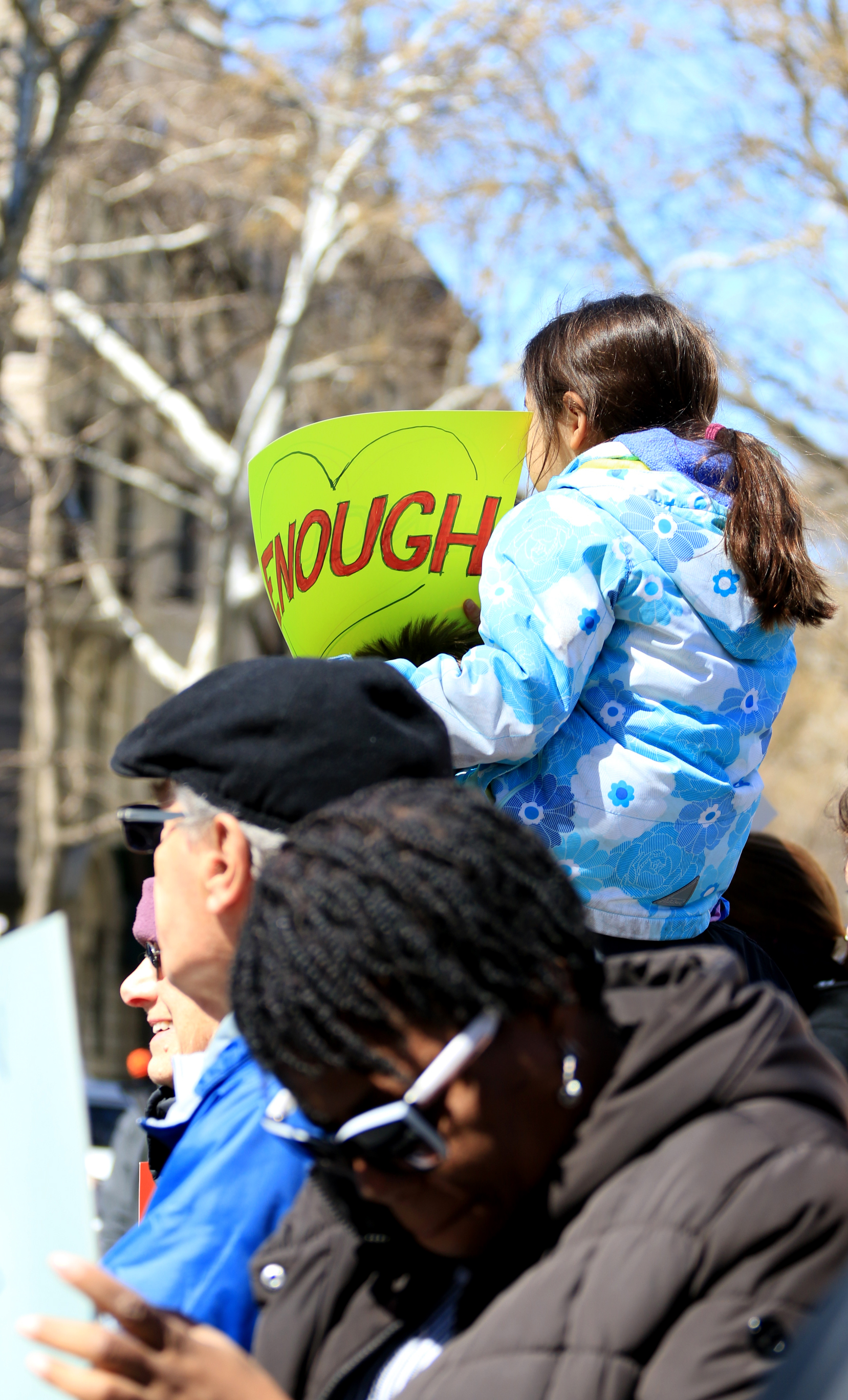
—Featured photo: A girl holds a sign signaling her desire for an end to school shootings at West 72nd Street and Central Park West as speakers ended their remarks and before New York’s March For Our Lives began. Photo by Izzie Ramirez.

Related Posts