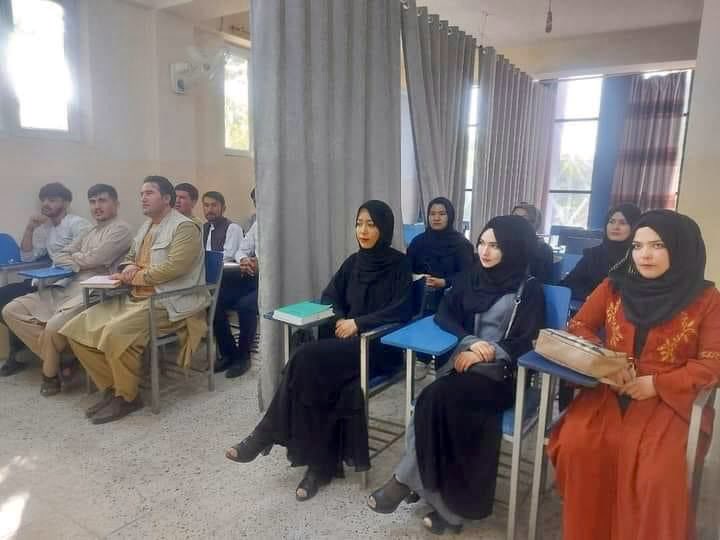
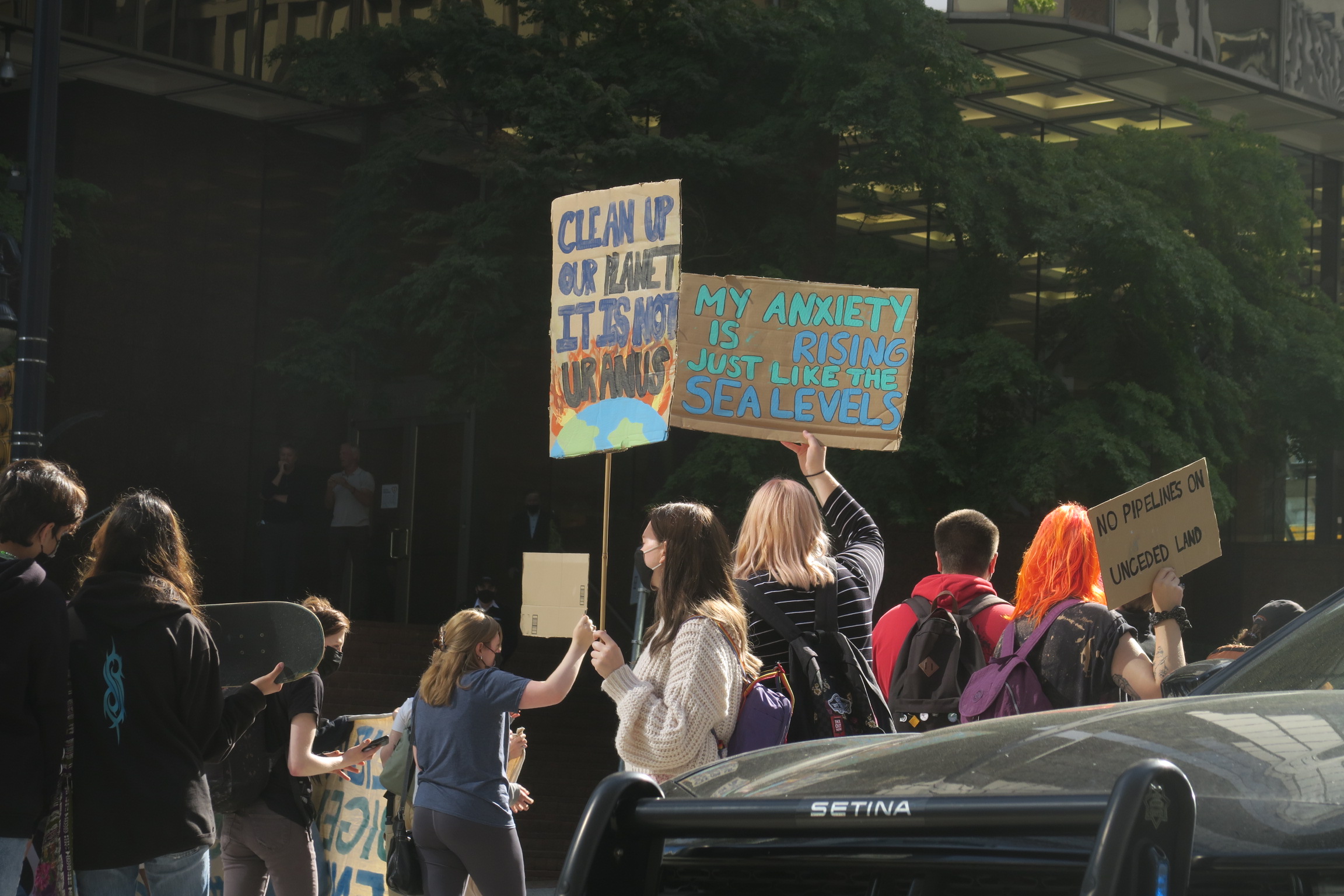
They’ve gone dark: Afghans who helped the U.S. military, trained as American-style journalists and rode the wave of women heading to higher education are destroying the diplomas, transcripts and résumés that prove how they built civil society in the country that the U.S. has left behind.
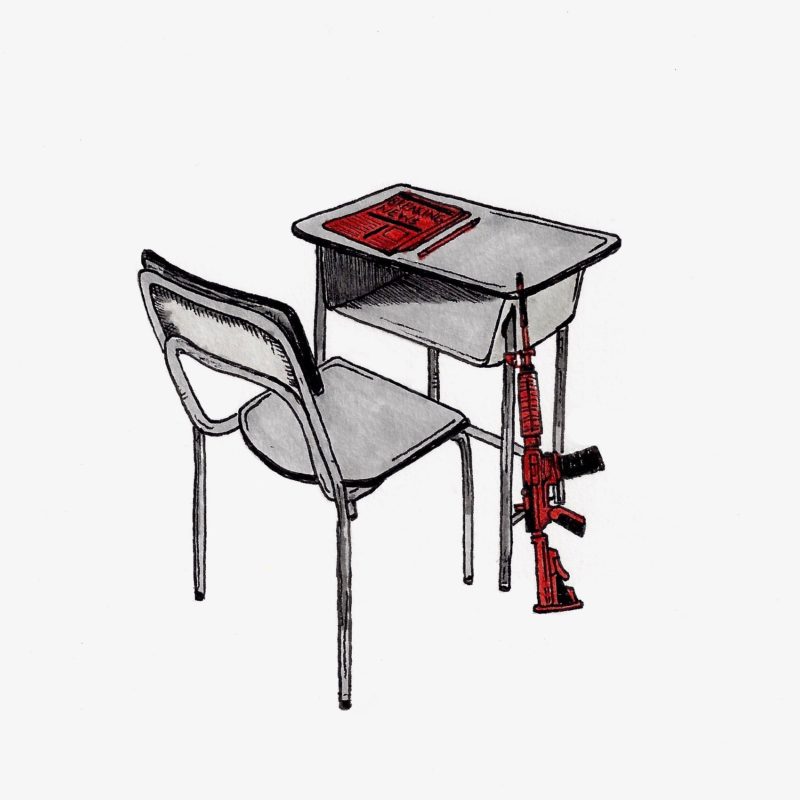
OPINION: In Denver, it can’t be just another Wednesday
By Allie Kelly, GSS editor
DENVER — He loves “Peppa Pig.” I’m sitting on my neighbors’ couch, babysitting their 2-year-old son because preschool was canceled today, and we’re watching “Peppa.” He doesn’t know why he’s still in his pajamas on a Wednesday morning.
I’m a high school senior, with more than 12 years in school, and having class canceled because of a shooting threat is something I haven’t experienced before.
My school has been threatened by guns, but those lockdowns only resulted in increased police presence on campus, some concerned parents — and, once, the appearance of the SWAT team.
Never before has school been canceled.
The Denver Post reported that the woman at large was “infatuated with Columbine,” and had purchased a shotgun after arriving in Colorado this week. Three days before the 20th anniversary of the shooting at Columbine High School, where 13 lives were lost, this information is particularly painful. That tragedy continues to cycle through our nation’s public conversation on gun violence. This is not because we want to remember the past, but because shootings continue to be America’s present.
This morning, I watched my mom, who remembers placing flowers on the long row of Columbine High memorials years ago, break down in tears while watching the news. A part of her, understandably, is terrified for us. I never want to text her and my dad “I love you” from a locked school broom closet. But, at 18 years old, I don’t know a world where that thought doesn’t come to mind sometimes.
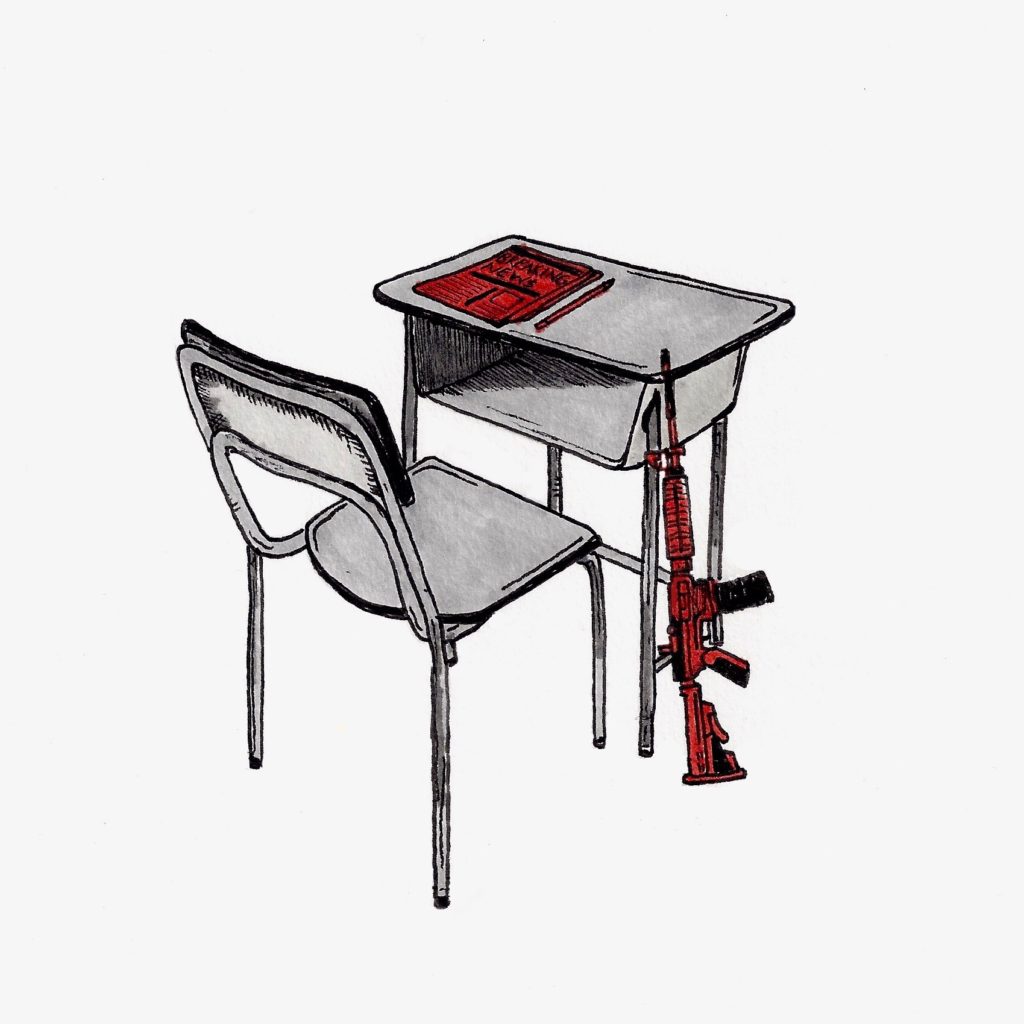
School shooting threats aren’t uncommon. Lockdown drills and March for Our Lives events have characterized much of my high school experience. Maybe it’s because I live in Denver, Colo., less than a half-hour drive to Littleton, the quiet suburban community of Columbine High School. Or perhaps it’s because, since I began my ninth-grade geometry course, I have heard the stories of lives lost in Orlando; Las Vegas; San Bernardino, California; Annapolis, Maryland and Parkland, Florida.
This time, I am surprised that the suspect being hunted is a teenage woman. I don’t mean to stereotype — young women are capable of violence — but a “massive manhunt” for an 18-year-old female is a departure from the usual headline. Still, the fact that the suspect’s gender was more startling to me than the fact that she has a gun is concerning — I’m getting too used to this.
I’m becoming too accustomed to the headlines, the funerals, the vain hope for change. I can feel the numbing, the normalization, the faint pit in my stomach that settles and stays there.
It isn’t OK. My younger sister’s soccer practice was canceled Tuesday night because now it’s dangerous to have a large group of children together in a public place. Her team is considered an “easy target.” A toddler’s mother had to text me Wednesday morning hoping that I could watch her son, kept home by a hunt for a shooter, while she went to work. Thousands of students are missing science tests, reading lessons and art projects because there is somebody in my city with a gun.
There is nothing about this that is normal.
It should not be ordinary.
It can not be just another Wednesday.
Yet, here I am, watching “Peppa Pig” and refreshing the news page on my phone waiting for the latest update.
Editor’s note: Shortly before noon on Wednesday, the FBI’s Denver office reported via Twitter that Sol Pais, the Florida woman accused of making threats against schools in the Denver area, was found dead from an apparent self-inflicted gunshot wound earlier that morning.
—Allie Kelly is a senior at Denver East High School in Denver, Colorado. Earlier this year, she served as assistant project editor for “Since Parkland,” a student journalism project that produced 1,200 stories about children and teens who died in gun violence following the shooting at Marjory Stoneman Douglas High School in Florida. This story was also published by the San Francisco Chronicle.

Related Posts