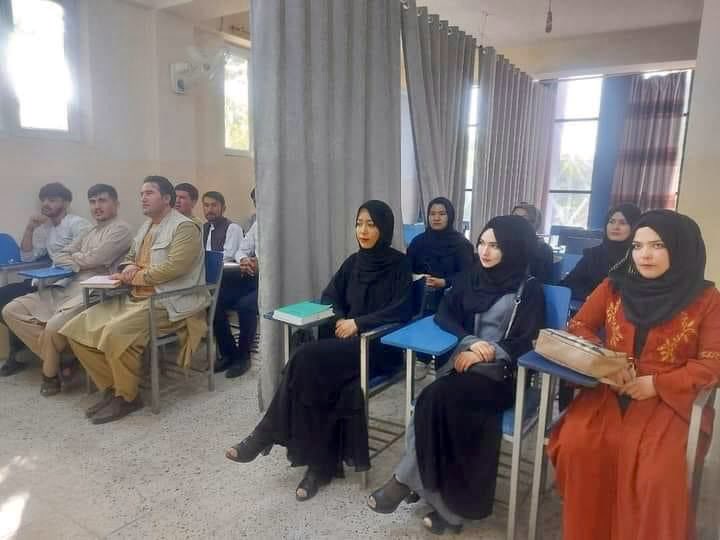
They’ve gone dark: Afghans who helped the U.S. military, trained as American-style journalists and rode the wave of women heading to higher education are destroying the diplomas, transcripts and résumés that prove how they built civil society in the country that the U.S. has left behind.
OPINION: Blue House standoff comes amid anger among South Koreans over corruption, social inequality
By Daniel Kim
GSS Contributor
SONGDO, South Korea — For months now, South Koreans have been checking the news every morning for fresh details about a story that seems like it will never end — the ongoing political scandal surrounding President Park Geun-hye.

Earlier today, government investigators in Seoul were denied access to Blue House, the presidential compound, where they had hoped to use a search warrant to collect evidence of bribery and other allegations pending against Park.
Two weeks ago, Samsung heir Jay Y. Lee became part of the story after prosecutors revealed they were seeking his arrest on charges that he bribed Park and Choi Soon-shil, a Park confidante.
Park has been accused of having Choi exert influence on government operations ranging from appointing the Korean ambassador to Myanmar to gathering illicit donations from top Korean corporations.
On Dec. 9, South Korea’s parliament voted to impeach Park, suspending her from office pending a decision by the Constitutional Court, which could come any day now.
Shocking, isn’t it? How could the president of South Korea be involved in such atrocious scandals? That was the response of the majority of South Koreans once they found out about this incident.
As a Korean, I was horrified at the turn of events that led the entire nation into turmoil. It soon became difficult to tell apart truth from rumors ― a phenomenon known as the Tyson Effect.
Named after professional boxer Mike Tyson, who was constantly involved in scandals, the Tyson effect describes how the public became accustomed to hearing rumors about him, accepting allegations as fact because they had been told so many times that the allegations were true.
The current situation in Korea is quite similar―the only difference is that the person in question is the president.
Despite assertions by Park and Choi Soon-shil that the allegations against them are false, public opinion towards President Park is at an all-time low; in a nationwide address on Nov. 29, even Park herself did not seem to put much effort into placating voters, saying only that she will follow the Parliament’s decision instead of specifying a set date of resignation.
And that has given us South Koreans — people who are used to politics conducted in quiet, not in loud public demonstrations as in the recent Women’s March in Washington, D.C. — a difficult choice:
Should we take to the streets? And if we do, are we being disloyal, or patriotic?
Looking for an answer, I attended a protest rally in Seoul on Nov. 26 with other student journalists from my school.
As soon as I stepped outside the subway station near City Hall, I was confronted by a massive wave of citizens, all holding candles while shouting anti-Park chants.
From the loudspeakers came incendiary speeches rallying the protesters to bring down the president. Singers took the stage to perform for the crowd, and citizens delivered speeches on why they believe the president should step down. At one point, a Catholic priest, a Protestant pastor and a Buddhist monk formed a temporary truce to sing a parody urging that the president and her confidante be put on a train to prison.
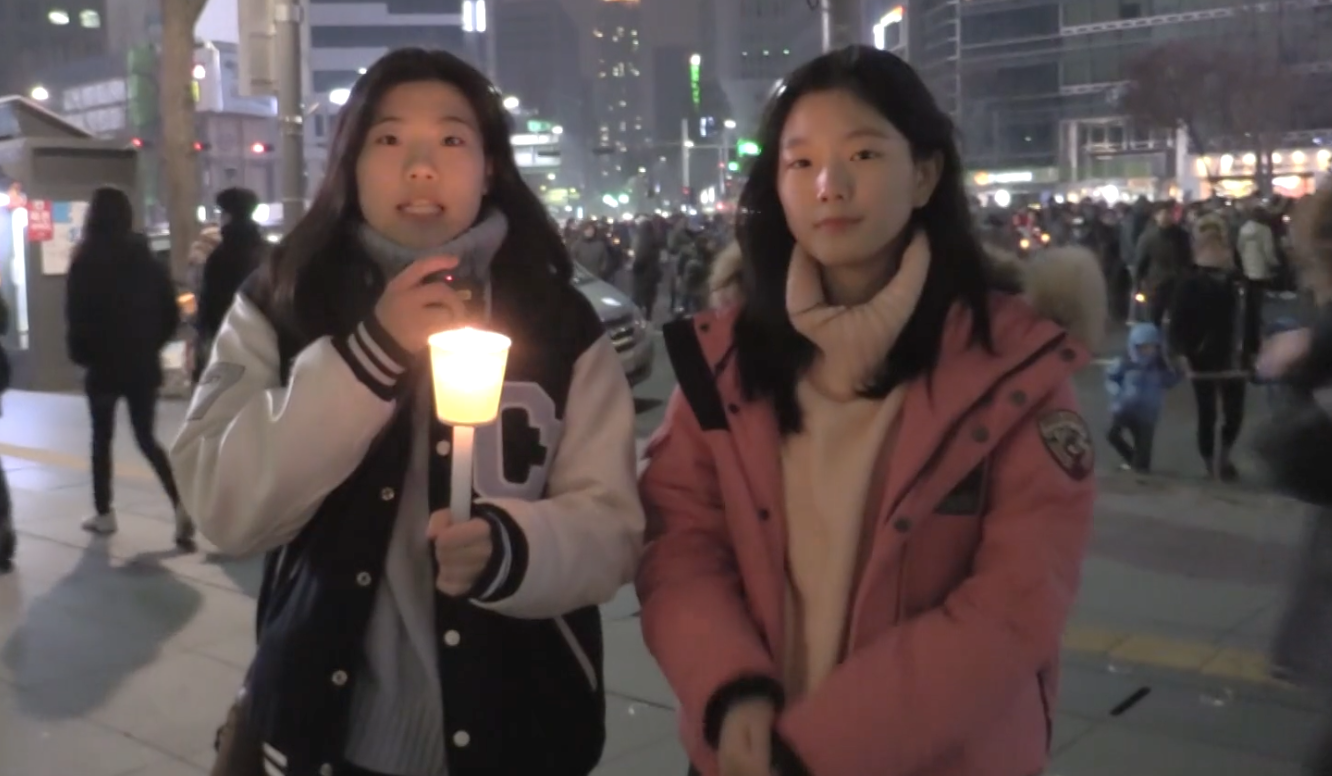
My colleagues reported on the scene:
But as I kept listening to the anti-Park protesters, it dawned on me that the main reason citizens are demonstrating in the streets is that they are dissatisfied with their lives.
For example, the protesters argued that the Park administration’s labor reforms made them lose their jobs. The protest was not only an attack on presidential corruption, but an outpouring of dissatisfaction towards how they are being treated in Korean society.
Another notable aspect of the protest rally was the mob mentality: Once one person started chanting, everyone joined in, holding up their candles. It seemed that even those who came to the protest rally without serious intent were swayed by the overwhelming atmosphere of anger. It was even frightening to witness how quickly the collective rage grew by feeding on the protest speeches, songs, and chants.
This made me contemplate what the protesters were wishing for: Did they have a clear goal of social reform, or did they feel pressure to join the nationwide protests simply due to the atmosphere around them?
Of course, what President Park did was impermissible, and she must face the consequences for her actions. Yet, impeaching her would only be a short-run remedy. Social inequality has become a deeply rooted issue that cannot be resolved simply due to an administration change.
Furthermore, corruption has been an issue plaguing Korean politics ever since the installation of the Korean government. Previous presidents have all been involved in one form of corruption or another, for example, President Roh Moo-hyun, who received major bribes from business leaders during his presidency; full details were revealed only after his suicide.
President Park’s alleged deeds may not be as anomalous as we think — it’s just that more details were revealed to the public this time.
We must not get lost in the commotion and simply forget about more serious issues if and when President Park leaves office. Our protest must continue, but it should not be the kind involving mobs of people in Seoul. Instead, an ideological protest against government corruption and deep social inequality should be our aim.
BONUS: Think you know your way around the Tyson effect and President Park? Then take this quiz:
—Featured photo: Reporters Yerim Mo and Haeji Kim cover a demonstration in downtown Seoul in November, one of many calling on President Park to resign amid a widening political corruption scandal. Screenshot by GSS staff.

Related Posts