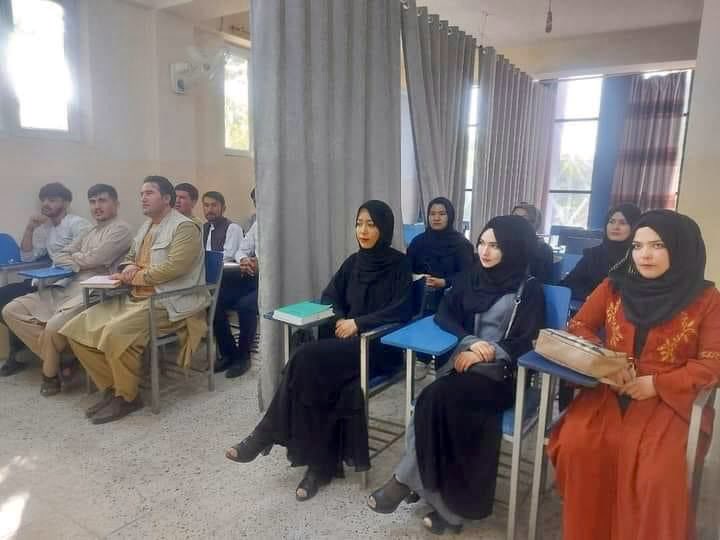
They’ve gone dark: Afghans who helped the U.S. military, trained as American-style journalists and rode the wave of women heading to higher education are destroying the diplomas, transcripts and résumés that prove how they built civil society in the country that the U.S. has left behind.
On one-year anniversary of Trump inaugural, interfaith groups get ready to resist anti-terrorism program targeting Muslims
By Hannah Shraim
GSS correspondent
Interfaith activists will mark the one-year anniversary of the Trump inaugural this weekend by gathering in Boston to discuss a controversial program called Countering Violent Extremism.
The program, launched in December 2015 during the Obama administration by the Department of Homeland Security, is one of the so-called Terrorism Prevention Partnerships, which aim to “address the root causes of violent extremism by providing resources to communities to build and sustain local prevention efforts and promote the use of counter-narratives to confront violent extremist messaging online.”
Two meetings, to be held on Jan. 20 at the Unitarian Universalist Urban Ministry and Jan. 21 at The NonProfit Center, will cover the rights of individuals in resisting surveillance in addition to raising awareness of the impact of CVE programs on Muslims.
 The meetings are sponsored by Resisting Surveillance, an organization that includes the Muslim Justice League, the Quaker American Friends Service Committee and the Boston Workmen’s Circle Center for Jewish Culture and Social Justice.
Similar meetings last fall in Minneapolis, Chicago and Gaithersburg, Maryland all were aimed at drawing attention to CVE. Community leaders are particularly concerned about government informants targeting teens at school and other vulnerable youth, along with possible links between CVE and other surveillance programs such as the Chicago Police Department’s Gang Database.
Sue Udry, executive director of Defending Rights and Dissent, a civil rights advocacy organization based in Silver Spring, Maryland, plans to attend the Jan. 20 meeting.
“Tomorrow’s public meeting in Boston will be significant,” Udry said. “We will be able to educate the wider community about CVE, and draw parallels to other surveillance programs that impact other communities.”
Since its inception, CVE has been closely watched by community leaders, political activists and interfaith groups, who worry about its impact on everyday interactions between Muslims and non-Muslims.
But fears have grown during the past year of the Trump presidency, whose policies have often drawn a connection between Muslims and terrorism. (Editor’s note: the Supreme Court announced today that it will hear arguments in April on the legality of President Donald Trump’s latest travel ban targeting people from six Muslim-majority countries. A ruling is expected in June.)
According to Ayaan Arraweelo, executive director of the Young Muslim Collective in Minneapolis, the CVE program operates by targeting Muslim communities through the use of informants to build suspicions within communities and criminal cases against individuals.
 One concern activists have raised regarding CVE is incrimination without substantial evidence.
According to Arraweelo, who has worked on CVE issues in Minneapolis, which has a large Somali Muslim community that has experienced hate crimes, among the potentially incriminating evidence that government informants are told to gather include praying more frequently at mosques, a decision to adopt the hijab even if one has not worn it before, growing a beard, becoming more quiet if the individual has an outgoing personality and expressing negative opinions about the direction of U.S. foreign policy.
The American Civil Liberties Union has spoken out against CVE, calling it a program that “stigmatizes American Muslims and cast(s) unwarranted suspicion on innocuous activity.”
“What we’ve seen suggests CVE may task community members with monitoring each other and reporting to law enforcement the beliefs and activities of law-abiding Americans,” according to the ACLU’s online guide.
“To many, that’s known as spying. It’s hardly conducive to supporting communities and creating a space for differing viewpoints, and it stymies First Amendment-protected beliefs and activity.”
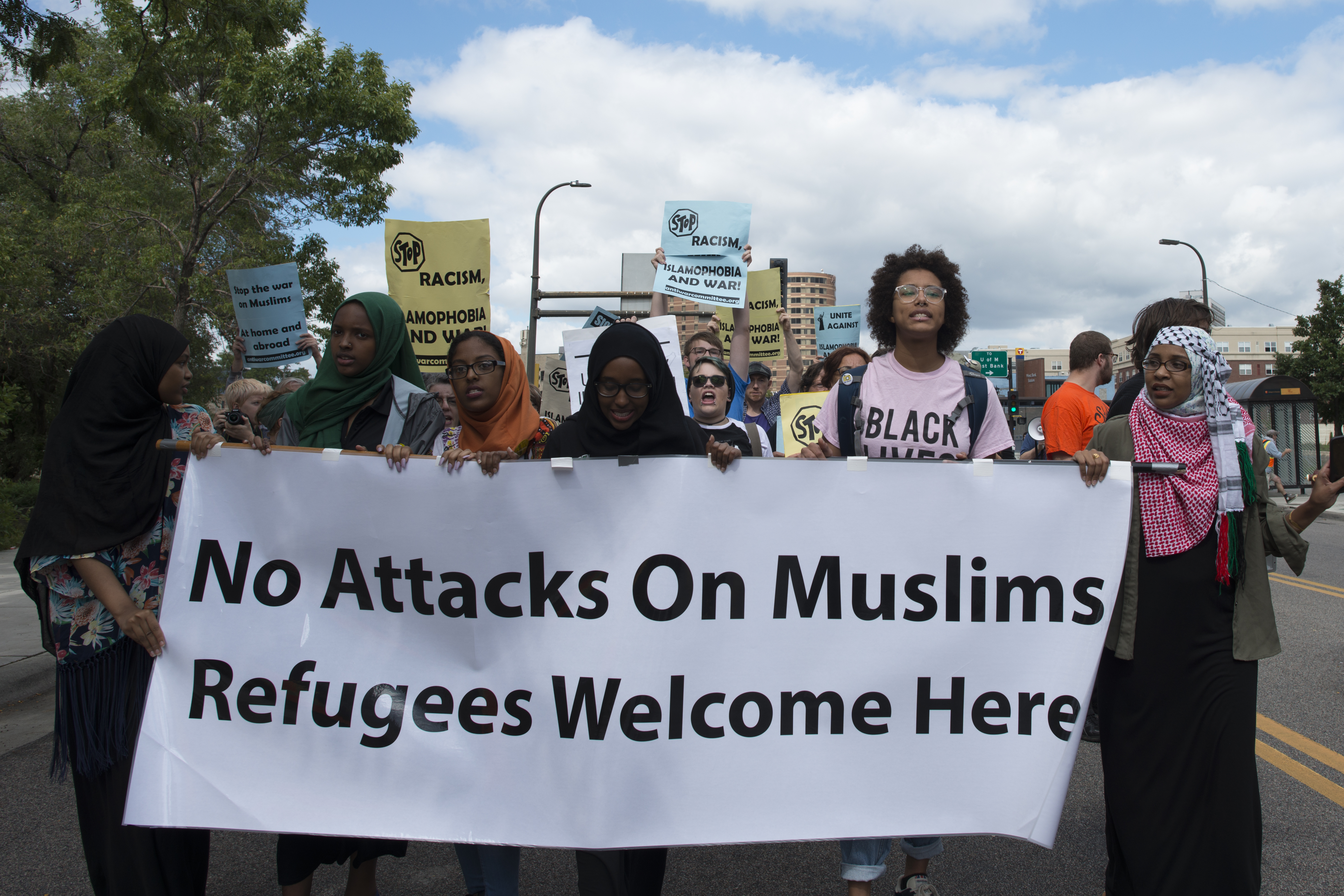
—Featured photo: About 200 people gathered in east Minneapolis on Sept. 17, 2016 for a rally and march to denounce government surveillance of the Somali community. Photo by Fibonacci Blue on Flickr.com/CC BY 2.0.

Related Posts