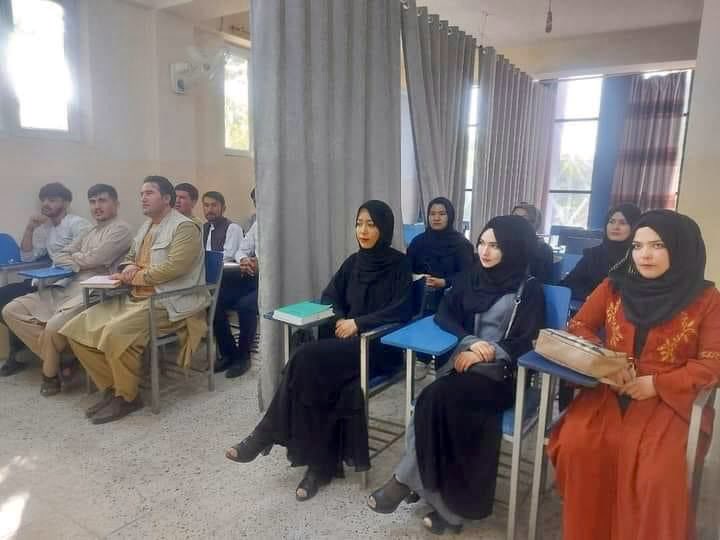
They’ve gone dark: Afghans who helped the U.S. military, trained as American-style journalists and rode the wave of women heading to higher education are destroying the diplomas, transcripts and résumés that prove how they built civil society in the country that the U.S. has left behind.
From Honduras to Yolo County to freedom: G.E.’s journey
By Meghan Bobrowsky
GSS Video Editor
DAVIS, California — Fourteen-year-old G.E. — referred to only by his initials because he is a minor — fled Honduras to escape an abusive family situation, traveling over 1,400 miles from his native country to reach Texas. Upon entering the United States, however, he was jailed as an undocumented immigrant.
On Jan. 10, G.E. received asylum, which “may be granted to people who have been persecuted or fear they will be persecuted on account of race, religion, nationality, and/or membership in a particular social group or political opinion,” according to U.S. Citizenship and Immigration Services. G.E.’s lawyers have withheld the specific reason behind G.E.’s asylum status.
However, G.E. remained locked up in the Yolo County Juvenile Detention Center in Woodland, California, for an additional two months after receiving asylum. On March 13, he was released to a foster home after a public outcry led by Indivisible Yolo, the local chapter of a grassroots organization opposing President Donald Trump’s administration.
Seth Sanders, a religious studies professor at the University of California, Davis and a member of Indivisible Yolo, heard about the incident and worked with fellow Indivisible Yolo member Emily Hill to put together a rally advocating for G.E.’s release. Indivisible Yolo’s action team — led by Sanders — coordinated with G.E.’s legal team, found speakers and publicized the event.
Their plan worked better than anticipated: G.E. was released from the Yolo County Juvenile Detention Center one day before the planned rally. Sanders and his group forged ahead with the rally anyway.
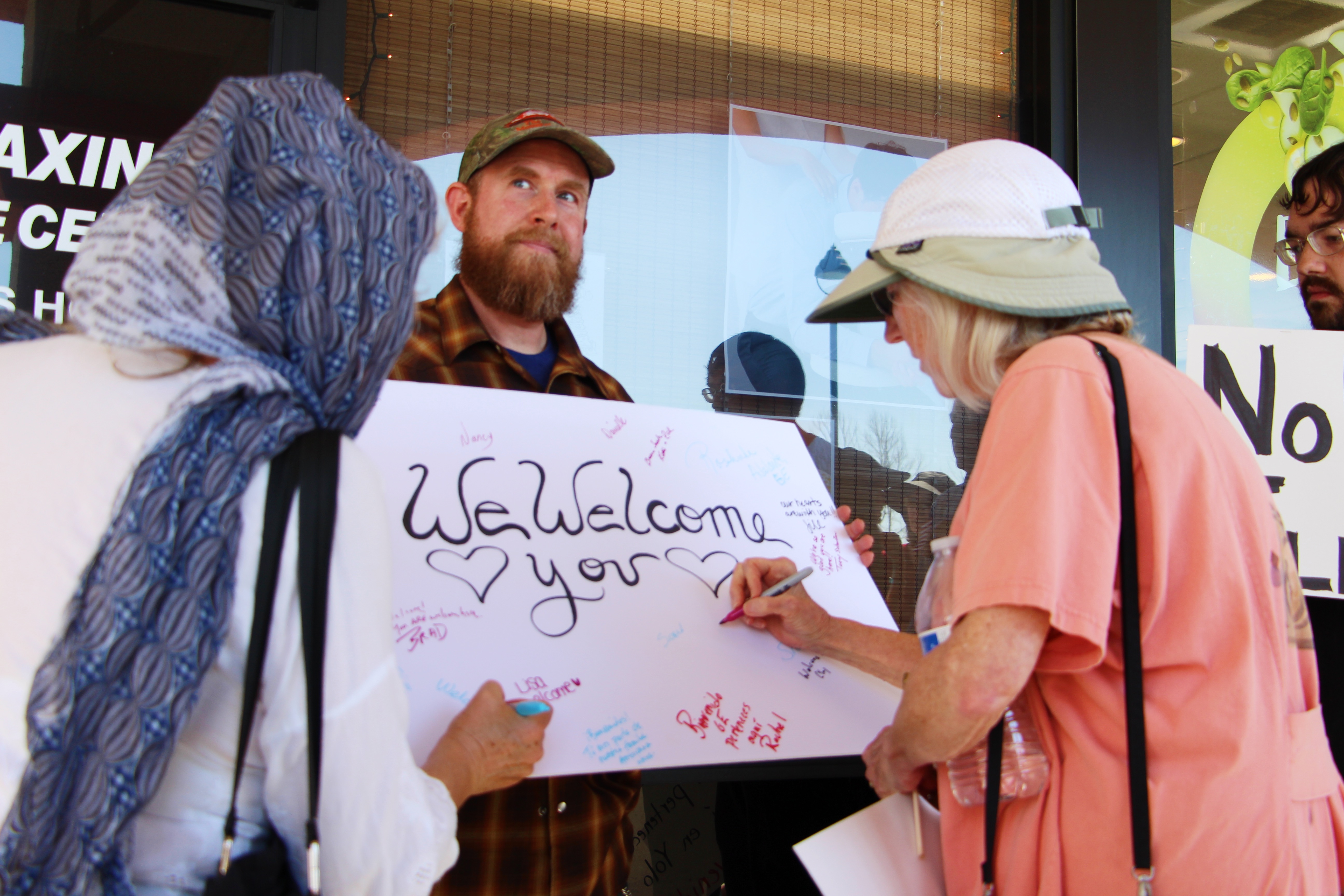
“We rally to celebrate G.E.’s freedom and welcome him to Yolo, but equally to remember: he is not the only one. To everyone else arbitrarily detained, we have not forgotten you,” Hill said.
Sanders cited California Rep. John Garamendi, D-Walnut Grove, as instrumental to the process as well as the ability of Indivisible Yolo to organize in an effective way.
“The treatment (G.E.) received was not fair and contrary to American values. I will do my best to make sure (Immigration and Customs Enforcement) no longer allows men, women, and children to anguish and be forgotten in detention centers,” Garamendi said.
Since G.E. entered the country about a year ago, Yolo County has been cooperating with the federal Office of Refugee Resettlement to “provide care in a secure facility for unaccompanied minor children,” according to Yolo County Public Information Officer Beth Gabor.
Gabor could not comment on the specific case, but explained that “federal law requires the ORR to continue to detain a child even after he or she is granted asylum until a suitable custodian can be located.”
Sara Ehsani-Nia, a member of the UC Davis Immigration Law Clinic, understood the federal law, but did not see any reason to continue holding G.E. after Jan. 10. So she started working on a writ of habeas corpus with another member of the UC Davis law clinic, Eduardo Osorio, in early February.
“There was no legal reason (to keep G.E.) inside of the immigration jail. They terminated his deportation hearings and gave him status,” Ehsani-Nia said.
G.E. had been moved around several detention centers across the nation before he made it to Yolo County. Ehsani-Nia added that it is not uncommon for children in asylum limbo to be moved around frequently.
However, there is a lack of services and centers available for kids like G.E., according to Yolo County Supervisor Don Saylor. In addition, there are only three reasons kids would theoretically be placed in the center: if they committed a crime in the United States, committed a crime in their home country or pose a threat to public safety.
While G.E.’s release is a victory, Hill is not convinced the problem is solved. She worries that there are several more children like G.E. being locked up for seeking “freedom and safety.” Indivisible Yolo does not know the specifics of these children’s cases.
“We are very concerned that other youths are being detained much longer than is just,” Hill said.
Hill says that her Indivisible group will keep fighting for the rights of children who are detained and not permitted a paid attorney.
“We are a better, stronger, kinder nation when we are united, and when we recognize the contributions of everyone in our communities,” Hill said. “We will not let Trump turn us against each other. We will stand indivisible.”
Saylor admits that transparency is paramount for federal agencies. After meeting with his Board of Supervisors, he is interested in understanding ORR’s program better. The board is requesting a detailed report on the program to be delivered in April.
“We don’t want this program to be an extension of ill treatment,” he said.“We’re working to make sure (the immigrants’) experiences are mostly positive.”
—CORRECTION: An earlier version of this story mistakenly referred to asylum “from the United States.” G.E. was granted asylum by the U.S. related to conditions in his home country.
—Featured photo: Supporters of the cause sign a poster welcoming G.E. and those in similar situations. Photo by Annabelle Zhou, a senior at Davis Senior High School.
—Slideshow by Annabelle Zhou.
—This is an edited version of a story originally published on BlueDevilHUB.com, the award-winning student publication at Davis Senior High School in Davis, California.

Related Posts