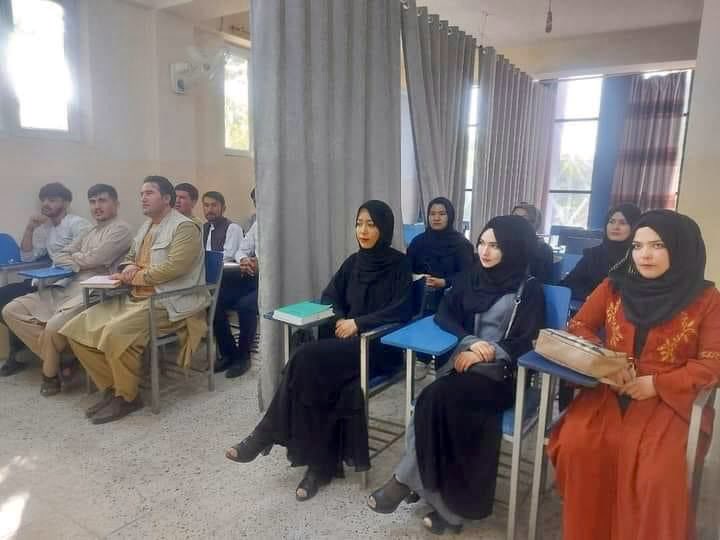
They’ve gone dark: Afghans who helped the U.S. military, trained as American-style journalists and rode the wave of women heading to higher education are destroying the diplomas, transcripts and résumés that prove how they built civil society in the country that the U.S. has left behind.
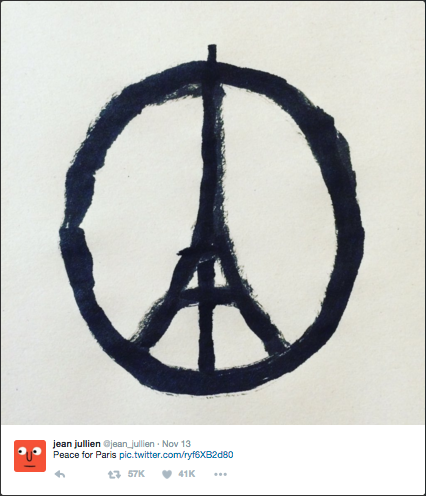
Editorial: In wake of Paris attacks, we will report
PARIS — Friday, Nov. 13 was a very long night, for all of us as journalists, but also as Parisians, as we stood witness to atrocities our city has never suffered. This morning, we wake up to a changed city, a scarred city, a mourning city.
Shortly after 9:15 p.m. Paris time, a total of seven separate terror attacks took place.
They included two suicide bombers who detonated their explosive-laden belts at the Stade de France during a football game between France and Germany, attended by French President Francois Hollande.
Terrorists also took hostages at The Bataclan, a concert hall sold out that night for a performance by Eagles of Death Metal, an American band. Shortly after midnight, the police launched an assault. According to Paris Match, 200 people were freed but 89 were found dead when the police came in.
At that point, all of us, just like countless other people all over Paris, all over France, and, surely, all over the world, had been glued to our television, computer and phone screens for three hours. The attacks appeared to have stopped. The media was just beginning to grasp the implications of the attacks. And while ISIS did not claim the attacks until noon on Saturday, that night President Hollande was already calling the incident a “terrorist attack.” The French army was called in. A state of emergency was declared.
On Saturday, the sun rose over empty streets. Any Parisian would tell you that usually, the streets on Saturday morning are packed, filled with life. People do their shopping for the week, enjoy the first real morning of the weekend, kids play in the parks, running and laughing.
As far as law enforcement could tell and the media could report, roughly 120 people had lost their lives the preceding night. The police had ordered Parisians to stay indoors except in case of emergency.

In the 7th arrondissement, the Eiffel Tower was dark and closed, the streets were eerily quiet.
In the suburbs, some cars could be seen in the streets, but they were few and far in between.
A few people could be seen, carrying grocery bags, visibly anxious, peering over their shoulders.
Paris, the city of light, the genesis of modern democracy, a beacon of freedom, was a cracked castle of glass, vulnerable to hatred and insanity.
However, despite the fear these attacks have instilled in our city, Paris stays strong.
The COP21 conference is to go on as planned, though with heightened security protocols.
French police uncovered a car linked to the attacks in Montreuil, an eastern suburb, with several Kalashnikov assault rifles inside. A Syrian passport was also found belonging to one of the shooters, and one was identified thanks to his fingerprints.
Paris will hold onto its values. We will stand tall and recover from these attacks, just as we did after the massacre at the Charlie Hebdo magazine in January.
However, it is clear now that to a large extent, our bubble of safety is an illusion. Taking military action against ISIS alongside the United States has marked us a target, and that is something we will have to live with. Parisians will have to find the correct equilibrium between safety and defiance.
I believe that I speak for many in my generation when we say we will not live in constant fear. As journalists, often we have very little agency or power when it comes to bringing the world closer to a solution. We are simply messengers. But at a time when the world is reeling from the violence in Paris and Paris is suffering, this is a task we take seriously.
If our role while under attack is to report, then report we will.
—This editorial represents the majority view of the ASPire journalism staff at the American School of Paris. Contact ASPire at newsaspire@gmail.com.

Related Posts