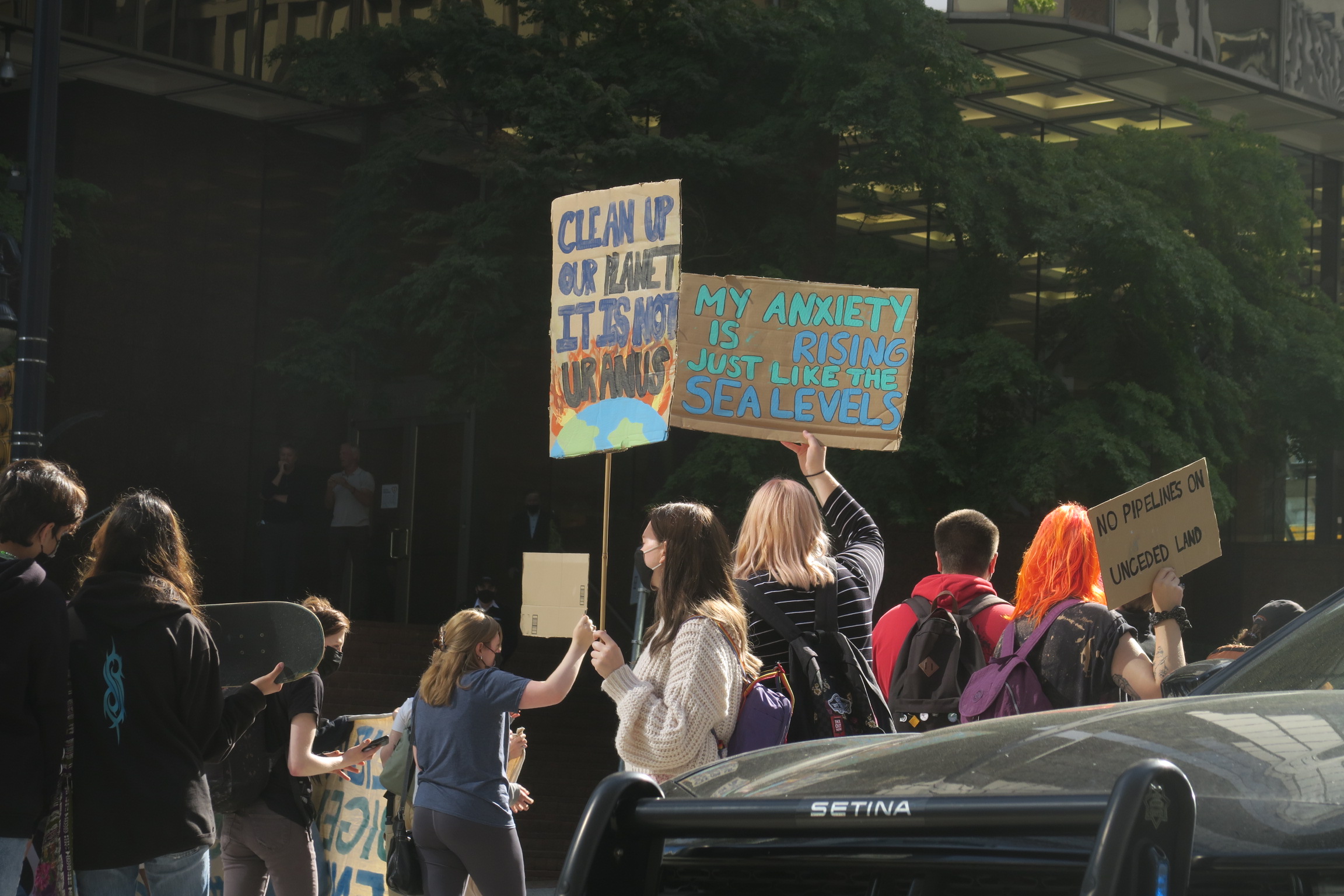
They’re back: Today’s Fridays for Future strike — the first in 18 months — will see youth activists taking to the streets again to push progress on solutions to climate change.
Here’s what you can do to raise awareness and seek solutions where you are.
Developing, sharing clean water on the table at COY11
By Bethany Ao, GSS correspondent
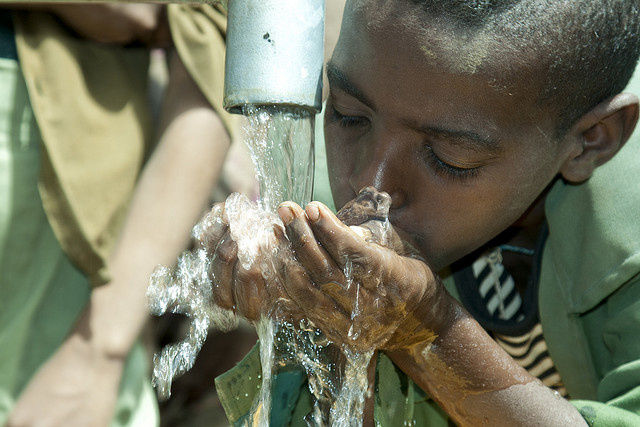
PARIS, Nov. 26 — COY11 attendees gathered today to discuss water infrastructure in developing countries, a crucial issue that is a key part of the United Nations’ Sustainable Development Goals.
According to the UN World Water Development Report 2015, water is at the core of sustainable development. In emerging economies especially, water plays an important role in agriculture, plus public health and sanitation.
But natural disasters — especially severe storms, hurricanes and other events that may be linked to rising world temperatures — can imperil water supplies.
“Climate change and water disasters are linked directly,” said Mathieu Demares, country ambassador of CliMates for Spain.
CliMates is a self-described student “think-and-do tank” that began as a collaboration between the Paris Institute of Political Studies (Sciences Po) and the IDDRI (Institute of Sustainable Development and International Relations and has grown to some 100 students worldwide.
“The main problem more in developing countries is the management and distribution of water,” Demares said. ”(I)n developing countries there is an unequal solution, but in developed countries, we don’t have this problem.
“We need more public and private investment in infrastructures to conduct water to all sectors of the population.”
According to UNICEF, waterborne illnesses are a leading cause of death for children under five, killing nearly 1,000 children every day. Another 2.4 billion people live without proper sanitation.
Ironically, the world has water, Demares said, but it isn’t using it efficiently.
“When there’s too much rain, we cannot penalize and we cannot control the retention,” Demares said. “We have to manage it. We need a more aggressive sanction policy and a strict sea legislation, for example, to condemn companies who are working for gas and oil and spreading their contamination to the water and increasing the pollution of the seas.”
Developing countries can help by assisting developing countries to finance improvements in water infrastructure, Demares said.
Water is a key part of the UN’s sustainable development goals, including achieving “universal and equitable access to safe and affordable drinking water for all” people by 2030.
Olivier Tuyishimine of the Water Youth Network, an organization that advocates for “change-making” on global water policy, warned that the UN goal will not be easy to meet.
“(D)o we have the capacity, do we have the human resources, the willingness to achieve these goals? That’s a very big question,” he said, adding that “even if we do not achieve them, we have to try our best because it’s in our best interest to do so.”
 —Bethany Ao is GSS News Editor for Europe and a junior at Northwestern University’s Medill School of Journalism. See more of her on-the-ground reports from COY11 on Twitter @GSSVoices, #GSS_COY11 and on Facebook. Follow Ao @BethanyAo and email her atbethanyao2017@u.northwestern.edu.

Related Posts