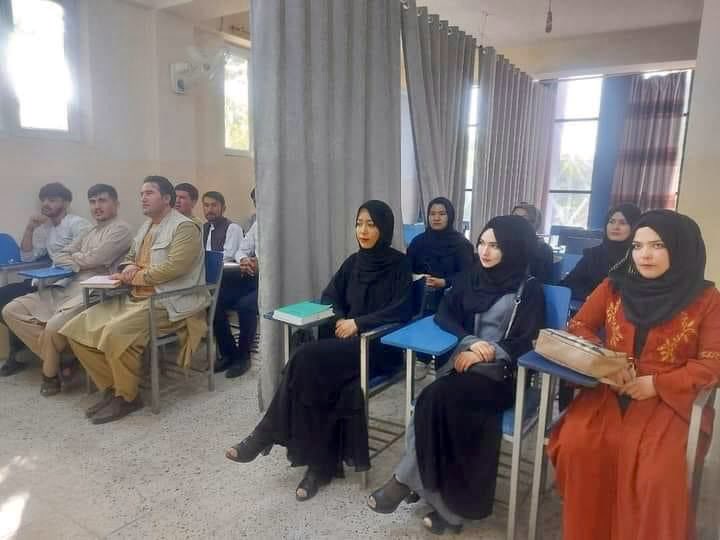
They’ve gone dark: Afghans who helped the U.S. military, trained as American-style journalists and rode the wave of women heading to higher education are destroying the diplomas, transcripts and résumés that prove how they built civil society in the country that the U.S. has left behind.
Denver teen fights to make Elijah McClain’s name known
By Leo Kamin, Newsroom By the Bay
AURORA, Colorado — He was 5-feet-6-inches tall, a 24-year-old massage therapist, an avid violinist who played to soothe kittens at the local animal shelter. He had anemia, so he walked the streets in a ski mask to stay warm. He committed no crime, but, following a 911 call that described him as suspicious and an altercation with police, paramedics injected him with a fatal dose of ketamine. He was taken off life support three days later.
That was 10 months ago. However, it is only recently that his hometown Colorado — and the United States — learned his name: Elijah McClain.
In late May and early June, the video of the police killing of George Floyd in Minneapolis on May 25 rocked the nation, leading to protests in more than 2,000 cities, from Caribou, Maine, and Chicago, to Calexico, California. The Metro Denver region was no different, with thousands flocking to the state capitol in protest. Earlier, when organizers asked “What’s his name?,” Denverites yelled back the name of the man killed in Minneapolis, not the young man who was killed in their own backyard.
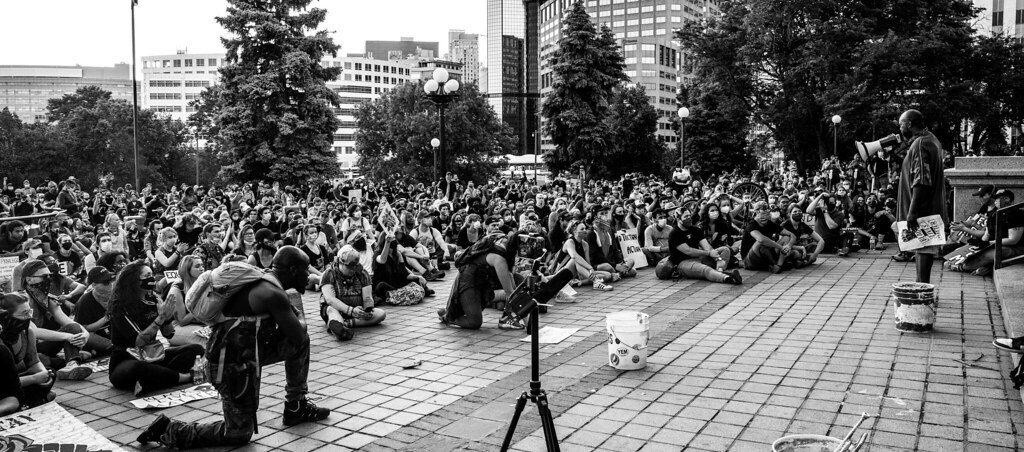
Now, protesters respond with a different answer, as demonstrations for McClain have picked up steam with turnouts rivaling those seen in early June. Leading these recent calls for justice are a number of young voices, many of them high school students. These young Coloradans organized protests, spoke in front of massive crowds and met with local leaders.
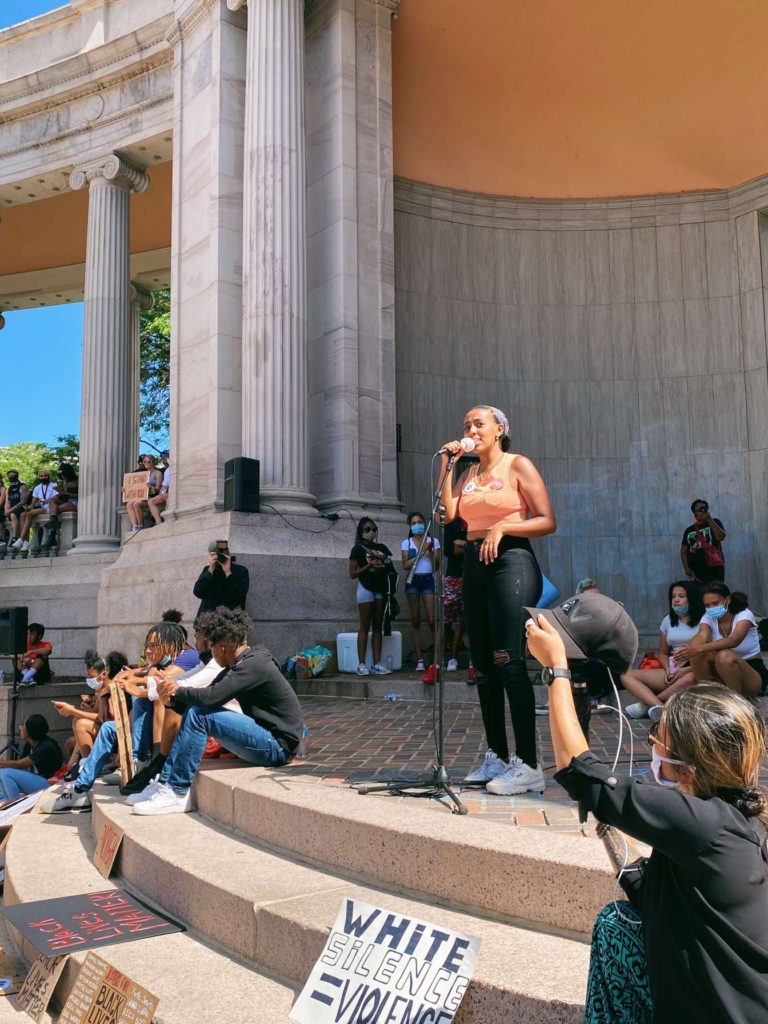
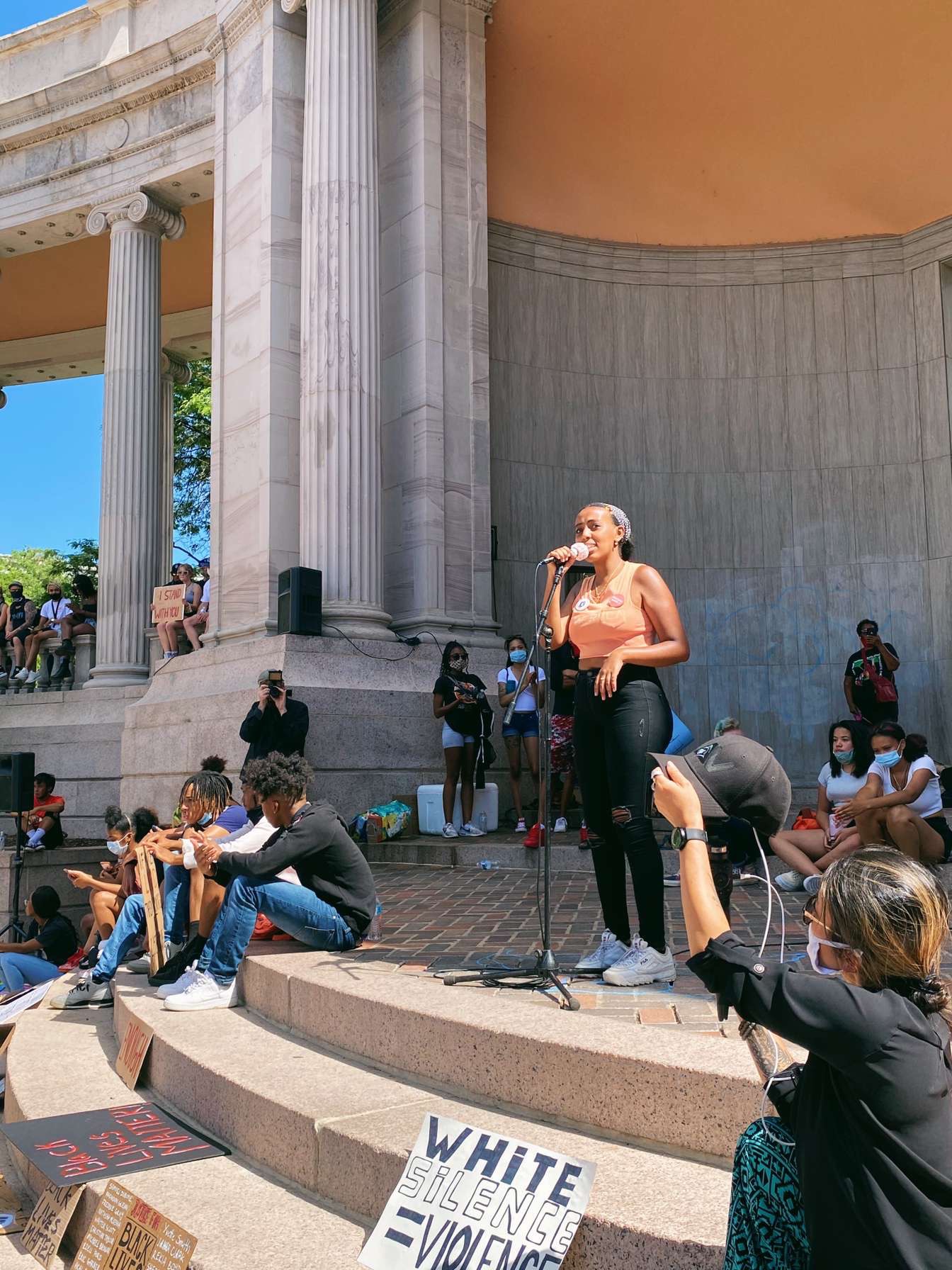
Hermela Goshu, 17, worked her way up from a protester to a full-fledged leader in the fight for justice for McClain.
“At first I just helped out and spoke at protests as much as I could,” Goshu said.
Goshu quickly made the connections necessary to organize her own protests, including getting contacts for public address systems and security. To lead a protest, though, Goshu needed more than the physical tools; she needed the respect of her community. This was difficult to earn, especially among older protesters.
Goshu gained the admiration of her peers after organizing a protest at her school, Denver East High School.
“That was really when people were like, ‘Oh, so you’re like, involved in this stuff?,’ she said.
Goshu traced her growing respect among older protesters to a particular instance when a man came up on stage during a protest and began to say that the Black community was suffering the consequences of gay peoples’ sins, she took action.
“I snatch the mic from him — a grown-ass man — and I tell him off,” she recalled, adding that after that moment, “(m)ore adults started paying attention to me.”
As Goshu rose to prominence on the Denver protest scene, the movement’s focus slowly shifted from events of national interest— police killings of unarmed African Americans like George Floyd, Breonna Taylor and Rayshard Brooks — to the local killing of McClain. This shift dramatically altered Black Lives Matter’s online presence. On June 23, Google searches including McClain’s name eclipsed those including Floyd, Taylor, and Brooks. Goshu witnessed the change in real-time. A few weeks ago, she noticed posts about McClain popping up all over TikTok, Snapchat, and Instagram.
“People started to care,” she said.
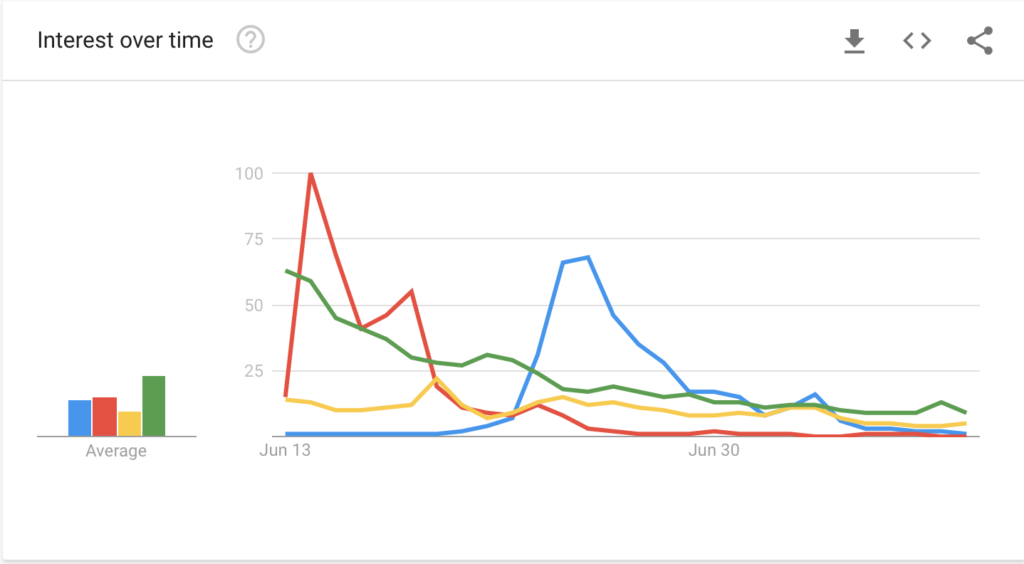
Searches for Elijah McClain rose during the week of June 22. Screengrab from Google Trends search, July 13. 
While being more recent, newer incidents remain relatively localized. Screengrab from Google Trends search, July 13.
Although the spotlight is beginning to shine on McClain’s story, Goshu is concerned that some of the activism is not well-intentioned.
She worries that many white people are practicing “performative activism,” posting in support of McClain and Black Lives Matter and going to protests just because “it’s a trend” or because they “don’t want people to think they’re racist.”
Goshu has similar experiences on a personal level, describing a number of peers that treated her “like crap” who are now kissing up to her. Her message to them: “You’re not friends. I do not inspire you, you are scared of me.”
Whether her supporters are motivated by fear or a true desire for justice, Goshu has helped to foment a movement that puts McClain’s story front and center in the area’s discourse.
She first learned about what happened to McClain in November 2019, three months after his death. Goshu wasn’t surprised that the Aurora police department was involved. The city of Aurora, just a few miles outside of Denver, has had its fair share of police violence; in 2015, it was ranked 11th in the nation in police killings per capita.
“Anyone who’s Black knows they’re aggressive,” Goshu said.
For her, the fight for justice is deeply personal: Goshu says a family friend was shot “at the bottom of his spine” by an Aurora police officer, and that the friend has been in prison since Goshu was in the 7th grade. However, she declined to give the person’s name and the information could not be verified with the Aurora Police Department.
On June 27, Goshu organized her second protest, along with a few other students from the Denver area. Instead of congregating in downtown Denver, as earlier protests had, the organizers set their sights on Aurora itself. The young leaders were met with swift resistance.
Goshu said that Aurora police found the organizers’ personal information through school records, called their parents, and told them, “If anybody got hurt by them (Aurora police), that we would be responsible.” In retrospect, Goshu said, it was more of a threat than a warning. Just a few hours after Goshu’s protest, Aurora police in riot gear forcefully interrupted a peaceful violin vigil just feet from where the activists had gathered.
Goshu also said that she was informed of a threat coming from another group organizing a protest on the same day: Information that surprised her, as she had worked with the group in planning her protest and trusted their leadership. She now believes that this threat came from the Aurora police.
Unwavering, Goshu and her co-organizers pushed forward. Their protest, which featured a number of student speakers, attracted hundreds of participants, who listened to student speakers in front of the Aurora Municipal Center before marching through Aurora’s residential neighborhoods. As they made their way through the streets surrounding the municipal center, Goshu asked her crowd to be loud so that “the whole neighborhood can hear us.”
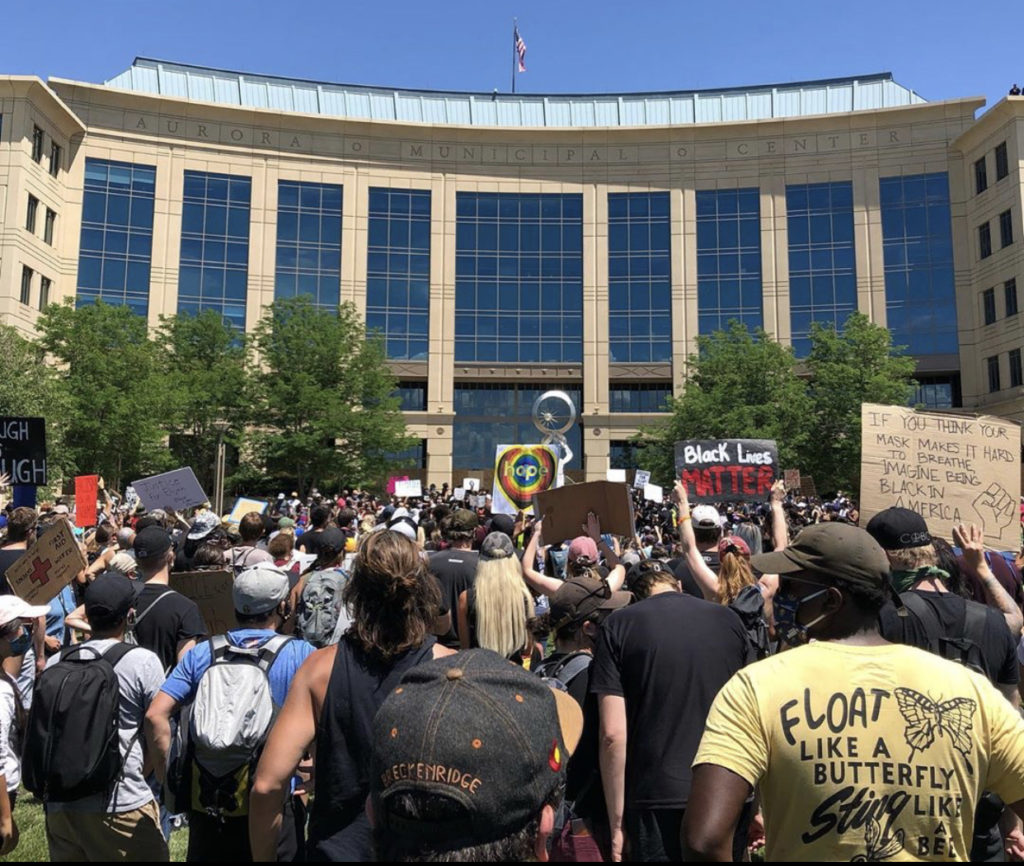
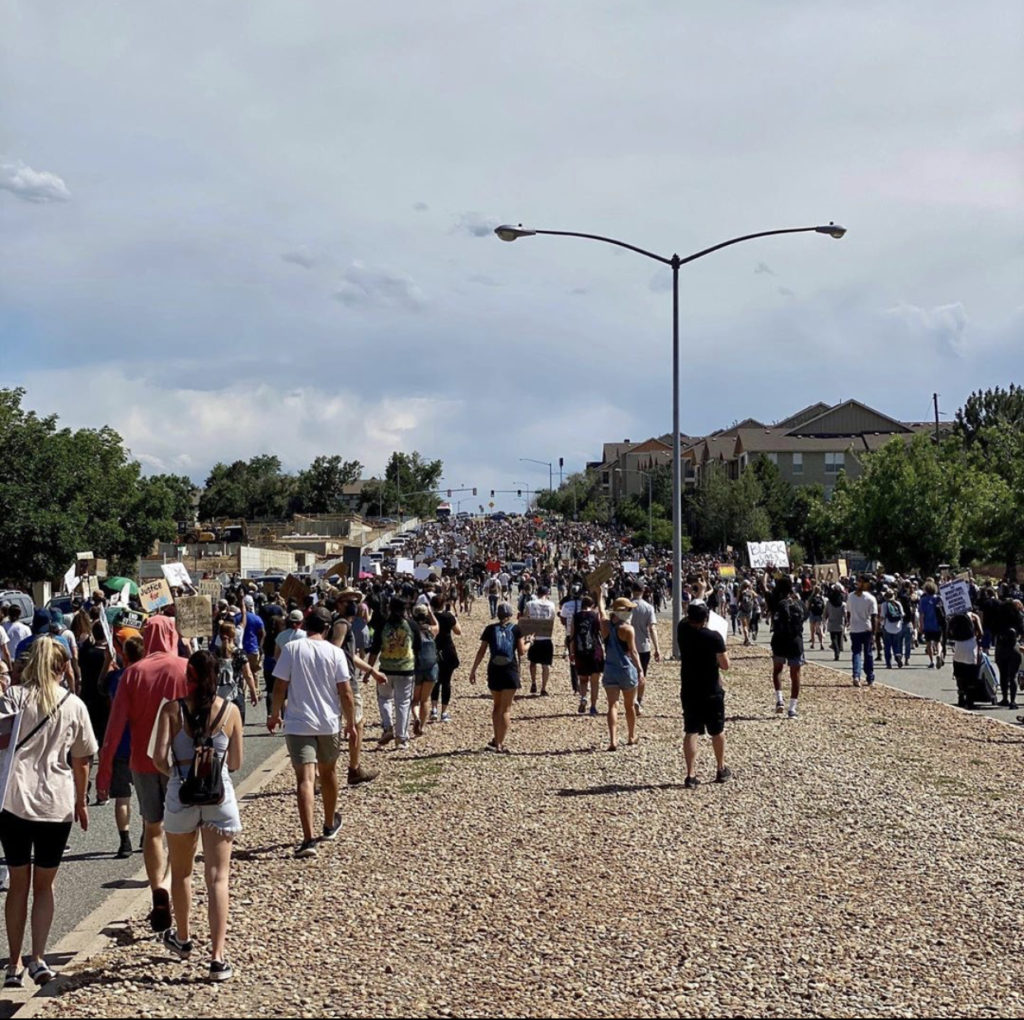
At the intersection of First Avenue and Chambers Road, Goshu called out to the thousands of protesters before her, her voice a thin metallic sound coming from the megaphone: “What’s his name?”
This time, nearly a month after Colorado’s protests began, a new cry rang out through the streets of Aurora.
“Elijah McClain!,” the crowd roared back.

Related Posts