They’ve gone dark: Afghans who helped the U.S. military, trained as American-style journalists and rode the wave of women heading to higher education are destroying the diplomas, transcripts and résumés that prove how they built civil society in the country that the U.S. has left behind.
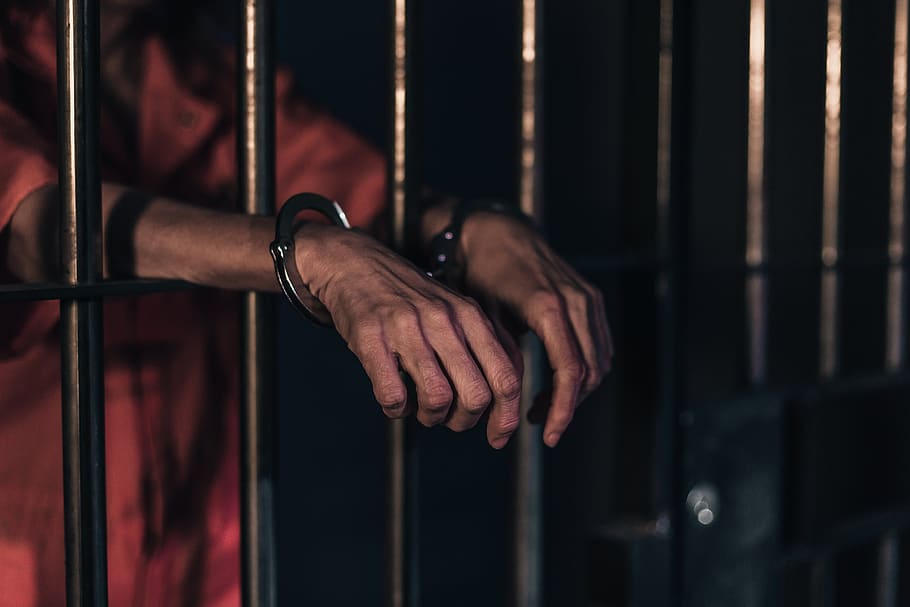
Caught between convictions and coronavirus, early-release prisoners face unique challenges
Jonas Shladovsky, Newsroom By the Bay
LOS ANGELES –– For any inmate who has served a sentence, the path to successfully reentering society is challenging. But for the prisoners who are being released amid a pandemic, coming home has an entirely new meaning.
Jails and state penitentiaries across the nation have experienced significant COVID-19 outbreaks. According to a New York Times map of cases on July 6, three California prisons –– San Quentin State Prison, Castaic North County Jail and Chuckawalla Valley State Prison –– had more than 1,000 inmates who had tested positive. But with approximately half of the state’s inmates and prison staff untested, experts and others following this issue say that cases are likely much higher than reported.
“Because of the cramped conditions of jails and prisons, the coronavirus can spread like wildfire,” said freelance immigration reporter Jack Herrera, who reported on COVID-19 and incarceration of immigrants in a May 5 article for Politico.com.
“We’re kidding ourselves if we say there’s any prisons where widespread infection isn’t going to occur,” he added. “It’s happening state after state, city after city, municipality after municipality.”
In an effort to reduce crowding in prisons, California Gov. Gavin Newsom granted early release to more than 3,500 inmates serving terms for nonviolent crimes in March 2020. Over the next 60 days, these inmates were released with unfinished sentences. On July 10, the state announced it would release up to 8,000 additional inmates by the end of August.
This mass release of prisoners prompts questions about public health. According to Peter Espinoza, head of the Los Angeles County Office of Diversion and Reentry, inmates in the county aren’t being tested for COVID-19 before their release unless they show symptoms. As a result, untested convicts are unknowingly carrying COVID-19 into their communities and potentially infecting friends and family.
However, the inmates who haven’t been released face a much greater health risk, as COVID-19 is rapidly spreading through congregate prison facilities.
Outbreaks that originate in jails and prisons have major effects in the outside world. A study published in April by the American Civil Liberties Union finds that standard models for COVID-19 death tolls that don’t account for correctional facilities could be underestimating between 99,000 and 180,000 deaths from the virus among inmates of jails alone, not including prisons or detention centers.
According to Herrera, whose work centers on incarceration as well as immigration, there is only one possible response. “We need to drastically reduce the prison population,” he said. “Not only are the people on the inside’s lives being put at risk, but actual communities surrounding these prisons are vulnerable,” Herrera said.
While there are no guarantees, it’s likely that released inmates with the virus won’t have the same detrimental effect on the world as a world transformed by COVID-19 will have on them. They’re entering a world that in many ways is functionally uninhabitable, in which opportunities for employment are greatly reduced and housing and legal services and support from reentry programs may not be accessible.
Michael Pittaro, associate professor of criminal justice at American Military University in Charles Town, West Virginia, wrote an article in 2018 about the struggles ex-prisoners face in successfully reentering society. He emphasizes that the pandemic has made reentering society even more challenging and nuanced.
“Prisoners need continuous services from when they’re in prison to when they return to society. Now, everything is shut down,” Pittaro said in a Zoom interview on July 9. “We’re putting people at risk by releasing them without any preparation or support.”
Statewide advocates have emphasized that jails and prisons are releasing prisoners without any plan for shelter. According to a May 17 Los Angeles Times article, Susan Burton, the founder of A New Way of Life, a prisoner-to-society reentry program, wanted to provide housing for vulnerable inmates being released, but her initiative was turned down. According to the article, in April Burton planned to pick up a woman from the Los Angeles Women’s Jail and transition her to a nine-bed shelter that she set up in anticipation of early releases. But about an hour before she intended to set out, the Los Angeles County Sheriff’s Department called her and told her not to come.
Challenges arise even when jails and prisons reach out to reentry programs. When Santa Clara County became a locus of outbreaks in March, the sheriff’s department asked Home First, one of the largest local shelters, to expect an influx of 200 to 300 inmates. According to the LA Times article, Home First had no choice but to turn them away, making the difficult decision of protecting their current residents’ health at the expense of taking in inmates.
“The big challenge for (released prisoners) is finding somewhere to live. Right now, shelters are at a standstill,” Pittaro said. “A shelter that could house, say, 100 men and women before the pandemic, can now only house 50.”
Limited access to transitional housing is one of the many unpredictable challenges this pandemic poses for recently released prisoners. Enrolling for Medicaid is further complicated by office closures. California’s recent unemployment rate, a staggering 15.9% as of May, suggests that finding a decent paying job is nearly impossible when opportunities are scant.
Reentry programs are doing what they can to continue supporting ex-prisoners. The Los Angeles Regional Reentry Partnership maintains a list of local and national employment opportunities on its website. A New Way of Life has continued to offer housing services over the last few months while operating as an essential business. The organization is also providing legal advice and leadership development through Zoom workshops.
However, providing support through online resources and Zoom calls isn’t ideal. It leaves many ex-prisoners in the dark, and may simply be ineffective for others.
“We just assume everybody has access to the internet. But given that internet services cost money, and the majority of prisoners are lower (income), that’s simply not true,” Pittaro said. “With counseling, you get better results during a face-to-face conversation. If you were my psychologist, and we were on Zoom, I don’t know how I’d feel about opening up to you.”

Related Posts