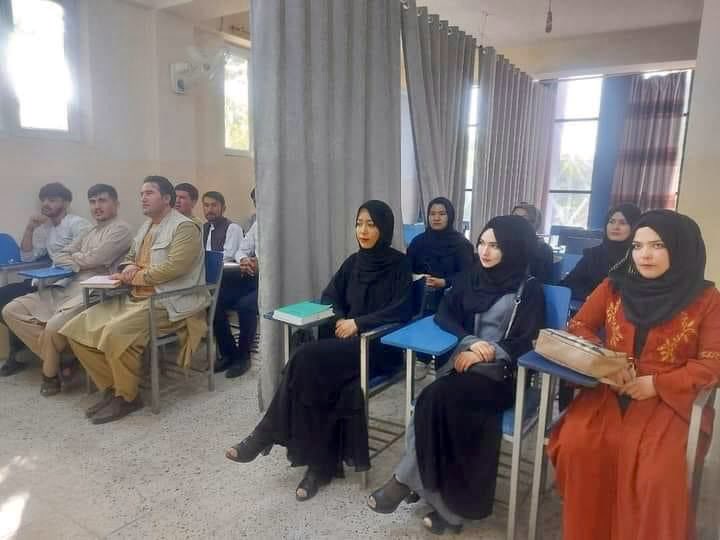
They’ve gone dark: Afghans who helped the U.S. military, trained as American-style journalists and rode the wave of women heading to higher education are destroying the diplomas, transcripts and résumés that prove how they built civil society in the country that the U.S. has left behind.
Art of war: Amid Syria’s heartbreak, an artist creates works that heal
By Marwa Boustaji
Special to Global Student Square
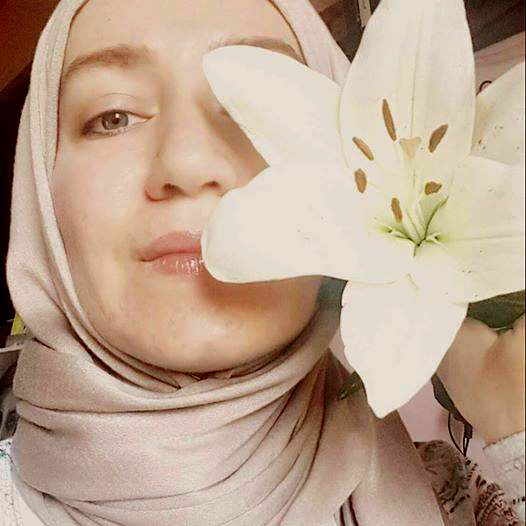
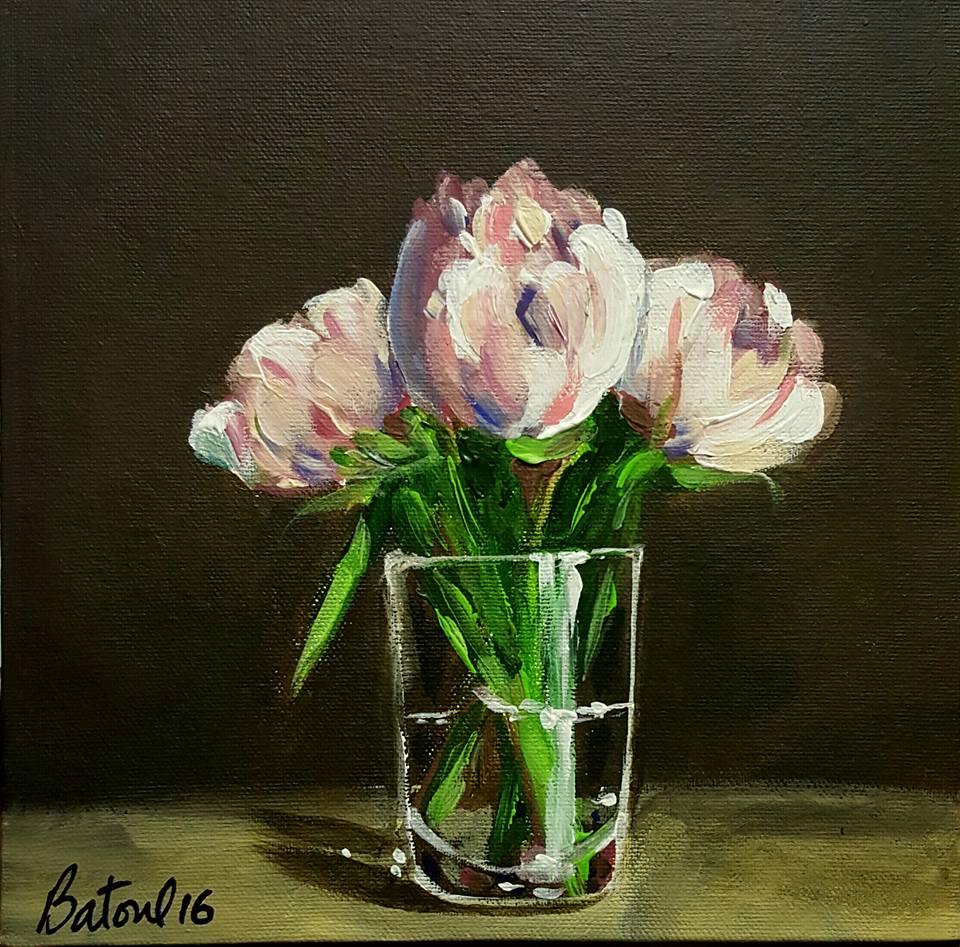
MEDINA, Saudi Arabia — The brush glides over the canvas as she starts to fill in the flowers of her painting. Her hands are a bright mess and colors are splattered across her white sweater. Classical Arabic music coming from the radio gives her the notes she needs to translate the heartbreak of Syria into art that heals.
It’s just another day for artist Batoul Makki.
Makki, 35, is Syrian but lives in Kuwait City, Kuwait. She used to travel to Syria to visit her extended family every year, but had to stop after the war made travel impossible. Though she continues to keep up with news of her homeland, four years ago she turned to art as a way to cope with her frustration and depression.
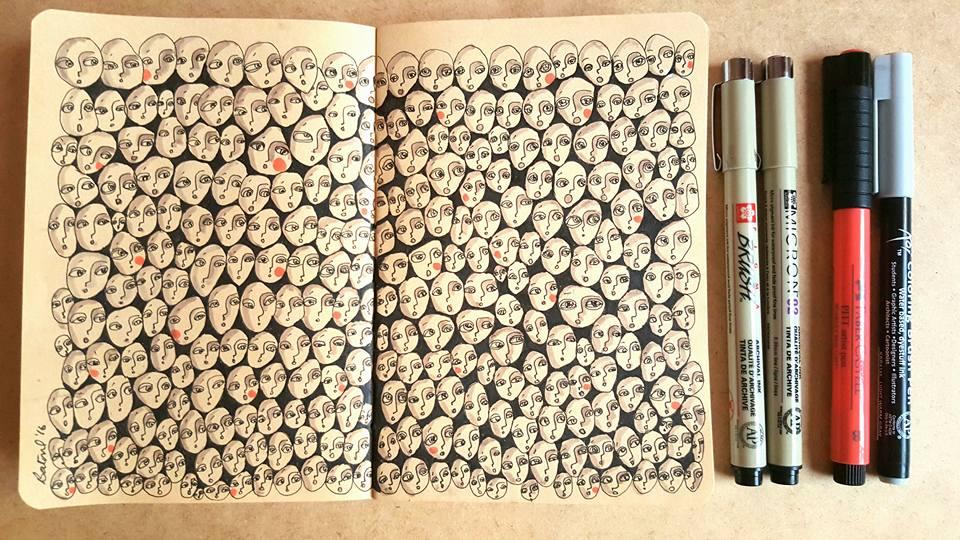
“(I) started painting when I could not endure the violent status of the Middle East,” Makki said. Following the long struggle of various rebel groups against the Assad regime exerted a particular toll: “I was crazy about the (Syrian) revolutions and tracking them continually, but it takes a lot from my health.”
[Editor’s note: The UN Security Council is holding an emergency meeting this afternoon in New York to discuss sanctions against Syria in the wake of a chemical attack Sunday in the opposition-held town of Douma, 10 miles from the Syrian capital of Damascus, that killed 70 people and sickened an estimated 1,000 more, including children. During a meeting with his cabinet at the White House on Monday President Trump called the attack “atrocious” and vowed a U.S. response “in the next 24 to 48 hours.”]
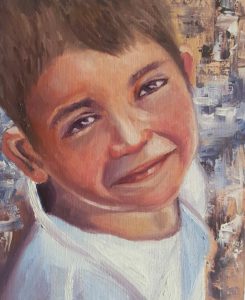
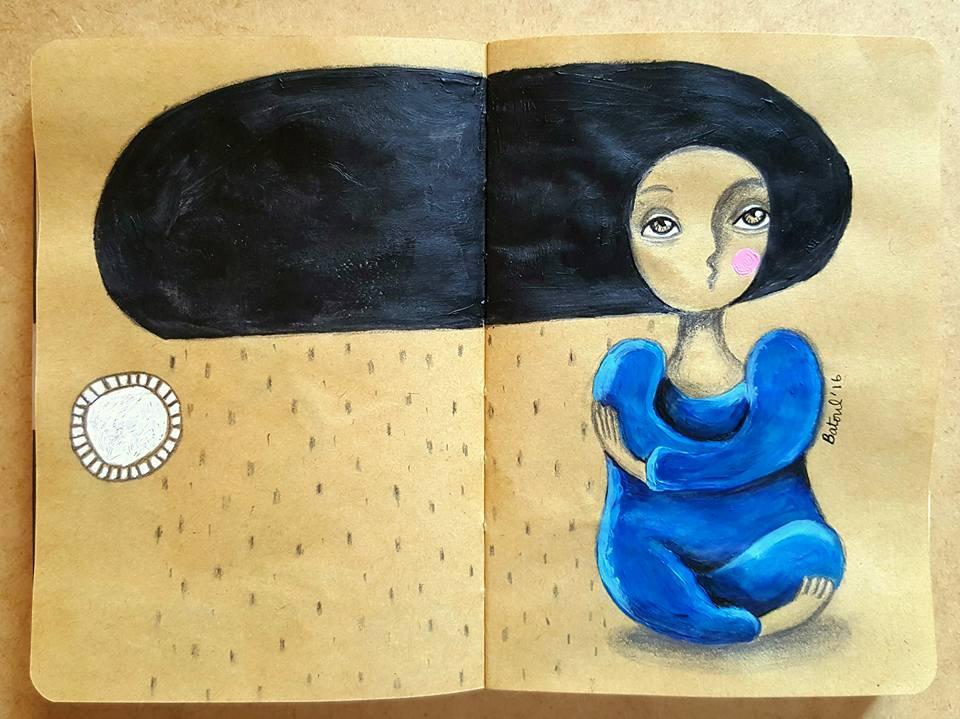
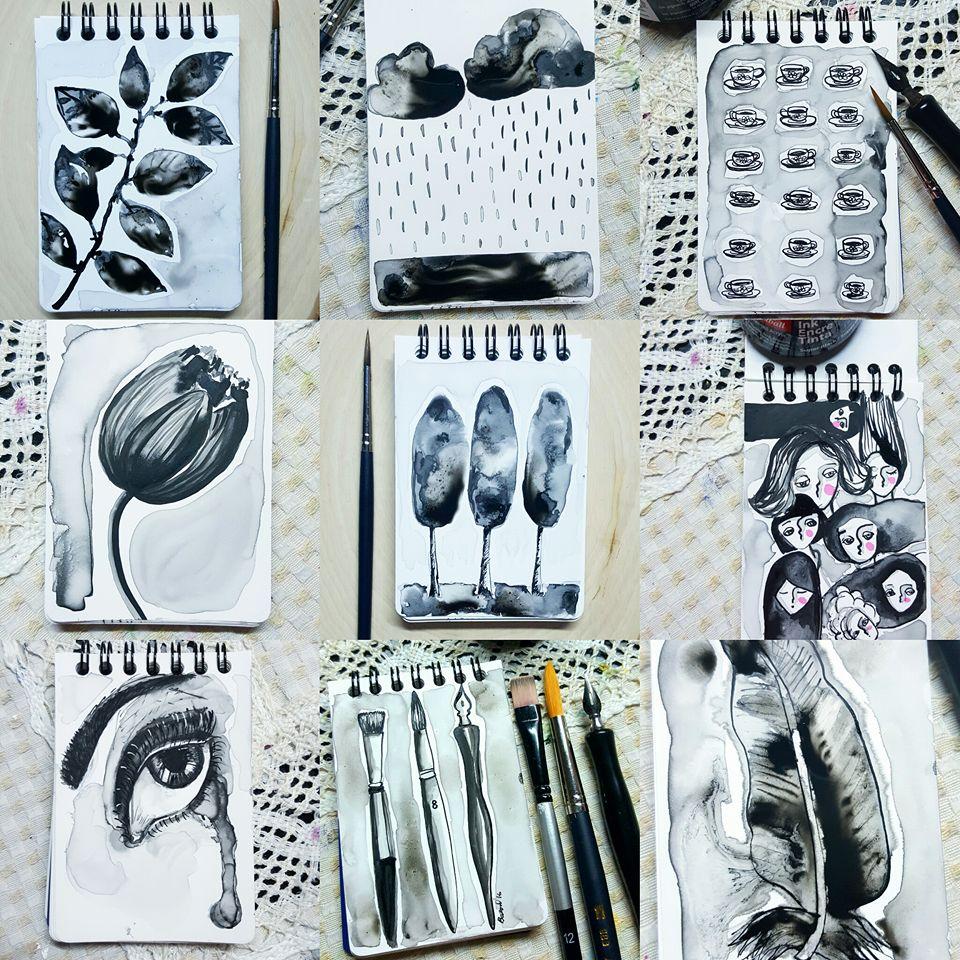
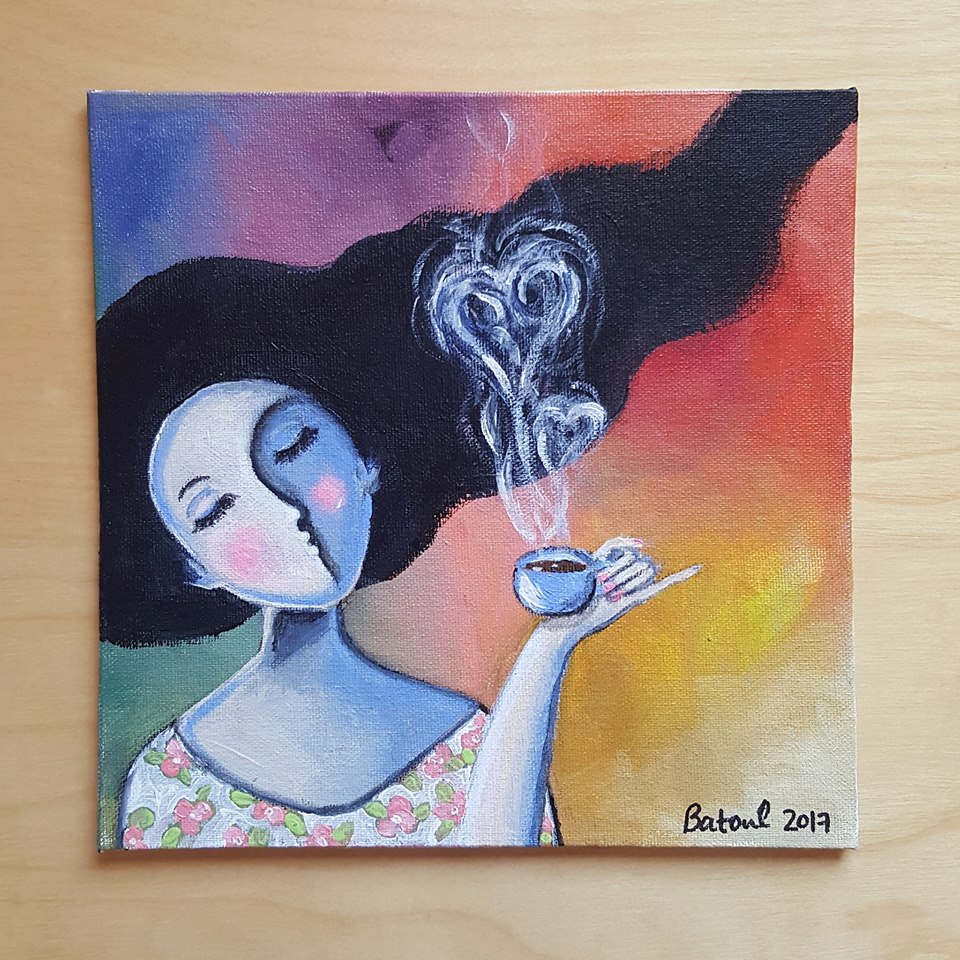
A teaching assistant in the department of pharmacology at Kuwait University, Makki draws and paints on various materials — paper, wood, cloth, and most recently, clay — with ink, oil, acrylic paints and markers. Makki also likes to draw in small notebooks, whose limitations push her “to be more creative,” she says.
Makki found an opportunity to share her passion in January 2016 when she joined a daily drawing challenge on Instagram. By the end of the month, she had received support from many people on social media who had seen her work.
The response was “a motivator to keep improving my work,” Makki said.
Makki also began looking for ways to support war victims, creating her own business in 2017 to raise money for relief efforts in Syria.
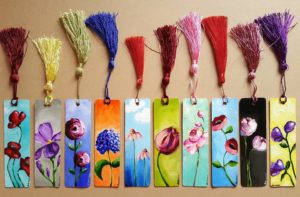
“I have painted on (wood strips) and made (them into) bookmarks; it succeeds well,” Makki said. Sales of the bookmarks have raised nearly $500 for the Syrian Expatriate Medical Association to provide prosthetics for Syrian refugees in north Syria, she said.
Makki is not the only Syrian who has used art to cope with the Syrian conflict.
Sofia Dawoodi, a Syrian living in Amsterdam, started Annamarie Art Stichting, a non-profit organization that aims to support the art of diaspora by showcasing projects in international art exhibits in Europe.
In 2017, Dawoodi organized “Meet the Syrians,” an art exhibit in Amsterdam that featured 63 Syrian artists, including Makki.
“(T)he visitors of the exhibition were afraid of … a gallery about Syria. They were afraid of pain,” Dawoodi said in a video interview. “(B)ut in the end, all of them were surprised that those (who have) suffered … can create this amazing art.”
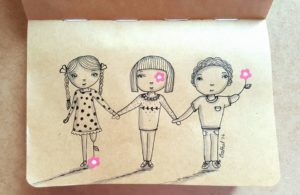
Makki’s contribution to the exhibit was a delicate drawing of three children who have been injured in war (see right).
“Her expression of the amputated parts of the body of the injured was wonderful and very special, and drew the attention of all visitors to the exhibition,” Dawoodi said.
Makki was able to see her work in a gallery for the first time at Den Gallery in Kuwait City: “It was a great feeling.”
Her brother Nader Makki also is an artist.
“Despite the huge difference in our art styles, Batoul was — is — the one who mainly push(es) me to become the artist I want to be,” said Nader Makki, who creates pen-and-ink drawings.
“Watching her grow as an artist with every project, and passionately explore new styles and techniques, is one of the few things that actually brighten up my days.”
Batoul Makki says this is just the beginning. She will continue to learn more about the art schools, find her art’s style and try to draw with other materials. After doing that, she has a plan.
“I’ve noticed during my learning that there are no Arabic platforms nor sources to learn art, so I would like to create my own platform and let art (reach) everyone … in the Middle East,” Makki said.
“I do not believe in the absurd optimism that makes us forget the bloody reality,” she added. “But I believe that we can embody this suffering with art, and this is an essential part of my work.”
—Featured photo: A drawing of a woman, her flowing hair pictured as a raincloud. Featured photo and gallery photos by Batoul Makki/used with permission.
—Boustaji, who studies business administration online at Asia e University, graduated last fall from an introduction to journalism class conducted by Paper Airplanes, a nonprofit that provides free online language and skills instruction to people affected by conflict. This is her first story for Global Student Square.

Related Posts