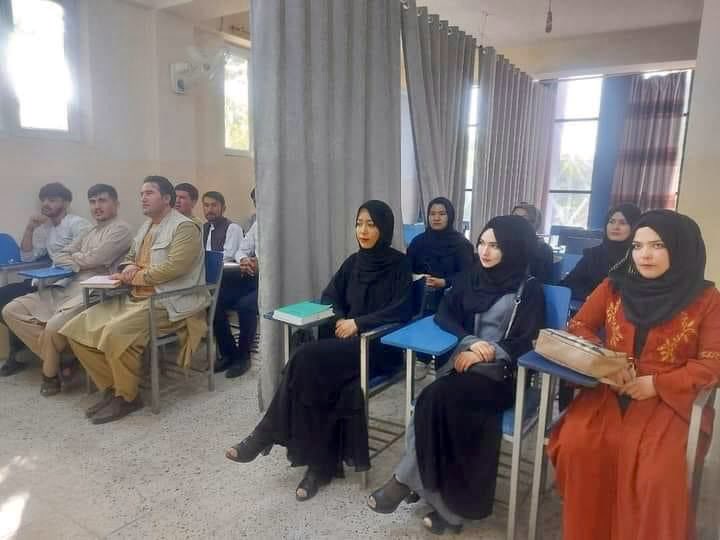
They’ve gone dark: Afghans who helped the U.S. military, trained as American-style journalists and rode the wave of women heading to higher education are destroying the diplomas, transcripts and résumés that prove how they built civil society in the country that the U.S. has left behind.
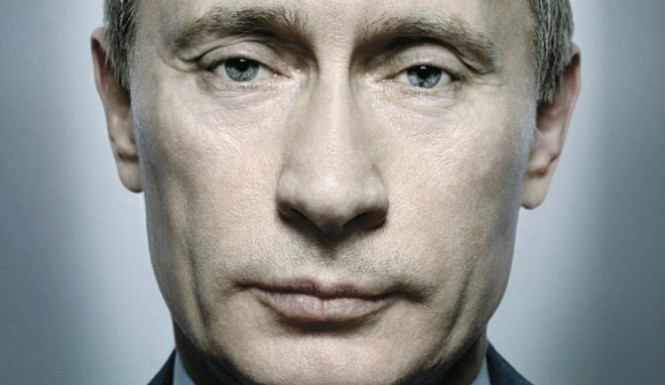
A Putin Portrait
REDWOOD CITY, California — Students at Sequoia High School chose to focus on the person who is one of the most important men ever to lead Russia: Vladimir Vladimirovich Putin.
Their work included a look at the many faces of Putin as reflected in Western media, from news reports to book reviews and opinion/editorials, to a comparison of the sociological and psychological characteristics of Rodion Raskolnikov, the main character of Fyodor Dostoevsky’s “Crime and Punishment,” and Putin.
Read on for a multidimensional portrait of a man the West often struggles to understand.
—the editors
“The Man Without a Face”
For this project, students began with Masha Gessen’s, “The Man Without a Face: The Unlikely Rise of Vladimir Putin,” a 2012 book that traces Putin’s rise from deputy mayor of St. Petersburg — where Dostoevsky’s “Crime and Punishment” is set — to his current position as ruler of Russia.
The annotated collage below includes links to published articles, from The Moscow Times to the Toronto Globe and Mail, Der Spiegel and Newsweek, and a video interview with Fiona Hill, director of the center on the U.S. and Europe at the Brookings Institution.
In fact, the Times’ “Plenty of Crime But No Punishment for Putin” (Sept. 3, 2014) draws a direct link between today’s news events and Dostoevsky’s novel.
Here is one version of Putin’s many portrayals.
—the editors
Two Men
—By Manuel Benitez, for Madigan Griffin, Ada Gao, Samantha O’Neill, and Robert Vogel
After completing our project — a comparison of Rodion Romanovich Raskolnikov, from Fyodor Dostoevsky’s “Crime and Punishment,” and Russian President Vladimir Vladimirovich Putin — we came to some conclusions about the psychological and literary makeup of these two different yet similar men.

Based on our study of the novel, we thought Raskolnikov had much more sociopathic characteristics, while based on our study of Putin, we believe he suffers more from narcissism. We discovered this by comparing Raskolnikov and Putin side-by-side using Thinglink to annotate a photo and illustration (below), and by creating a Piktochart (at left) that breaks down the characteristics of sociopathy and psychopathy.
As shown in the annotated photo below, we believe that many of Putin’s actions relate much more to narcissism than sociopathy. Raskolnikov’s symptoms of sociopathy are revealed in the quotes from the novel.
Though our project is finished, it is ultimately up to readers themselves to conclude what they think about Rodion Romanovich Raskolnikov and Vladimir Vladimirovich Putin.
—Editor’s note: A third group’s work — a timeline of Putin’s life, from his birth “to an ordinary family in Leningrad” and his 1983 marriage to his rise through the KGB and St. Petersburg city politics to prime minister and then president of Russia, including his 2013 decision to grant asylum to Edward Snowden, his 2014 move into the Crimea, his nomination for a Nobel Prize for Peace, and recent legislation restricting gay rights and adoptions of Russian children by U.S. citizens — is missing due to a broken link.

Related Posts