If you could give your phone a name, what would it be? Which social media platform do you hate most? What's the first thing you do when you wake up every day? Student journalists at the Global Media and Information Literacy Week Youth Forum launched an innovative pop-up video project to find the answers.
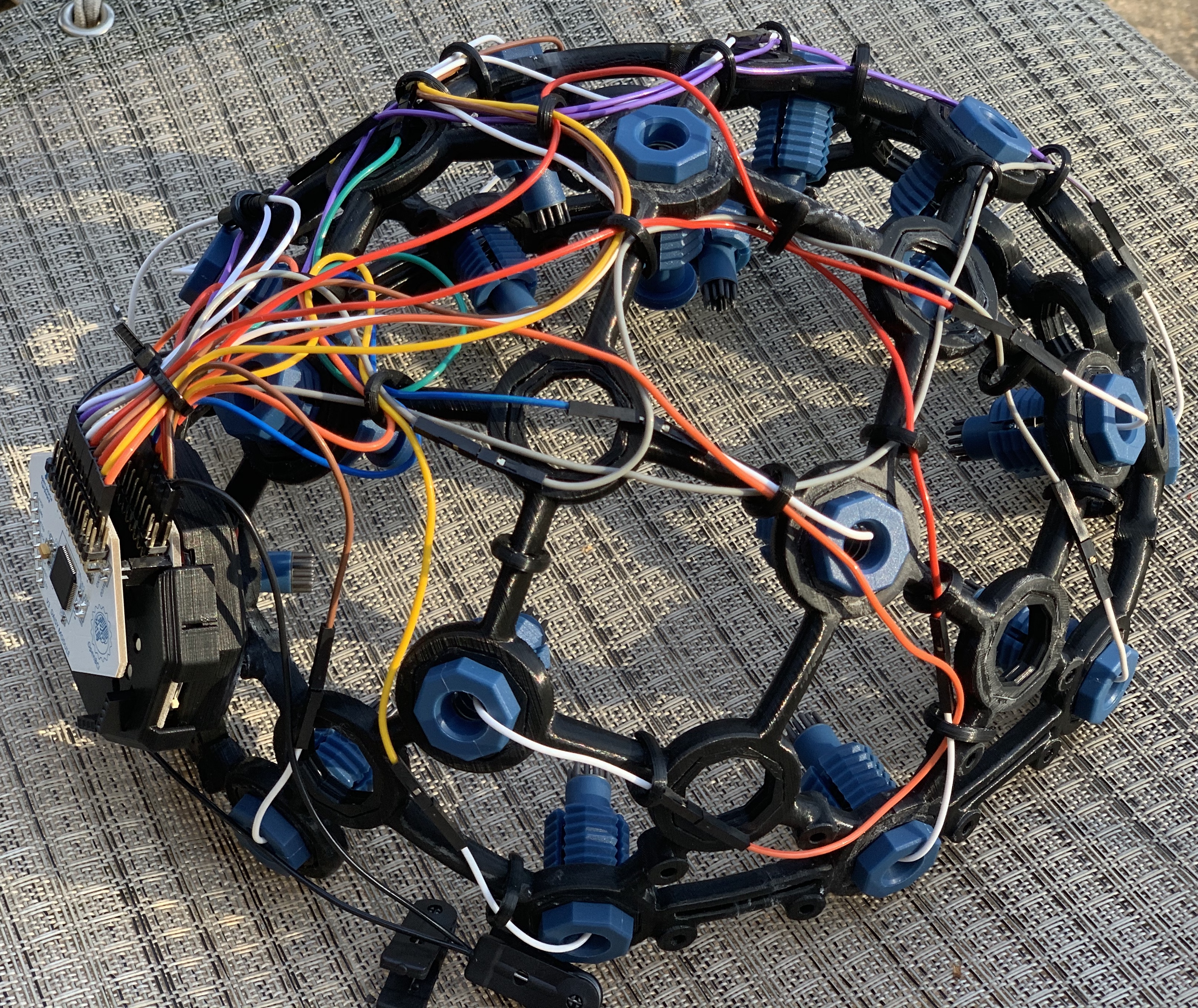
The Happiness Helmet: How AI can guide how you feel
By JJ Hennessy
Mind And Machine Columnist
Imagine yourself in a dark and desolate forest. All of a sudden, in the corner of your eye, you see a massive grizzly bear charging at you. In mere milliseconds, your brain will perform innumerable complex neurobiological computations that rapidly resolve into a surprisingly simple yet life-saving decision:
Run away. Now.
How exactly does our nervous system do this? What are the underlying algorithms that dictate the flow of information in the brain?
As humans, we are in a constant cycle of collecting data through our senses and using our nervous system to analyze these inputs to make decisions. We do not yet completely understand the mechanisms that operate the brain and form intelligence.
However, this has not stopped humanity from attempting to explore and replicate the concept of intelligence and learning on machines. In the mid-1950s, John McCarthy coined the term “artificial intelligence” and organized The Dartmouth Summer Research Project on Artificial Intelligence, which established AI as a concrete field of study.
AI is a term that constantly circulates through news media and daily conversation, but many people don’t fully understand what it truly means and how it works. In simple terms, AI aims to develop algorithms that mimic the natural intelligence found in humans and animals. It is a broad discipline that includes everything from visual perception to language translation.
At the same time, you have likely come across the term “machine learning,” which is often mistaken as being synonymous with AI. Machine learning employs various algorithms that can recognize patterns in data and make predictions from what it has learned, which is only one sector of AI.
So what do these often confusing terms look like in practice? Let me show you!
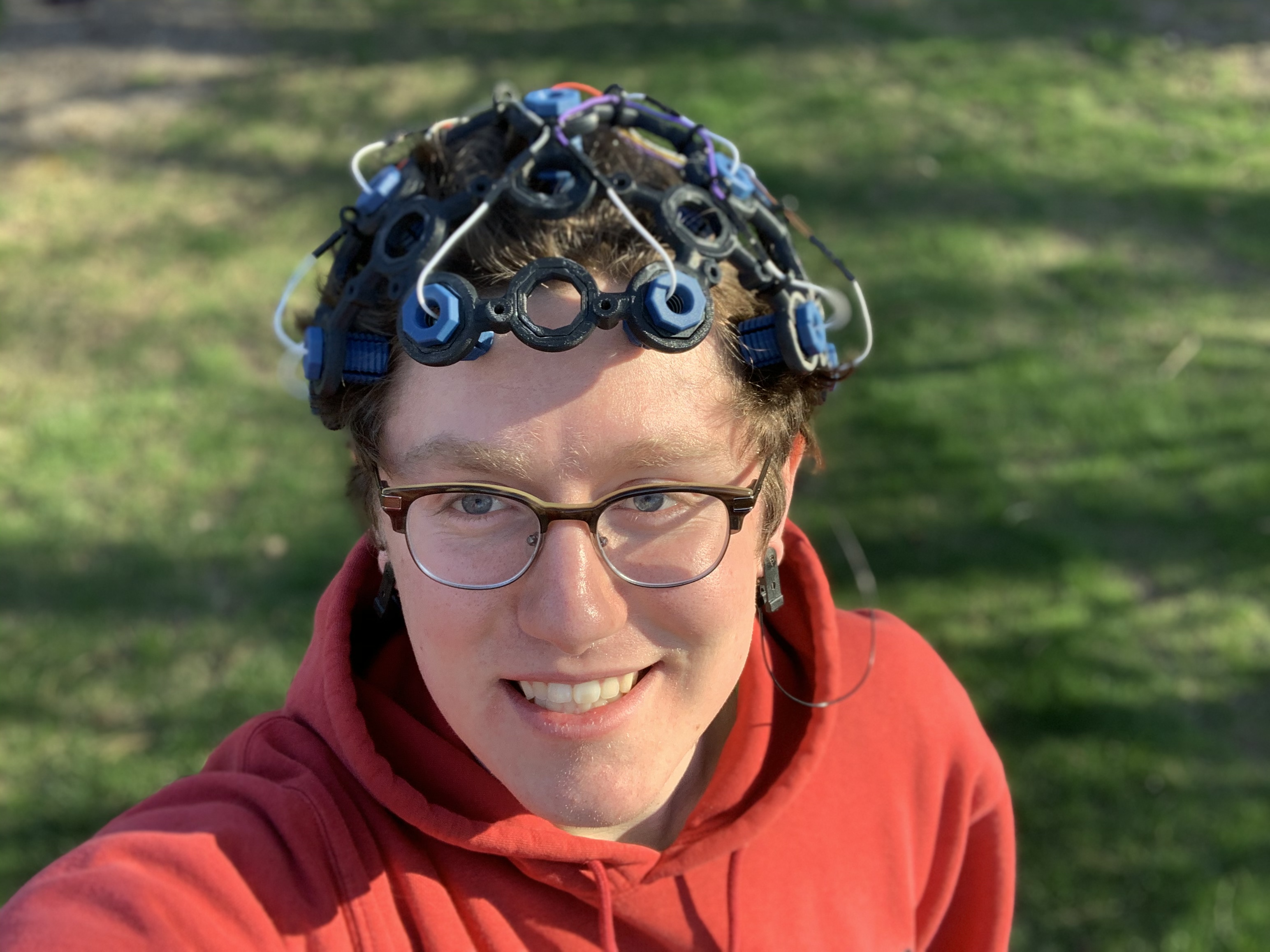
Over the past few months, I have been working on a passion project, called the Happiness Helmet, to give people guidance on how to alter their behavior and lead a happier life. The general setup for the project includes a custom-built electroencephalogram (EEG) helmet, a camera
When the system turns on, the computer simultaneously streams EEG and camera data into two sep
This algorithm has been trained on gigabytes of raw data, from which it learns the correspondence between fluctuations in EEG measurements and the emotion someone experiences. This means that when you pass it new EEG data, it is able to make an accurate estimate of one’s emotional state.
So what are the roots of this idea, and what are its applications? My initial idea dawned on me one night when I couldn’t fall asleep, as one question constantly looped in my mind: “How can we scientifically measure someone’s happiness?” People fantasize about being happy and even dedicate their entire lives to the endeavor of achieving this elusive emotion.
This whole debacle ties into the applications of my project, which is primarily to give people guidance on how to alter their behavior to lead a happier and healthier life. My helmet can be used on anybody, but is particularly aimed at those struggling with mental health challenges such as anxiety and depression.
For example, the system might detect very few positive spikes of emotion while you are at work. This pattern, which develops over time, might suggest that you may want to consider finding a new job, or at the very least shaking up your routine while on the job.
Or maybe the system might detect more positive spikes in emotion when you’re eating fruits and vegetables compared with potato chips. This may suggest that you should alter your eating habits to lead themselves towards better health not only physically, but mentally. Simply knowing that one’s diet is unhealthy is far different from seeing concrete scientific evidence that a poor diet is having a negative influence on your headspace. My helmet tries to bridge this gap.
And that’s it! My project is an example of how AI is used in the real world. What do you think about the current state of AI? How do you envision our
Drop a comment below and keep reading Mind and Machine for more coverage on current developments in AI!

Related Posts