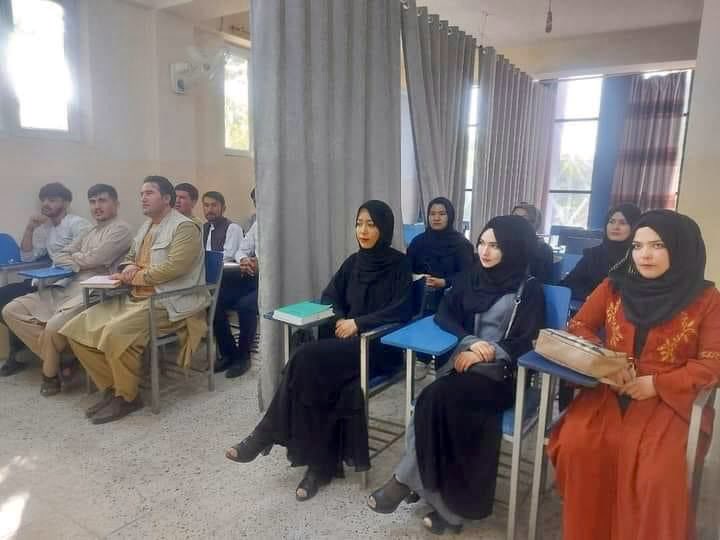
They’ve gone dark: Afghans who helped the U.S. military, trained as American-style journalists and rode the wave of women heading to higher education are destroying the diplomas, transcripts and résumés that prove how they built civil society in the country that the U.S. has left behind.
#enough: High school students step out to call attention to school safety, gun control
By Sophia Haber
GSS correspondent
LOS ANGELES — Students across the nation put down their pencils, pushed in their chairs and walked out of their classrooms to advocate against violence and to honor the victims of the Marjory Stoneman Douglas shooting in Parkland, Florida one month ago.
Some school administrators rallied behind the students’ cause, while others threatened consequences. The American Civil Liberties Union urged schools not to discipline students for expressing their views, and universities including Harvard, Yale and MIT announced that suspensions from the walkout will not hurt students’ chance of admission.
Despite being discouraged by school officials, students at Mauldin High School in Mauldin, South Carolina walked out of class to release 17 balloons with the names of each person who was killed in the Parkland shooting. The move took place after the school observed a moment of silence and read out the victims’ names, Mauldin junior Charlotte Capers Snoad said.
“We all just stood there and hugged each other,” Snoad said. “Some kids began to pray.”
Students who walked out were required to sign their names on a sheet and received a formal warning for skipping class. Several teachers told students that they would receive a zero on their tests if they walked out, and some also threatened suspension, Snoad said.
A total of 176 students walked out; some made signs, some sang the national anthem and others prayed, Snoad said.
“For my school in the Deep South that number was truly amazing,” Snoad said. “The entire scene was unlike anything I’d ever seen at my school.”
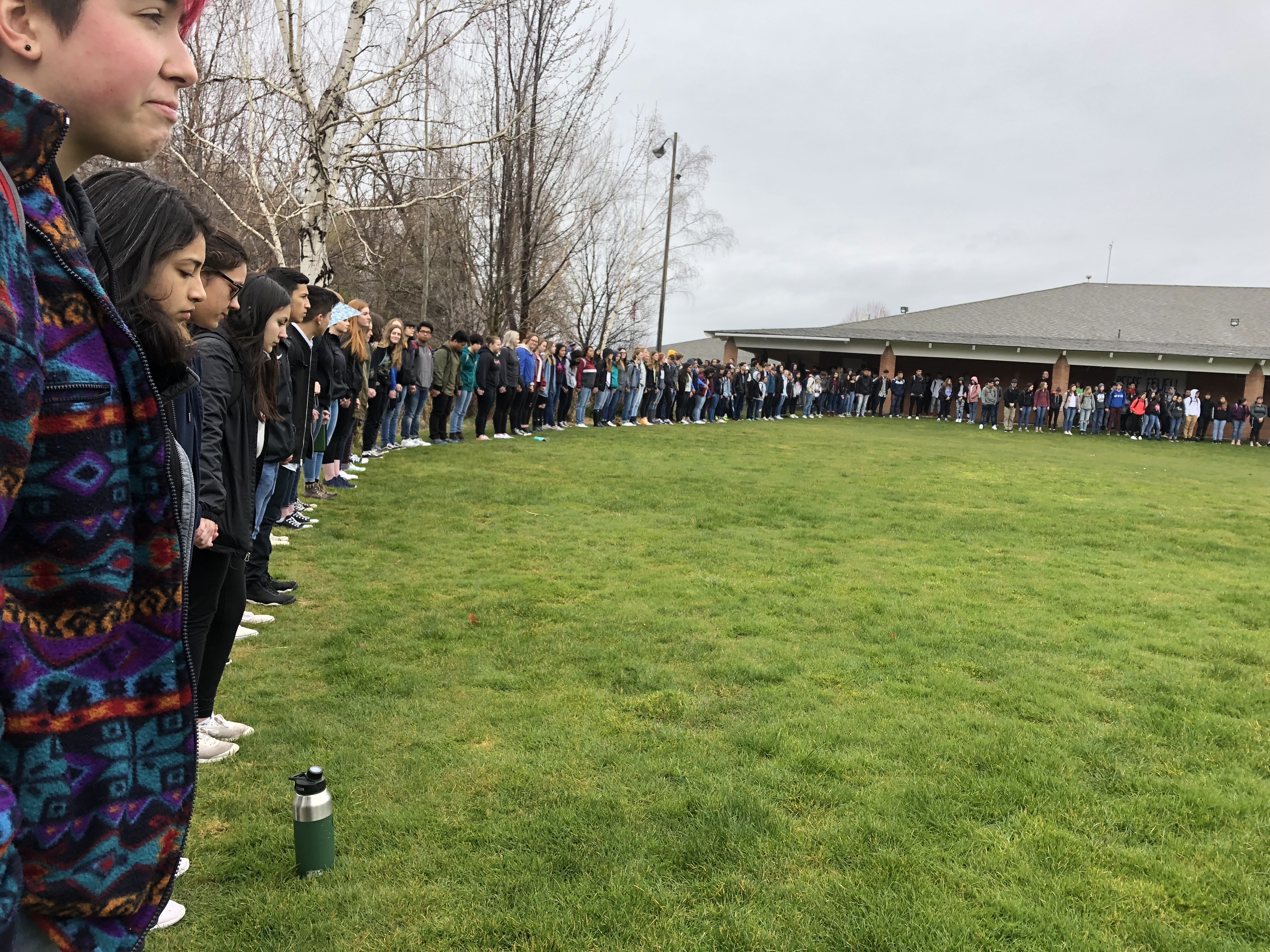
By contrast, in Walla Walla, Washington, approximately 400 students from Walla Walla High School gathered in the center of campus and joined hands to honor the Parkland victims while parents, school administrators and district superintendent Wade Smith stood by in a show of support.
The muted scene at Wa-High — which, like many high schools, is all about sound, with students laughing, shouting and calling to each other all day long in the hallways and outside on the athletic fields — was surreal, students said.
Under a steady drizzle, students of all ages and interests — seniors and freshmen, jocks and math nerds, no two students necessarily friends — headed out to a grassy field known as the Commons:
After one minute of silence at 10:12 a.m., several students stepped into the middle of the larger group and read the names of each student killed in the Parkland shooting. Students held hands, with only a few speaking amid the quiet.
“It was inspiring and empowering to see so many students come together for our school, for our nation and for each other,” said Emma Case, 18, a senior and student body president.
Similarly, at the Marlborough School in Los Angeles, junior Hattie Rogovin said she knew of only two students who chose not to participate in the walkout. The administration at the all-girls’ school was supportive, and helped organize the event to ensure students’ safety, Rogovin said.
Dressed in orange, the color of the movement against gun violence, students walked off campus, holding handmade posters. For 17 minutes, they stood on the corner of Rossmore Avenue and 3rd Street outside of their school, chanting slogans in favor of gun regulation.
“So many cars were going by, honking in support, which was a really powerful and amazing moment,” Rogovin said.
For Rogovin, it was empowering to see students of all grades coming together to effect change, she said.
“As students, we all want to feel safe in our schools, and we all agree that that starts with gun control,” Rogovin said. “There is a clear path to change, and today was the first stepping stone to a new generation. It was important to me to be a part of this amazing path, and I could not feel any luckier that I got to participate in such a monumental moment.”
Some students took their activism not just beyond the school gates, but straight to their elected officials.
Maddy Weiss, a junior at Sycamore High School in Cincinnati, participated in her school’s walkout and then traveled just over 100 miles north to met with three members of Congress at the Ohio statehouse in Columbus.
Along with a group of high school students from around the state, Weiss shared her point of view with lawmakers and told them how she wanted them to vote on legislation.
“Most people were very attentive and seemed to care about why we were there, even if their views might not align with ours,” Weiss said. “They did seem concerned about school safety. My local representative kind of dismissed us and did not give a concrete response to our demands and told us to ‘have fun,’ which was kind of belittling.”
Overall, she said the experience was beneficial, as it allowed her to develop a greater understanding of democracy, and she learned that she has the power to testify in support or against a new bill before a committee even though she is not of voting age.
“It was important to me to participate today because every student has the right to feel safe at school,” Weiss said. “We can only do our best work when we feel safe [to learn], and I don’t believe anyone’s right to own an object is more important than someone’s right to live.”
For students at Amos Alonzo Stagg High School in Stockton, California, Wednesday marked a second walkout after a previous attempt several days earlier resulted in vandalism, violence and arrests.
Many of those who participated in the first protest and acted aggressively had no idea what they were actually protesting, students said. Senior class president Sara Abdeltawab said “after witnessing it go down like it did, I was very disappointed in my school and I felt they had grossly hurt Stagg’s reputation.”
Students who joined the National School Walkout on Wednesday said they returned to class feeling empowered by knowing that by walking out of class they can change a day’s headlines, and maybe a nation’s policies.
“I need to be a part of the change I want to see in the world,” Snoad said. “If I sit back and let others walk out without me I feel like I’ve lost my voice.
“While this is a movement that has thousands of young people, it is a movement of individuals, which for me means that every voice matters and every voice counts,” Snoad said. “I can’t call myself a leader of change without taking action, and for me walking out was that action.”
—Haber is a student at Harvard-Westlake School in Los Angeles. GSS correspondent Macy Quinn-Sears contributed reporting, photos and video from Walla Walla, Washington. Phillicity Uriarte-Jones reported from San Jose, California.

Related Posts