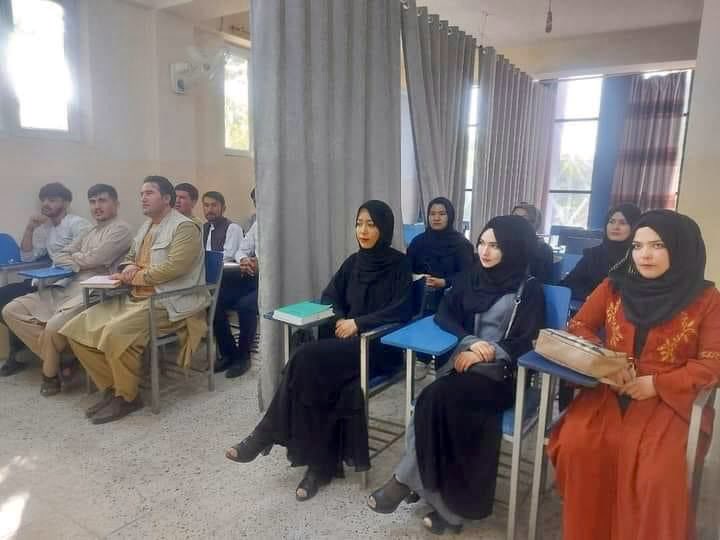
They’ve gone dark: Afghans who helped the U.S. military, trained as American-style journalists and rode the wave of women heading to higher education are destroying the diplomas, transcripts and résumés that prove how they built civil society in the country that the U.S. has left behind.
Developing Dubai — amid skyscrapers, a push for sustainability
By Jacob Pantin and Shashikant Dangli
GSS correspondents
Cities have been growing rapidly over the past few decades. Historical animations of the growth of some capital cities, such as London and Moscow, show them quadrupling in area and population since the early 1900s. But if you look at these and other established cities, their plan is completely random. They grew out of necessity; many, when looked at from above, look as if a painter threw splotches of paint at a canvas and called it a day.
However, various cities around the world have been looking to plan their expansion for more sustainable living. One such city is the rapidly expanding Dubai in the Middle East:
Dubai at a glance
The population of Dubai, the largest city in the United Arab Emirates, was approximately 2.5 million as of 2016. It is a city that has grown very rapidly since the 1990s, with skyscrapers rising out of nowhere. But how could it have grown so rapidly and still remain so organized? It retains a rigid city plan, with clear limits and regular shapes. But does this mean it is sustainable?
From environmental impact to sustainability
At first, it wasn’t. In order to make Dubai the massive metropolis it is today, sacrifices had to be made. Coral reefs were buried in order to make offshore complexes. Thousands of tons of fossil fuels have been used to power massive skyscrapers.
And while developer Emarr Properties PSJC recently announced plans to build the world’s tallest skyscraper in Dubai — a project that would top the Burj Khalifa, which at more than 160 stories is already the world’s tallest tower — fires in 2015 and in 2017 at Dubai’s Torch Tower along with softer real estate prices have companies looking for other ways to expand.
Today, Dubai is trying to become more environmentally friendly. People are transitioning to solar power and finding ways to reduce their energy use. They are building thousands of solar panels in the desert. In fact, sustainability is the theme of the upcoming Expo2020 conference to take place in Dubai two years from now.
According to an October 2017 National Geographic article entitled “What Will the City of the Future Look Like?” writer Susan Goldberg says that faster and more efficient public transportation is slowly replacing gas guzzling sports cars that used to race through the streets.
Streets are being redesigned to encourage walking, though being outside under the blistering sun in Dubai remains a challenge. And while constructing skyscrapers can be controversial, they can allow for a more efficient use of space; the new Creek Harbour Tower is expected to house up to 470,000 people. All these things are helping to make Dubai more sustainable.
The Sustainable City — and lessons learned
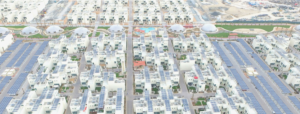
But what is the main feature of Dubai’s sustainability goal? The answer is a section of the city in the southern outskirts called The Sustainable City. This development reduces water and waste and uses solar power to produce more energy than it consumes.
The lesson learned? The sustainable city and Dubai itself can grow in a purpose-built way. Even skyscrapers can help sustainability by allowing more people to live in a smaller area and by putting pressure to find sources of renewable energy.
While other cities sprawl, Dubai seems to be surging forward with an eye on sustainability.
Featured photo: Electric cars participating in the four-day Emirates Electric Vehicle Road Trip in February 2017 took to the streets of Dubai’s Sustainable City. The $299 million development opened in January 2016. Publicity photo by Diamond Developers.
—Pantin and Dangi are students at the American School of Paris.

Related Posts