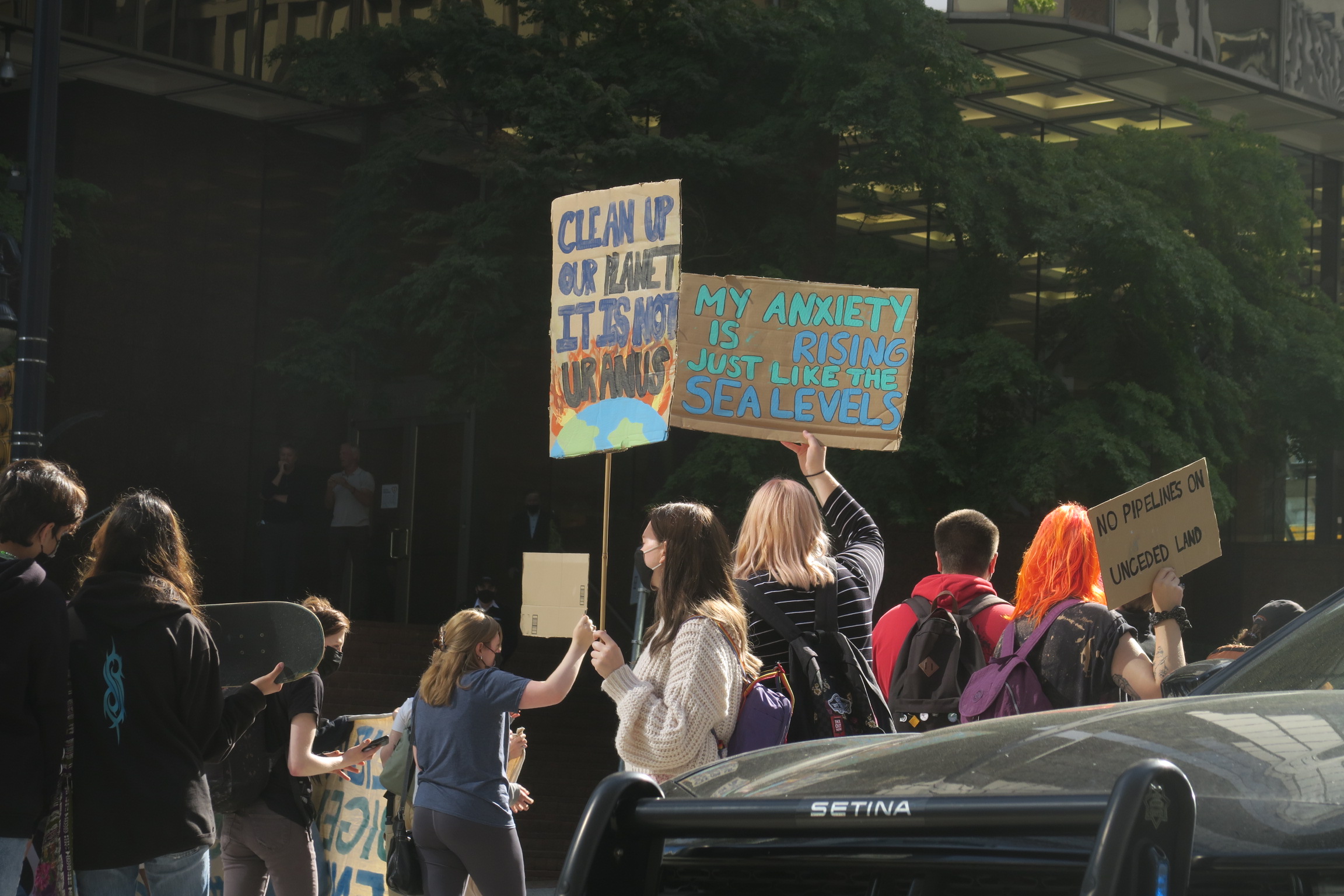
They’re back: Today’s Fridays for Future strike — the first in 18 months — will see youth activists taking to the streets again to push progress on solutions to climate change.
Here’s what you can do to raise awareness and seek solutions where you are.
Goodbye PyeongChang, hello Paris — city of light already working on 2024 Summer Olympics
By Cairo Pulley
GSS correspondent
SAINT CLOUD, France — If you were to go to most stadiums in the world today, you would expect thousands of people packed into a large, but cramped space. You’d watch the barely visible players on the field while snacking on popcorn. After the spectators leave, the stadium would become a desolate space with rows of empty seats and litter in the stands.
Now imagine a family excursion to the stadium of the future: Once the family goes through the front gates, Mom heads off to go shopping while Dad sits down to watch the nail-biting soccer game. Tomorrow’s stadium would be complete with wind turbines, reusable water storage and a complete ecosystem on the roof.
As for the sports themselves, they would be more diverse, with space for sailing, surfing, basketball and soccer — all available in one stadium rather than in multiple venues. This stadium would not only be a space for events, but also a place to shop and to live, equipped with beautiful apartments and restaurants.
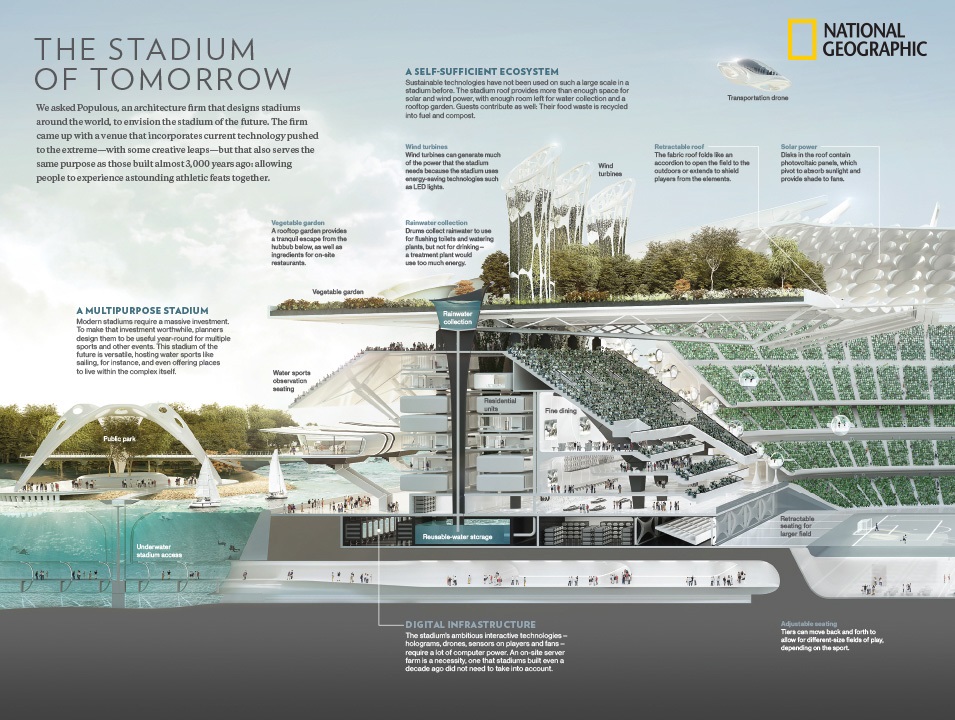
All this is an idea for the “stadium of tomorrow” created by Populous, a company that designs stadiums for sports teams and events, in a recent collaboration with National Geographic.
It’s also the vision for the planners of Paris 2024, who say they want to hold “the most sustainable games ever,” in line with the 2015 Paris climate accords and with a 55 percent smaller carbon footprint than the 2012 Olympics in London.
Some architects, urbanists and city planners want to make sustainable stadiums a reality. And for good reason: The change would solve many of the issues that people have with stadiums such as the waste of space they become when an event ends, or the forced displacement that can take place when stadiums are built for special events, such as the Olympics.
Host countries need to have impressive, practical stadiums ready for events, and that often means that multiple venues are needed as one stadium is not enough for all the sports that are involved in the Olympic games.
As seen in this week’s closing ceremonies at the Winter Games in PyeongChang, South Korea, there also has to be a stadium large enough to seat all the spectators along with all of the athletes and Olympic staff. There has to be an Olympic Village, where athletes live for the duration of the games, as well as efficient transportation.
Mistakes in locating stadiums can harm people and even governments. That was the case in Rio de Janeiro, where citizens were displaced from their homes to make room for the Olympic Village. In Greece, the cash-strapped government spent an estimated $11 billion on making multiple stadiums and venues for the 2004 Olympics; 10 years later, photos showed the Helliniko Olympic Complex trashed, graffitied and forgotten. It’s now the site of a UN refugee camp:
A “stadium of tomorrow” could be different.
Populous envisions “creating (a) multi-use, multi-experiential ecosystem with a plethora of sports and recreation opportunities” that could also be used afterwards for more events and lessen the financial load that countries take on when they hold the Olympics.
In Paris, a lot of the buzz recently has been about the fact that Paris landed the 2024 Olympics, after many years of consideration and betting. Already, the preparations are beginning, with Citylab reporting that the city of Paris will be using the Olympics as an opportunity to upgrade: “Paris seems to be taking a leaf out of London’s book and plans to use the games as a regeneration tool.”
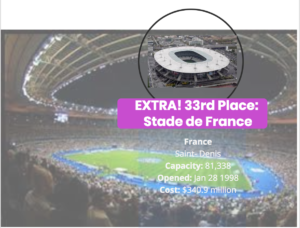
The Stade de France is Paris’ premier stadium, home to many football and rugby games along with the occasional concert. For the Olympics, it will be the main focus as it will be holding the opening and closing ceremonies. The Stade Roland Garros is another important venue that will be used for events such as tennis. These aren’t new; the Stade de France has been up and running since its inauguration in 1998 while the Roland Garros Stadium has been at it for even longer, since 1928. Renovations to both the Stade Roland Garros and the Stade de France are already underway.
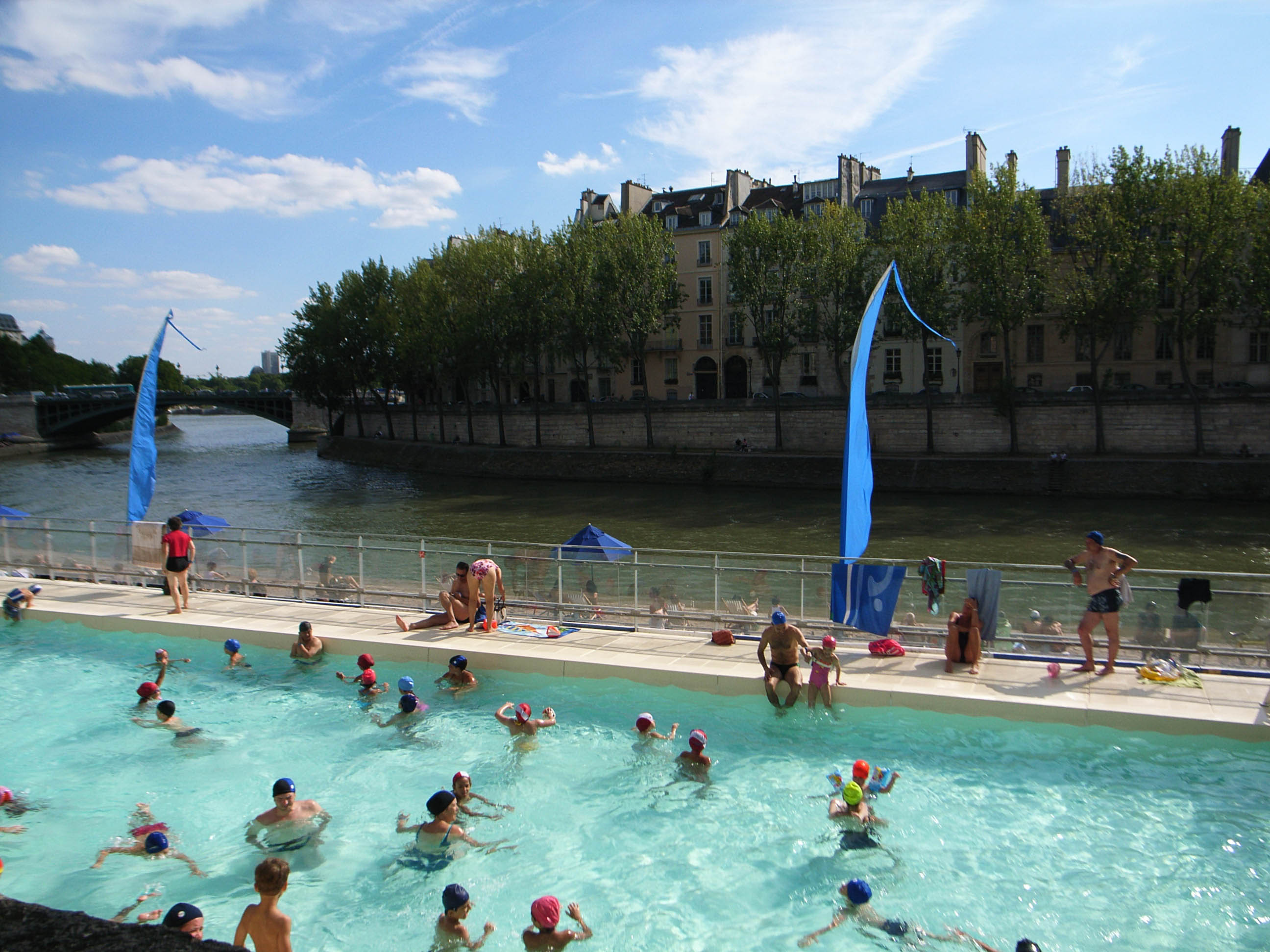
In addition, Paris will have to build an aquatics center, a second indoor arena at Bercy, an Olympic and Paralympic village and a media village. Paris has opened some canals in the city for swimming, part of mayor Anne Hidalgo’s “Swimming in Paris” plan to hold Olympic swimming events in the Seine. The city has also begun a four line expansion of the metro system to make transportation to and from the Olympics more convenient.
Another problem that is especially important is security. Paris is a huge city full of people from many different backgrounds, which makes it a model of diversity but also a target for political threats. In November 2015, suicide bombers detonated themselves outside of the Stade de France during an event, as part of a citywide terrorist attack on Paris that killed 130 people and injured another 350 people. Security is sure to be an issue that will be considered very seriously when France begins to improve its stadiums.
All this will take a lot of euros. The city of Paris has a 6.8 billion euro budget and it claims that 95 percent of infrastructure needed for the Olympics is already built. This may mean that the budget could stretch pretty far, though it is too early to tell.

Ultimately, the biggest question regarding the 2024 Paris Olympics is whether or not Paris will be ready in time.
Supporters of the city’s bid say that Paris is one of the most prepared cities ever in Olympic history, with key infrastructure in place including a working transportation system as well as most of the venues needed for the event already built. Opponents point out that Paris will have to speed up its extension of metro lines will still need to crack an Olympic code that has challenged other cities: making the Olympic investment worthwhile it in the long run and not just for a two-week sporting event.
Whatever changes Paris makes, creating a new stadium experience wouldn’t be a bad place to start.

“The viewing experience within a stadium environment has not fundamentally changed since Vespasian ordered the construction of the Colosseum almost 2,000 years ago,” said Christopher Lee, managing director of Populous, told National Geographic.
Populous has designed more than 30 stadiums around the world, including Millennium Stadium (also known as the Principality Stadium) in Cardiff, Wales, which opened in 1999 with one of Europe’s first retractable roofs.
According to Lee, “technology and information technology is literally changing the playing field, providing an opportunity to create a new vision for both the experience of watching and playing sport but also for the role a stadium can play as a significant urban influencer.”
Featured photo: Swimmers enjoy a public pool next to the Seine River in 2010. Photo by Chen Zhao/Wikimedia Commons.
—Cairo Pulley and Alex Jung are students at the American School of Paris.

Related Posts