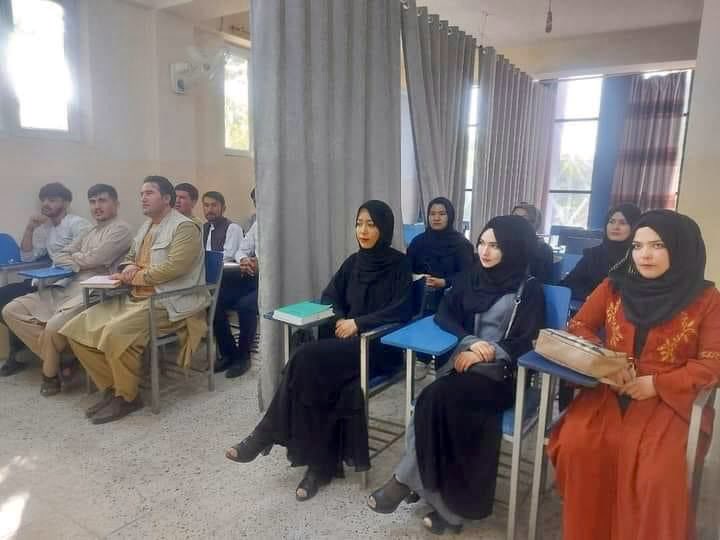
They’ve gone dark: Afghans who helped the U.S. military, trained as American-style journalists and rode the wave of women heading to higher education are destroying the diplomas, transcripts and résumés that prove how they built civil society in the country that the U.S. has left behind.

OPINION: Student assault cases demand stronger response by Korean courts
By Jiwon Na
GSS correspondent
SONGDO, South Korea — Korea’s shaky criminal justice system recently faced public outrage after a group of female middle school students brutally bullied a fellow student, yet escaped punishment by the law.

The Sept. 1 incident, which has come to be known as the case of the “Bloodied Middle School Student,” involved a victim in Busan who was assaulted for more than an hour with glass bottles, chairs and items from a nearby factory. It became a national phenomenon within just a few days after violent pictures of the victim captured on closed-circuit television were posted on social media.
This controversy has led South Koreans to question the state of youth offender punishment and prison term limits, especially with continued and increasing reports of school bullying across the nation.
“I have witnessed school violence before, almost every year. Although the cases are not even close to being as violent as the recent Busan (incident), a class tends to exclude a student from most activities and refuse to talk to them,” said Hong Jungwoo, 15, of Daemyeong Middle School in Seoul.
“I believe that stronger punishment is needed,” said Junwoo. “One of the pillars of the criminal justice system is proportionality. If one commits a crime, he or she must receive the proportionate amount of punishment. When considering the education that students are given and the social attention that juvenile crimes are receiving, it seems to naive to believe that children are not capable of knowing what’s wrong or right.”
Shin Yeajin, 15, a student at Sang-myung Middle School in Seoul, agreed that a stricter approach is necessary.
“I witnessed a boy cutting off the hair of other students by using scissors and some even resorted to physical violence. I personally believe that more education is not the way of dealing with youth offenders. Stronger punishment is necessary in severe cases like (Busan) because the perpetrators are not likely to change their ways without receiving severe punishment.”
Despite public attention and calls for legal reforms, the justice system’s verdict was much more lenient than expected.
Two 14-year-old perpetrators of the crime, identified in court papers as Student A and Student B, were placed in a juvenile delinquency center, while Student C and Student D, who are also minors, did not receive detention. Student D was placed under juvenile probation.
The verdict was in line with the Juvenile Act of 1995, which prevents minors from being prosecuted as adults under criminal law and limits the maximum detention period at a juvenile reformatory to two years.
Perceiving the punishments as too lenient, some Korean citizens have demanded changes to the legal framework for juveniles. On the presidential office website, a petition to repeal the law has garnered 282,000 supporters and brought attention to a plethora of past incidents involving youth offenders, such as the Miryang incident of 2004 when 41 high school boys raped five schoolgirls on several occasions over the course of an year.
Such assaults cast light on a deeply rooted and neglected deficiency of the criminal justice system. Though the original purpose of Korean law was to protect minors and provide youth offenders a second chance, adolescents have often abused this system to commit heinous crimes and avoid their corresponding punishments. Rather than reflecting on the inhumane nature of their crimes, some refuse to acknowledge the profound impact of their criminal decisions on victims. This lack of deterrence has also resulted in higher rates of recidivism for teenagers compared to adults. According to the Korean Statistics Office, 12.3% of youth offenders commit crimes again, while the percentage stands at 5.6% for adults.
The criminal justice system must take action and measures to increase penalties and punishment for adolescents who hurt others. Just as when the “Dogani Law” (a revised bill that allows for heavier punishments for sex offenders of children and the disabled) was implemented in response to public outrage, the South Korean government must be attentive to the voices of its citizens. The “Bloodied Middle School Student Incident” is not an isolated case and reflects the harsh reality of many youth offender charges which go unpunished.
A single criminal case can destroy the life of a single individual. Such acts, at any age, deserve to be punished. Youth offenders are able to make rational choices and already have a sense of morality. Students who commit such crimes should be punished as adults so that they have a chance to reflect upon their unethical decisions.
Featured photo: A Sept. 4 Instagram post on the Busan incident by the popular Korean singer Solbi was widely shared but also critiqued for her observation that “all of us have some degree of responsibility” for youth assaults such as the one in Busan. The post was later deleted. Read more here.

Related Posts