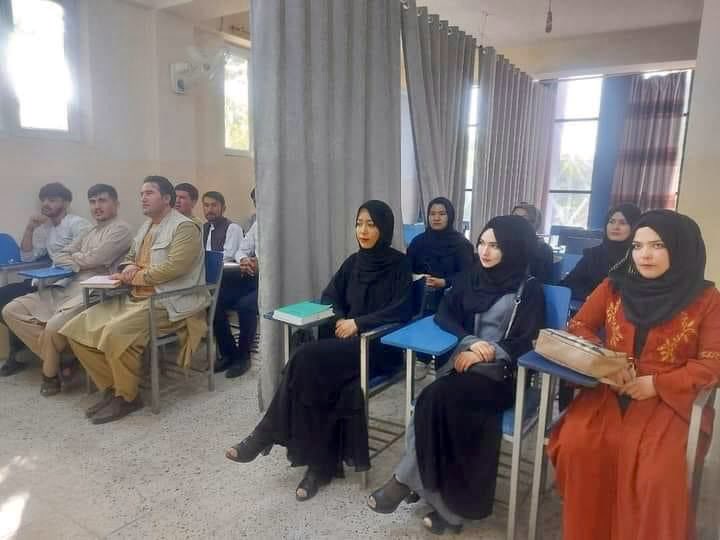
They’ve gone dark: Afghans who helped the U.S. military, trained as American-style journalists and rode the wave of women heading to higher education are destroying the diplomas, transcripts and résumés that prove how they built civil society in the country that the U.S. has left behind.

OPINION: Media mistakes make London attack a lesson for future journalists
By Max Somer
GSS Correspondent
It was the latest story in a long, sad, litany of terror.

On March 22, Khalid Masood, a British citizen, mowed down pedestrians on Westminster Bridge, crashed his hired Hyundai into the railings in front of Parliament and then fatally stabbed an unarmed officer before being shot dead. Over the course of this 82-second spree, five people (including Masood) were killed and another 50 injured.
By any standard, what happened in the heart of London was striking, sudden and tragic. But Londoners were left feeling particularly disconcerted by the media response.
Minutes after Masood’s rampage ended, 24/7 coverage began and continued into the night, a stream of violent images and rhetoric suffering from a clear deficit of accurate information.
Baseless speculation was rife, with the Independent and Channel 4 News incorrectly naming the attacker as Abu Izzadeen, a British-born man who was imprisoned in 2008 on terrorism charges.
The initial reports were later corrected:
From certainty to uncertainty, good illustration of why we mustn’t rush to judgement on id of suspect from @simonisrael on @Channel4News. pic.twitter.com/8YJaH7QbTu
— Gordon MacMillan (@gordonmacmillan) 22 March 2017
Further Channel 4 News statement pic.twitter.com/yA3xsCQ9ZU
— Hayley Barlow (@Hayley_Barlow) 22 March 2017
Such media mistakes serve as a painful illustration of the proclivity of some news organizations to cry terrorism first instead of focusing on facts. Patchy and inaccurate initial reports swell into a narrative in which the horrific actions of an individual are all too quickly tagged with an extremist ideology.
Notwithstanding the fact that ISIS did claim responsibility for the attack, in a quest to break the story first, Channel 4 acted irresponsibly and communicated erroneous information to the public.
Moreover, in the aftermath of the attack, a number of distressing images surfaced of individuals fighting for their lives. Reuters received ample criticism for their decision to publish the grotesque pictures; this was a breach of moral decency by most community standards.
Additionally, the Independent Press Standards Organisation’s Editors’ Code of Practice, which regulates the UK’s newspaper and magazine industry, cautions the media against “intrusion into grief or shock” when reporting on trauma.
Ultimately, Reuters’ decision made it inadvertently complicit in the actions of Masood and the sickening doctrine he represents. Sadly, the problem didn’t stop there. Images inevitably turn up on social media, be that Reddit, Facebook, Twitter and other platforms. And therein lies the problem: The declining influence of mainstream media and the rise of alternative sources makes it especially difficult to stop the spread of images once they are published:
Photos by Toby Melville show injured people in an incident outside British parliament https://t.co/q2Z1RCh2hx pic.twitter.com/C9yAT2qiYz
— Reuters Pictures (@reuterspictures) 22 March 2017
So what can we as the next generation of journalists do?
I believe the leading news organisations have a heightened responsibility to raise the standard of discourse. Instead of the continuous highlight reel of flashing lights and reporters in front of police tape, they should delve deeper into the groups that perpetrate such acts, rather than glorying the perpetrators with extensive profiles as took place regarding Masood.
Let’s be clear: I am not advocating censorship of the media or a closer relationship with the government as often adopted during times of war. However, just as we are attempting to deprive ISIS of precious oil revenues, our strategy must involve cutting the groups off from the oxygen of publicity.
Ultimately, news is news, and it must be covered but through responsible, accurate and balanced reporting, media organisations can ensure they do not assist or advance the terrorists’ cause.
I want to clarify one point: The power of terrorism is determined by our reaction to it, it has little inherent power.
Whilst the deaths of innocent civilians are tragic, such attacks, in themselves, do not represent an existential threat to a nation’s institutions or values. Fear is the primary byproduct of terrorism, and it is only through this trepidation that terrorists gain a foothold in our society. Publicity and coverage are force multipliers in the sense that they propagate the terrorist message, long after the incident has occurred.
This is not a new phenomenon. Osama Bin Laden understood the power of the media and manipulated it to further his narrative, famously turning his primitive cave in the mountains of Afghanistan into a journalistic theatre which hosted the likes of Peter Bergen (CNN), Robert Fisk (Independent) and many others.
London has been my home since the day I was born and whilst the attack was an absolute tragedy, in the words of Jon Stewart: “I grieve but I don’t despair.” The actions of an individual were reprehensible, yet the response of Londoners as a collective was phenomenal.
Last Saturday night, I visited Parliament Square where an ad hoc memorial has taken shape. Thousands have placed flowers there, lit candles and written words of solace to the victims. It was and is a picturesque moment of solidarity.
And that is the image that will stay in my mind, one far more enduring than the 82 seconds of carnage unleashed by Masood.
Featured photo: Newspaper headlines the day of the Westminster attack reflected fear, outrage and determination. Photo by Jun Sano.
—Somer is a junior at Southbank International School in London. This is his first story for GSS.

Related Posts