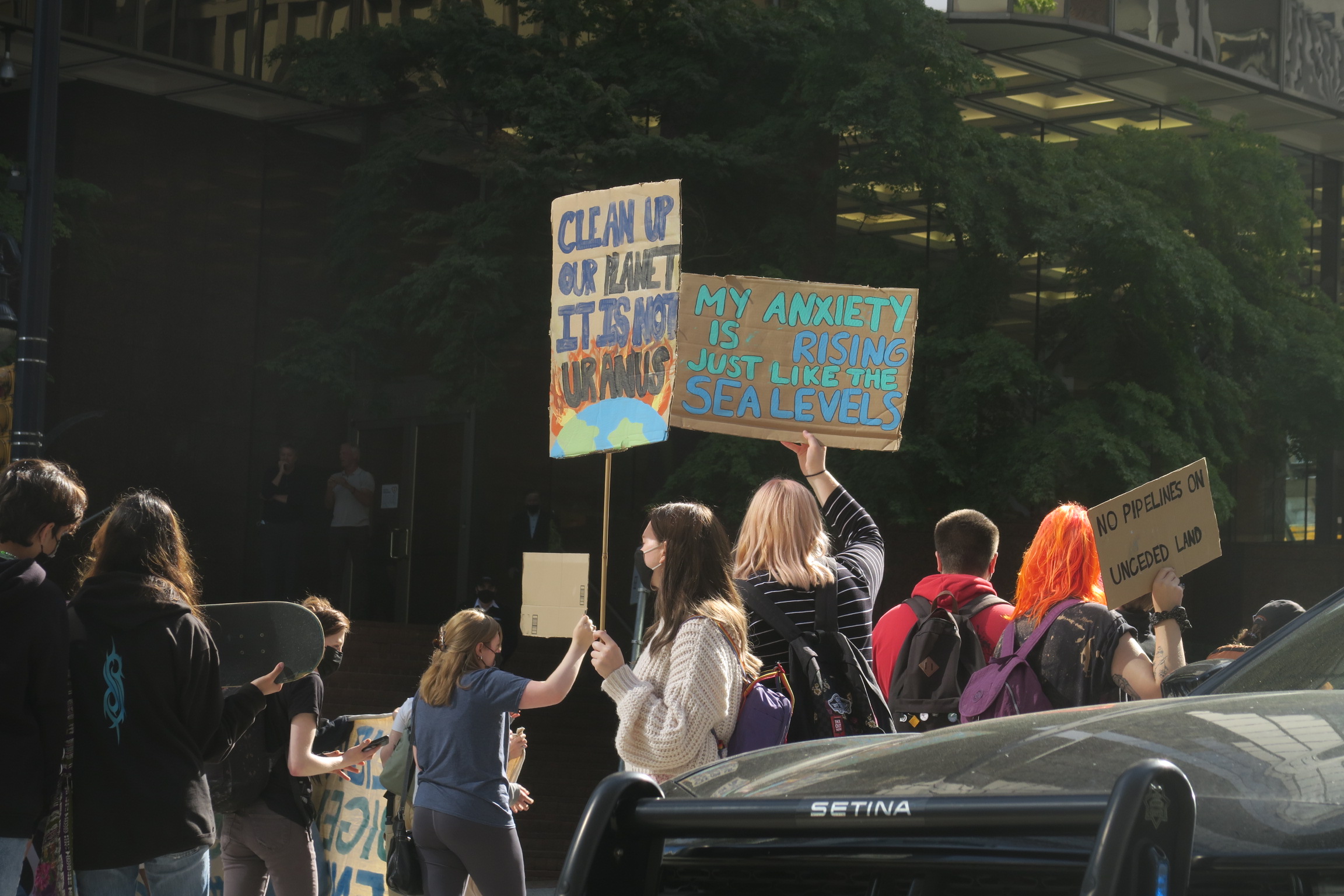
They’re back: Today’s Fridays for Future strike — the first in 18 months — will see youth activists taking to the streets again to push progress on solutions to climate change.
Here’s what you can do to raise awareness and seek solutions where you are.
Despite terror attacks, Paris moves forward with youth conference, COP21 climate change summit
By Bethany Ao and Jonah Zigman, GSS correspondents
PARIS — As the world responds to last Friday’s terror attacks in Paris, Paris itself seems determined to go forward with the epic climate change conference known as COP21, beginning with a Conference of Youth set to begin just 10 days from today.

After bombings and shootings on the night of Nov. 13 in Paris that killed 129 people and injured another 368, concern rose that terrorism would push climate change aside.
However, COP21 and COY organizers took to social media and the web to say that they are continuing with their plans, though security will be tighter.
“(COP21) will be held with enhanced security measures but it is absolutely essential action against climate change and of course it will be held,” Laurent Fabius, France’s Minister of Foreign Affairs and International Development, said during a press briefing on Nov. 14, one day after the attacks.
COP21 is scheduled to take place in Paris from Nov. 30 to Dec. 11 at the Le Bourget airport conference site north of Paris. It is expected to draw over 40,000 delegates from more than 90 different countries from all over the world.
Among the people expected to attend the conference are U.S. President Barack Obama and President Xi Jinping of China.
 A statement by the presidency of the COP21 confirmed that more than 300 planned “side events” — debates, events and conferences that were to be open to the public in a massive “Climate Generations” space at Le Bourget — “will be maintained.” That includes a special Youth and Future Generations Day on Thursday, Dec. 3 with presentations and projects by youth activists.
However, Prime Minister Manuel Valls told RTL Radio on Monday that COP21 “will be will be reduced to the negotiations … a lot of concerts and festivities will be cancelled.” Among those events is a pre-kickoff march through Paris on Nov. 29 that was expected to draw as many as 200,000 people.

The week before COP, the 11th Conference of Youth will take place Nov. 26 to Nov. 28 at the Parc des Expositions Villepinte in St. Denis.
COY11 is expected to draw over 5,000 youth from Europe, Africa, South America and Southeast Asia for a weekend of talks and events on sustainability and climate change.
According to the COY11 website and social media, the attacks have not changed any plans regarding the conference.
“COY11 is maintained, and will more than ever be the place for inclusion, sharing and construction of our societies together,” a statement released by conference officials on Facebook said.
“We are doing everything in our power to ensure the good proceedings of COY11 and to welcome all of you in the best conditions possible.”
Toute l’équipe organisatrice de la COY11 envoie ses meilleurs sentiments aux victimes et familles de victimes des…
Posted by COY 11 on Sunday, November 15, 2015
In addition to COP21 and COY11, prior to the terror attacks other events were planned to take place throughout Paris, including a Sustainability in Sports (SIS) program on Dec. 7 at the Stade de France in St. Denis, north of Paris.
French police raided an apartment building in St. Denis on Tuesday night. Two suspected terrorists were killed and eight detained. The Stade was also where three terrorists attempted to set off bombs on Nov. 13 during a game between France and Germany.
According to the SIS website, the event was expected to draw “100+ leaders” from government, the UN and sports to discuss how sports can be a “game changer” in promoting climate change.
Despite the attacks and police raid, Nick Henry, chief executive of Climate Action, which is organizing the SIS event, said there would be no change in the location for the sports conference.
“An important reason for choosing Stade de France as our event partner was its excellent security record,” Henry said in a statement posted to the SIS website. “This was confirmed on Friday when three terrorists were denied entry to the stadium.”
However, plans were not as certain for the Climate Games, a social media-fueled event whose Facebook site describes it as “the world’s largest Disobedient Action Adventure Game.”

Participants register anonymously at the website and work in teams to stage “creative resistance” activities throughout Paris, documenting and mapping their actions online:
A statement on the Climate Games website as of Nov. 19 noted that “(w)e are waiting to hear whether the French government decides to extend the state of emergency to cover the COP21” and that “(o)ur playing field has been totally transformed.”
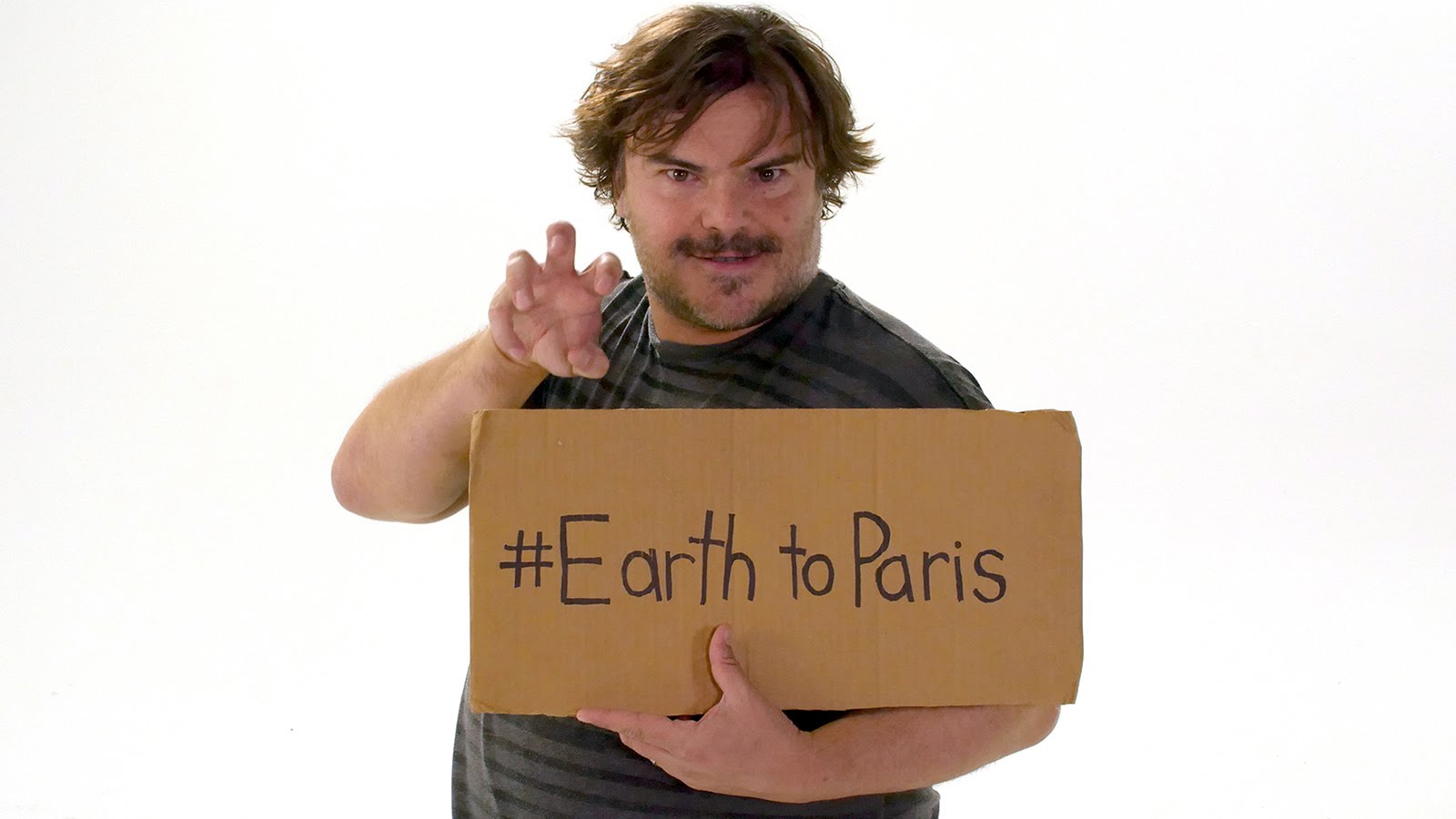
Organizers of the “Earth to Paris” youth summit scheduled to take place Monday, Dec. 7 at the Petit Palais in Paris and Tuesday, Dec. 8 at UNESCO headquarters also were reviewing their plans as of press time.
Despite the political and security concerns, it seems certain that among those who are still willing to come to COP21, new ideas on how to create, save and even use less energy will be on the table.
Rising levels of greenhouse gases, plus temperatures and sea levels, are prompting scientists and innovators to look for more energy-efficient ways of supporting society.
One possibility: Graphene, a new material with potential for wearable solar panels and more efficient air filters.

Graphene is a two-dimensional material, meaning it is only one atom-layer thick. It is made up of carbon atoms connected in a hexagonal shape.
According to a December 2014 article in The New Yorker, graphene is the thinnest, strongest, and lightest material on Earth — 200 times stronger than steel, yet as flexible and manipulative as rubber, and 250 times faster at conducting electricity than silicon.
Andre Geim, the discoverer of graphene, first created the material in 2002 by using Scotch tape to separate the layers of graphite from a pencil, until what was isolated was a single layer of carbon atoms.
Over time, scientists have come up with more and more ideas for how to use graphene, varying from longer lasting batteries, to flexible computer screens, to new water filtration and desalination systems.
—Jonah Zigman is a student in Paris. Bethany Ao is a news editor for Global Student Square and is a junior at Northwestern University in Evanston, Illinois. Contact Bethany at bethanyao2017@northwestern.edu.

Related Posts