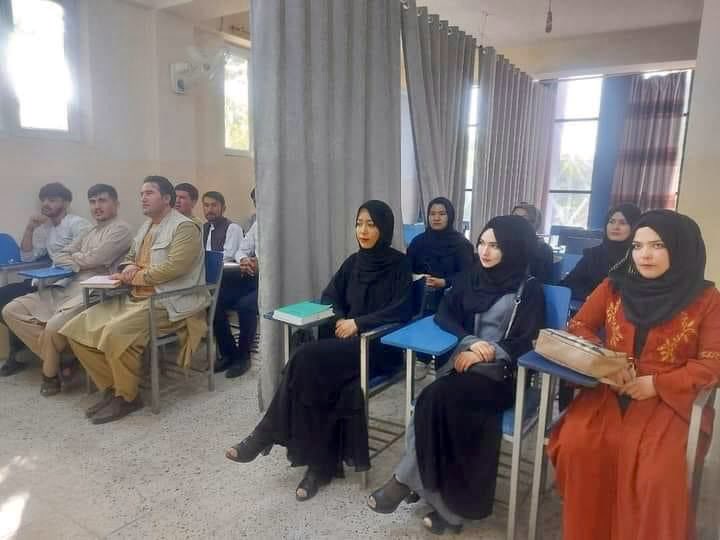
They’ve gone dark: Afghans who helped the U.S. military, trained as American-style journalists and rode the wave of women heading to higher education are destroying the diplomas, transcripts and résumés that prove how they built civil society in the country that the U.S. has left behind.
Opening ceremony doesn’t tell all — here’s what’s really trending in Korea
By Dohun Lee and Noah Jang
GSS correspondents
Skyscrapers. Planes flying across the skyline. Atop a landscape that used to be an ocean but is now reclaimed land, and inside the Songdo Convensia building — which no other adjective than “modern” can describe — the opening ceremony of the 2015 Presidents Cup began.
It started with a traditional orchestra playing a folk song, “Arirang.” When we realized that the bright red and yellow colors of the orchestra members’ clothes vividly contrasted with the suits in which the manifold foreign and Korean attendants were dressed, we thought, “Does such a performance — so distant from the modern culture of Korea, a 300-year old relic from the past — accurately represent our country’s modern culture?”
Tradition is a set of understandings passed from generation down to another generation. Therefore, it is natural, or even necessary, for a country’s citizens to actively promote their traditions in that such behavior may not only unify citizens but also attract foreign visitors to the country.
On the other hand, since traditions often convey that which is strictly limited to a country’s past, it may not be particularly helpful for foreign visitors who wish to learn about the cultural norms of the country’s present day.
For that reason, we decided to offer those willing to learn what is actually trending in Korea what we think could be the right windows from which to view our modern culture.
 The culture of modern Korea can more or less be defined by the term, “Korean Wave” (Hallyu; pop culture of Korea). With the rapid spread of Internet and the subsequent exposure of Korean Wave to the public, it has increasingly become a defining feature of Korea’s culture.
Three main components of Korean Wave are K-Pop, television dramas, and online games. According to the Korea Creative Content Agency, the value of these industries tell us about their importance.
In 2014, the gaming industry alone earns $10 billion dollars revealing not only the size, but also the popularity of the gaming industry. K-Pop has the next biggest market with a profit of over $800 million dollars. The smallest grossing of the three is Korean dramas, which earn $100 million dollars.
Traditional orchestra may be the best tool to convey the country’s past. However, there is no doubt that it is far from the daily lives of modern Korean citizens.
Thus, if you wish to have a modern cultural experience, we do suggest you to go and enjoy a concert of “Big Bang,” spend your afternoon playing some online games, and have a relaxing evening watching series of Korean dramas.
—This story was published with cijournalism.org, the student-led news website of Chadwick International School. For more information, contact CI Journalism editors-in-chief Diana Minjin Kim mkim2016@chadwickschool.org and Sarah Choi s2choi2017@chadwickschool.org.

Related Posts